
Companies rethink return-to-office plans amid omicron cases
Published:Wednesday | December 15, 2021 | 12:05 AM


American companies of all sizes are rethinking their plans to send workers back to the office as the new omicron variant adds another layer of uncertainty.
Alphabet’s Google and the nation’s second largest automaker Ford Motor Company are among those once again delaying their return-to-office plans, while other businesses whose employees have already returned are considering adding extra precautions like requiring masks. Officials in the United Kingdom, Denmark, Norway and Sweden also have asked people in recent days to work from home if they can because of concerns about the variant.
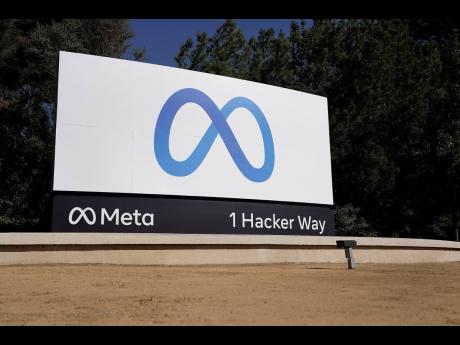
Meta, formerly known as Facebook, and ridesharing company Lyft separately announced Tuesday that they’re letting workers delay their return when offices fully reopen early next year. Meta still plans to open its headquarters at the end of January but will allow workers to delay their return as late as June. Lyft says it won’t require workers to come back to its offices for all of next year, though they will fully reopen as planned in February.
Janelle Gale, vice-president of human resources for Meta, said the latest decision recognises “some aren’t quite ready to come back”.
The moves are the latest indication of how difficult it is for companies to set firm plans for their employees’ mandatory return as worries about a spike in new cases or new variants keep shifting deadlines. This fall, the delta variant spurred many big companies to postpone a mandatory return to early next year.
“A year and a half ago, we thought this would be for a very short time,” said Jeff Levin-Scherz, population health leader at Willis Towers Watson, a global advisory firm. “But the pandemic has thrown us many curves, and employers need to continue to be nimble.”
The firm’s survey of 543 employers with 5.2 million workers showed on average 34 per cent of remote-capable employees remain remote, but that would decline to 27 per cent by the first quarter of 2022. However, the survey was conducted before news of omicron surfaced.
The delayed plans are yet another blow to already struggling restaurants, bars, dry cleaners and other businesses that rely on office workers as patrons. Particularly hard-hit are those in downtown or midtown areas of cities like New York dominated by office buildings that remain largely empty.
The delays come even as United States health officials say early indications suggest omicron may be less dangerous than delta, which continues to fuel hospitalisations.
Lawrence Gostin, a public health expert at Georgetown University, doesn’t believe there’s enough scientific information on omicron to warrant companies delaying their return-to-office plans.
“There will be a constant stream of new variants as well as surges and waning of cases,” Gostin said. “We shouldn’t disrupt normal business activity at every possible trigger.”
He noted that layered protection like masks, vaccinations and ventilation are highly effective at preventing virus spread in a workplace.
Still, the stream of new variants is having a psychological impact on business owners.
“Omicron has made me realise work life will never return to the way it was pre-COVID,” said Gisela Girard, president of advertising agency Creative Civilization, whose 12 employees have been working remotely since March 2020. “It made me realise how working from home is likely to keep employees, their families and also our clients safe.”
This summer, Girard’s company aimed for a mandatory hybrid work plan to start in fall, but delta pushed back those plans to early next year. Now, omicron has her reconsidering not only those plans but whether employees should return at all. She renewed the office lease last year but said she’s rethinking the physical office space.
For companies that have already brought workers back to the office, it’s harder to retreat and allow them to be remote again. Still, some are considering new safety measures.
Target CEO Brian Cornell recently told The Associated Press that it’s “avoiding putting dates on the calendar” for a mandated return to its Minneapolis headquarters. Target started gradually opening collaboration areas and workspaces in the fall for employees who wanted an option to work on-site.
“We’re going to learn along the way and make sure we make the right steps for our team,” Cornell said.
Lyft said the decision to let workers choose to work remotely for all of 2022 wasn’t tied exclusively to omicron but said new variants are a factor contributing to uncertainty.
“We’ve heard from our team members that they value continued flexibility in determining where they work and would benefit from additional time to plan,” said Ashley Adams, a Lyft spokeswoman.
Meanwhile, Google is indefinitely delaying the mandatory return to its offices. A company spokesperson said in an email that the update was in line with its earlier guidance that a return would start no sooner than January 10 and depend on local conditions. The company said it safely opened more than 90 per cent of its US offices and nearly 40 per cent of US workers came into the office in recent weeks.
Ford said it will delay plans for hybrid work at its Dearborn, Michigan, headquarters until March and plans to start a pilot phase for select employees in February. It had previously said it wouldn’t start the hybrid work model before January.
Ford said the hybrid work model affects approximately 18,000 employees in North America. Hourly manufacturing employees returned to work in May 2020.
AP