
ON THE COVER
Russia impasse could lead to higher inflation, says PIOJ
Economy grows 6% in fourth quarter
Published:Friday | February 18, 2022 | 12:13 AM
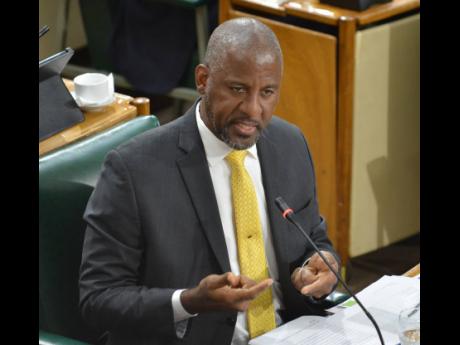

The impasse between Russia and Ukraine could lead to higher prices, according to the Planning Institute of Jamaica, PIOJ.
Western powers are viewing the build-up of Russian troops on sections of Ukraine’s border as a precursor to possible war and invasion, the impact of which “may manifest in further supply chain disruptions, given that Russia is a major producer of oil and grain. This may have implications for inflation globally,” said PIOJ Director General Dr Wayne Henry at his quarterly press briefing on the economy this week.
The Jamaican economy continued to rebound in the December quarter with GDP growth estimated at six per cent, while the new year offers a relatively positive outlook, the PIOJ said.
Eight years ago, Russia annexed Ukraine’s Crimean Pensinsula, but is now denying that it plans to invade its neighbour, which previously formed part of the Soviet Union.
Still, the tensions have rankled markets, including commodities. Oil prices, for example, are hovering at US$94.50, coming from US$76 a barrel at the start of the year.
The PIOJ declined to give an oil price projection for the upcoming fiscal year. Henry said the Bank of Jamaica, which monitors inflation, would better address oil price movements.
Food and oil prices are big drivers of headline inflation. Jamaica’s current inflation target, which the central bank is mandated to defend, is within a range of 4 to 6 per cent. However, annual inflation has surpassed the target and is currently tracking at 9.7 per cent, and remains a risk to growth forecasts.
The price movements largely stem from disruptions in the supply of goods across the world, which resulted in more expensive commodities and higher shipping costs.
The PIOJ growth estimate for Jamaica, while strong in percentage terms, still hangs lower than before the pandemic, in dollar terms; but full recovery is expected within two years.
“Note that the economy is projected to achieve pre-COVID-19 levels of output in fiscal year 2023/24,” said Henry.
The 6.0 growth in the October-December quarter was derived from a 0.4 per cent expansion of the goods-producing industry and 7.8 per cent the in services industry, said Henry.
He explained that the outturn was due to the relaxation of curfews to stem the spread of COVID-19 both locally and overseas. This led to increased domestic demand for goods and services. Increased operating hours for business led to increased production and higher employment and increased business and consumer confidence.
In the review quarter, the goods-producing industry held solid gains within sectors, especially for agriculture, up 12 per cent with all major crops reflecting double-digit growth; and construction up 6.4 per cent, which reflected new housing starts.
Mining and quarrying, however, suffered declines, down 65 per cent, due to the closure of the Jamalco alumina plant affected by a fire last August. Manufacturing also contracted by 0.9 per cent.
Within the services industry, various sectors expanded, led by hotels and restaurants, up 76 per cent. Wholesales and other services rose 10 per cent; transport and storage, 8.0 per cent; electricity and water supply, 5.7 per cent; finance and insurance services, 2.0 per cent; and real estate, rentals and business activities rose by 1.0 per cent.
For the calendar year, January to December 2021, PIOJ estimated real GDP growth at 4.4 per cent, reflecting an expansion in both the goods and services industries. The only sector to decline was mining and quarrying, due to the closure of the Jamalco alumina refinery, Henry said.
For the fiscal year ending March 2022, PIOJ projects the economy will grow within a range of 6 to 9 per cent; then further by 3 to 6 per cent for the following year, ending March 2023.
The planning agency’s growth estimates are preliminary. The final figures will come later from the Statistical Institute of Jamaica.
Looking ahead, the short-term prospects for economy are generally “positive” with the easing of the COVID-19 containment measures, said Henry. The further opening up of Jamaica to its main trading partners will support higher levels of external demand, particularly for tourism-related products and services, he said.
The downside challenges are the emergence of new variants of the virus, the continued closure of Jamalco, and the possibility of Russian invasion, Henry said.