
ADVISORY COLUMN: PERSONAL FINANCIAL ADVISER
Oran Hall | The national budget and you
Published:Sunday | March 13, 2022 | 12:07 AM
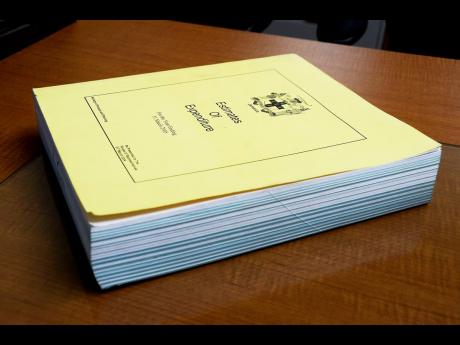
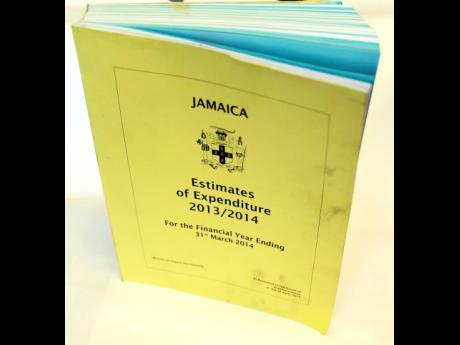
This is budget time. The spending programme that the Jamaican government presents each year affects all of us. It can significantly affect our personal budget in terms of our disposable income and how much we spend, save, and invest.
The national budget covers a 12-month financial or fiscal period, which runs from April 1 to March 31 of the following year. It sets out estimates of revenue and expenditure and outlines the Government’s spending priorities and how they will be funded.
In crafting the national budget, the government considers how the economy has performed in the past, the current economic environment, and the outlook for the local and world economy. It also determines the direction in which it desires the country to go to make life better for the residents of the country.
The budget relates to the central government, comprising the ministries, departments, and agencies of government. Expenditure is funded from the Consolidated Fund – that is, “the Government of Jamaica’s principal instrument of parliamentary control of public monies”.
For fiscal year 2022-23, a majority 59.2 per cent of the $912-billion budget will fund recurrent expenditure; 33.7 per cent the public debt, inclusive of principal payments, or amortisation, and interest; and 7.19 per cent will finance capital expenditure.
Compensation for employees is a major recurrent expenditure item accounting for the compensation of employees, primarily salaries. It also includes government’s contribution to health insurance for its employees.
Recurrent programmes (non-debt) account for 27.3 per cent of the budget and include the purchase of goods and services, grants for schools, universities and hospitals, rental of property, machinery and equipment, and utilities.
Capital expenditure covers the public investment projects to be implemented by the ministries, some new; some already in progress.
Each ministry is given an allocation to spend. Of note is the $40 billion allocated to the Ministry of Finance and the Public Service for public sector pension payments; the budgetary support to universities under the Ministry of Education and Youth; $57 billion to regional health authorities under the Ministry of Health and Wellness; and $20.7 billion to the Ministry of Economic Growth and Job Creation for the Southern Coastal Highway Improvement Project.
Of the $912 billion the Jamaica government estimates it will spend from the Consolidated Fund in the FY2022-23, some $749.8 billion is expected to come from revenue, the three main sources being general consumption tax ($234.7 billion), income tax ($189.6 billion), and special consumption tax ($92.1 billion).
Filling the gap
The gap between revenue and expenditure is to be filled primarily by borrowing $124.1 billion. But borrowing comes with a cost – interest – and the principal has to be repaid. As the Government borrows more, it has less to spend and has to increase taxes to pay principal and interest.
Rather than borrow, Government may choose to raise taxes to fund the budget. When taxes are increased, consumers have less to spend. For now, the finance minister has committed to no new taxes, but consumers are not able to maintain their spending levels due to rising inflation.
At the same time, the Bank of Jamaica, being responsible for monetary policy, is increasing interest rates to control inflation, which should dampen the demand of consumers for goods and services.
When the government increases its spending on goods and services, it generates sales for businesses, contributes to their profits, and enables them to create additional employment.
Similarly, when it increases spending on capital projects, it also increases employment and generates demand for the required inputs, thus contributing to the sales of the producers. When it reduces spending on projects and goods and services, the reduced demand tends to have a contractionary effect on the economy due to the negative effect on employment and income.
The government makes provision in the budget for various groups in the society, for example, its former employees and vulnerable groups, such as the poor who benefit from PATH, the Programme of Advancement Through Health and Education.
Pension payments allow its former employees to be in a position to buy goods and services even if not at the same level as in the pre-retirement period, and contributing to their health care through insurance reduces the need to cover the full cost of such care from personal resources.
Additionally, distributions to the more vulnerable members of society gives them some ability to contribute to the demand for goods and services.
How you create and manage your personal budget is not much different from how the government creates and manages the national budget. It is based on estimates; must be managed carefully, making modifications when necessary; and must balance – income must equal expenditure.
When there is a shortfall, borrowing is often the way used to compensate although reducing expenditure is another option. Governments have another option: taxes. It may increase existing taxes or introduce new ones. People do not have the ability to impose taxes, so it is fair to say that they have a more difficult task to balance their budget.
- Oran A. Hall, author of Understanding Investments and principal author of The Handbook of Personal Financial Planning, offers personal financial planning advice and counsel. finviser.jm@gmail.com