
Keith Duncan | Social partnerships: Essential medicine for COVID-19, crime and economic renewal
Published:Sunday | September 6, 2020 | 12:07 AM
Jamaica faces its greatest challenges in modern history, and now that the electoral process is behind us and a new administration is being put in place, Jamaica needs to confront these challenges united as a people. In the best interest of all our citizens, we now need to focus our collective and individual energies and our minds around Jamaica overcoming the public-health crisis that we face, which will certainly impact our ability to get our economy back to, first, pre-COVID-19 levels while driving economic reforms that will ensure that our economy can actually emerge more diversified, more productive, more inclusive with greater growth levels than what we have seen for decades.
Social partnerships work, as it ensures transparency, engagement and ownership of the public, private sector and civil society of policy and programme objectives. It sends a message to the wider populace that all stakeholders are unified, and all hands are on deck. Of course, the Government of Jamaica leads, as they should; however, with social partnerships providing input, monitoring, oversight, engagement and communication with the Jamaican citizenry, there is a tangible feeling of oneness and confidence that permeates through society.
Jamaica has examples of these partnerships which have proven to be highly effective when utilised. Examples are Economic Programme Oversight Committee (EPOC), the National Partnership Council, the Electricity Sector Enterprise Team (ESET) and the quiet but effective multi-stakeholder group ACORN, which operates below the radar.
If there was ever a time where Jamaica needs to utilise social partnerships, it is NOW!
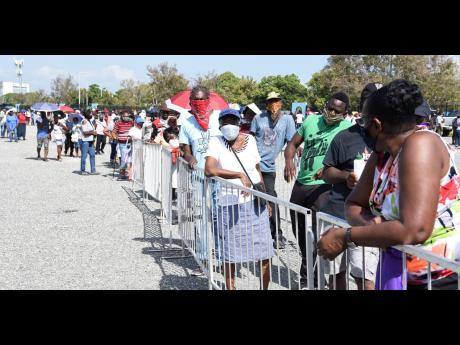
There is no denying that Jamaica is in a health crisis, as the positive COVID-19 cases continue to mount exponentially. We managed the early days of the pandemic quite effectively and the Government of Jamaica (GOJ) put in place the financial resources and systems to manage the spread of the virus. However, as we opened the various sectors of our economy and our borders, our public-health infrastructure are now close to being overwhelmed or may be actually in a state of overwhelm at this point in time. As we enter this second exponential wave of the virus, we are at near-crisis proportions.
As we enter this stage of the pandemic and our society is impregnated with anxiety, fear and uncertainty, we in the private sector are recommending that the GOJ reconvenes the National Disaster Committee, which is chaired by the prime minister and includes stakeholders from the public and private sectors, the Opposition along with civil society. We therefore believe it is entirely appropriate and timely that this National Disaster Committee be engaged to update, share, consult and seek input into Jamaica’s strategic response. It is an opportunity to engage all stakeholders, inclusive of the best minds and expertise available.
JAMAICANS MUST TAKE RESPONSIBILITY
If we are to stem the spread of COVID-19, we must effect the required behavioural change at the individual and community level, no matter how uncomfortable we might feel living with these new normals. We must be our brothers and sisters’ keeper and hold ourselves and our fellow citizens to account in practising the infection-control protocols.
If we don’t comply, we put ourselves and the most vulnerable of our population at risk, which means lives lost. We also place our front-line workers – doctors, nurses, public-health workers, and security forces – at risk for infection, who are getting infected, which therefore reduces our already overburdened front line and the capacity of the state to respond.
NATIONAL CONSENSUS ON CRIME – MAJOR TURNING POINT?
Jamaica’s crime problem is likened to a disease that has been with us for decades and comes at great cost to our economic, physical and mental well-being. Through the efforts of Howard Mitchell, past president of the Private Sector Organisation of Jamaica (PSOJ), the ACORN group and a working group chaired by Lloyd Distant Jr, we have been able to forge a national consensus on crime. This public-private-civic partnership, including the prime minister and the leader of the Opposition, on August 3, 2020 signed a memorandum of understanding (MOU) effecting this national consensus on crime.
This multi-stakeholder group agreed on a road map with a strategic programme of initiatives and actions that include specific deliverables and timelines in the following areas:
• Prioritising effective community and social-intervention programmes.
• The continued transformation of the Jamaica Constabulary Force (JCF), the continued investment in technology and capacity along with increased efforts in community policing.
• Preventing and reducing corruption.
The key success factors are:
1. Bipartisan agreement with the political parties and all stakeholders on the national strategic programme of initiatives and actions.
2. The recently established multisectoral and non-partisan Crime Management Oversight Committee having the responsibility for the oversight, tracking and monitoring of the programme while providing updates to the public.
3. This crime-reduction programme will be effected by a whole-of-government approach.
As a country, we cannot afford for this partnership to fall by the wayside and we, therefore, implore all stakeholders to ensure that we deliver on this important imperative.
ECONOMIC RECOVERY PROGRAMME
Jamaica’s economy faces its most formidable economic crisis in decades. The fallout in tourism, the reduced foreign exchange inflows and the overall slowdown in economic activity have seen the projections for GDP growth for the current fiscal year to a negative 7-10 per cent. The economy is not projected to return to pre-COVID level until 2022-23.
Unemployment and underemployment levels have surged, as businesses navigate the challenging environment. The Government has provided some relief to the most vulnerable individuals and businesses in our economy; however, this is not sustainable, as tax revenues of course are significantly down year over year. Without a doubt, the real solution lies in the increasing economic activity through the continued opening of our economy while managing the spread of the COVID-19 virus.
Jamaica’s economic recovery programme requires a multisectoral approach to return Jamaica to a sustainable growth path.
COVID-19 JAMAICA ECONOMIC RECOVERY TASK FORCE
Under the auspices of the national partnership, the chairman of the National Partnership Council, the prime minister of Jamaica, in April of 2020 engaged a multisectoral public-private-civil society task force, under the chairmanship of the Minister of Finance Dr Nigel Clarke, to develop recommendations for, first, returning Jamaica to pre-COVID levels of growth, and second, to create a solid foundation for a more productive, diversified and stronger economy.
After over a month of focused deliberation by all participants, a body of recommendations was completed and the report was published by the minister of finance on June 30, 2020. To quote from the minister of finance in the chairman’s message in said report, he said: “The COVID-19 Economic Task Force recommends not simply fixing what has been broken by COVID-19, thereby returning Jamaica to the pre-COVID-19 reality. The aim is to go beyond to also address the fundamental gaps that have been exposed by COVID-19 and exploit the opportunities the crisis offers. In other words, we must do better. We must embrace reform with ambition to be on better footing as recovery takes hold.”
Dr Nigel Clarke went on to say, “We will need to engender social consensus around a coherent policy agenda and have a bias towards implementation with a unity of purpose.”
There is total alignment with Dr Clarke’s aims and the social consensus required to deliver on the recommendations and we are, therefore, making a powerful request of the Government of Jamaica that this social consensus be actualised through the National Partnership Council or an appropriate social partnership vehicle to provide oversight and monitoring the implementation of Jamaica’s economic recovery reform programme.
SELECT KEY ECONOMIC POLICY MEASURES RECOMMENDED
• Macroeconomic stability underlined by fiscal responsibility and stable inflation.
• Diversification of the economy to reduce vulnerability and achieve greater output from agro-processing, logistics, manufacturing, music, entertainment and sports, among other sectors.
• Unlock investments from pension funds by increasing the limit on private equity investments by five per cent and, second, unlocking capital from insurance companies by reducing the minimum capital requirement.
• Mobilise private sector through public-private partnerships for investments in water, waste management, roads, etc.
• Implement a comprehensive GOJ land divestment policy and a transparent land bank.
• Prioritise the digitisation of the economy.
JAMAICA AT A CRITICAL JUNCTURE
Jamaica faces a daunting but not insurmountable task. To unleash the creative and positive energy of our people, they must be engaged in a constructive, transparent, and non-divisive manner. The public and private sectors must be engaged with civil society at the level of the communities and individuals to ensure that we are all on the same page so that we can move from a state of anxiety and paranoia to one of taking responsibility and ownership at the individual, business, community and national levels.
Every Jamaican must be clear on the end-in-mind objectives and the path to get there but, most important, can see where they fit into the plan in doing their part in creating a safe, healthy, more prosperous, inclusive, equitable and wealthy society for all Jamaicans.
I humbly submit that Jamaica’s recovery path will certainly be cemented and accelerated by our social-partnership vehicles. If there is ever a point in Jamaica’s history that we need a unified all-of-Jamaica response, it is now!
Keith Duncan is president of the president of the Private Sector Organisation of Jamaica (PSOJ). Email feedback to columns@gleanerjm.com