
Christine Hammond Gabbadon | Vaccines, epidemics and COVID-19
Published:Tuesday | December 15, 2020 | 12:08 AM
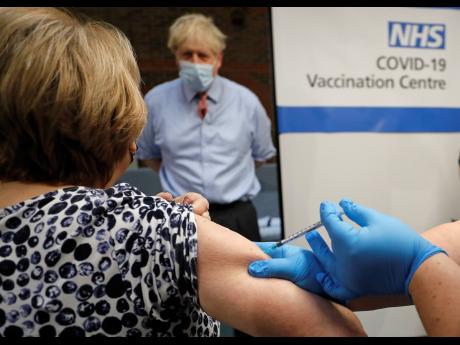

Guardian.com recently carried a piece on Paul Alexander, who contracted poliomyelitis at age six in Texas in 1952 and is one of the few polio survivors still dependent on an iron lung machine to breathe at age 74. The purpose of this article is to highlight previous epidemics such as polio as we experience the COVID-19 pandemic, which, to date, has caused over 1.6 million deaths worldwide. As of December 14, there have been 273 deaths in Jamaica among 11,792 cases, with some experiencing long-term effects.
At its peak, the polio virus was responsible for paralysis or deaths in hundreds of thousands worldwide before the arrival of a vaccine in 1955. Like COVID-19 today, most cases were asymptomatic, with 30 per cent showing symptoms, five per cent developing paralytic polio, of which five to 10 per cent died. Here in Jamaica, the last case of paralytic polio was reported in 1969, only to be followed years later by a report of an outbreak of Type I polio in 1982, highlighting the need for continued vigilance and of maintaining preventive measures through immunisations.
SMALLPOX AND MEASLES
For centuries, smallpox killed or disfigured hundreds of millions worldwide until a British doctor, Edward Jenner, in 1796 discovered that inoculating dried lesions from the milder cowpox into the skin prevented smallpox. This eventually led to a successful global eradication effort. Since then, many vaccine-preventable diseases have either been reduced or eliminated in various parts of the world through immunisation programmes. Jamaica has achieved at least 93 per cent coverage for 10 vaccine-preventable diseases, including polio, diphtheria, tetanus, pertussis and the highly infectious measles, among others (MOHW Quarterly Report 2018). Jamaica has had no local spread of measles since 1991, and the last imported case was in 2011. As a result, many doctors practising today have never seen a case of measles or the other vaccine-preventable diseases.
HOW VACCINES WORK
The complex immune system is made up of various cells and proteins called antibodies, which identify and neutralise foreign objects, such as bacteria and viruses (pathogens). Vaccines contain weakened or inactive parts of a particular organism (antigen) that triggers an immune response within the body. Newer vaccines (e.g., mRNA vaccines) contain the blueprint for producing part of an antigen rather than the antigen itself, prompting the immune system to respond as if exposed to the actual illness, without causing the disease itself. However, there are persons who object to immunisations for various reasons.
ANTI-VAXXER MOVEMENT
Although vaccination has been shown to be one of the most cost-effective ways of avoiding infectious diseases and currently prevents two – three million deaths annually, the World Health Organization (WHO) has identified vaccine hesitancy as one of the top 10 global health threats worldwide.
Reasons for vaccine hesitancy are complex and include complacency (vaccines seen as unnecessary), lack of confidence (mistrust) and inconvenience (lack of access). These are often fuelled by conspiracy theories, misinformation, social media, and deliberate disinformation (including dishonest reporting, such as related to MMR vaccine). Vaccine resistance has led to outbreaks of measles and pertussis, with resulting complications and preventable deaths.
COVID-19 VACCINES
Several COVID-19 vaccines are being developed within months instead of years, possibly because the relevant technology was already being developed when the pandemic occurred.
Phases of vaccine development
The three-phase process utilises volunteers receiving either a placebo or the actual vaccine, with neither the researcher nor the volunteer knowing which is given until after the trial (double blinding). The phases can be in sequence or simultaneous, making the process faster. The vaccines are held to rigorous international safety and efficacy standards.
• Phase I: small groups of people receive the trial vaccine.
• Phase II: the vaccine is given to people who have characteristics (such as age and physical health) similar to those for whom the new vaccine is intended.
• Phase III: the vaccine is given to thousands of people and tested for efficacy and safety.
There is also ongoing post-marketing surveillance. From their press releases, the three early COVID-19 vaccine candidates are:
Pfizer and BioNTech
• Uses mRNA as described above. This stimulates the body to produce antibodies. Note: The Centers for Disease Control and Prevention (CDC) states: COVID-19 mRNA vaccines give instructions for our cells to make a harmless piece of what is called the ‘spike protein’ … found on the surface of the virus. mRNA vaccines do not use the live virus that causes COVID-19. They do not affect or interact with our DNA in any way.
• Pfizer has claimed 95 per cent efficacy in 40,000 volunteers and “a benign tolerability profile across all ages”.
• Storage challenges – needs dry ice to maintain temperature conditions of -70°C ± 10°C. After thawing, it can be refrigerated for five days.
Moderna, Inc
• Also uses mRNA with claims of 94.1 per cent efficacy in a preliminary report. Phase III study is ongoing in 30,000 participants.
• Stable at regular freezer temperature -20°C for up to six months, and after thawing, it can last in the refrigerator for 30 days or kept at room temperature for up to 12 hours.
AstraZeneca (with Oxford University)
• Claims an average efficacy of 70 per cent over two dosing regimens, with phase III trials ongoing in 23000 recipients.
• Said to use a harmless version of a virus found in chimpanzees to carry the COVID-19 viral spike protein.
• Can be stored at regular refrigerator temperature of 4°C.
Long-term studies regarding efficacy and safety for these and other vaccines are ongoing.
As we await a possible COVID-19 vaccine solution, Jamaicans are encouraged to adhere to the national immunisation schedule. Influenza and pneumococcal vaccines are also recommended for vulnerable persons. In the meantime, persons should follow the recommended public health measures of social distancing, sanitising, wearing a mask, and avoiding large social gatherings while we anticipate a quiet and hopefully COVID-19-free Christmas holiday.
Dr Christine Hammond Gabbadon is a primary care paediatrician with training in public health and a focus on children’s health issues.