
PUBLIC AFFAIRS
Imani Tafari-Ama | Worrying trend of femicide in Jamaica
Published:Sunday | July 4, 2021 | 12:10 AM

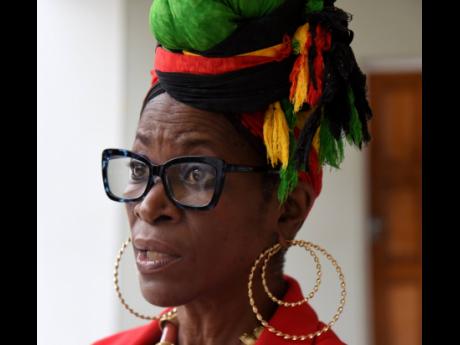
Femicide is an emerging category of crime which has been defined by The Economic Commission for Latin America and the Caribbean (ECLAC) as “a sex-based hate crime term, broadly defined as the intentional killing of females because they are females”. According to ECLAC, there is every reason to be concerned about “the increasing number of femicides in the region”. This concern echoes recommendations made by civil society organisations for several years now. This regional anxiety is magnified in Jamaica, which has one of the highest murder rates in the world and a rapidly increasing femicide rate. Femicide is also higher in countries where there is already a high homicide rate.
Femicides often take place in a general climate of indifference and impunity. This treatment of women can be attributed to the global construction of power relations between men and women as patriarchal. Jamaica is no stranger to the perspective that dominant masculinity and subordinate femininity is a normative cultural binary. Perpetrators of femicides are often the intimate partners and acquaintances of the victims.
It is a global pattern that when women opt for independence they run the risk of encountering their partners’ violence backlash because when some men find that they are unable to establish power over women and children, using old standards of asymmetry, they lash out at the ones closest to them.
STRANGE BEDFELLOWS
Using a purposive sampling approach, I identified eight cases of femicide perpetrated by members of the security forces, to demonstrate how easily women can be murdered by partners involved in the so-called serve and protect profession. Criteria for selection of the cases included:
i) Murder-suicide crimes
ii) Adult victims and perpetrators
iii) Crime timeline between 2010 and 2016
iv) Perpetrators being members of the security forces – Jamaica Constabulary Force (JCF); Jamaica Defence Force (JDF) and officers employed by private security firms
v) Female victims were intimate partners of the perpetrators
vi) Rural and urban locations in Jamaica
In a radio interview, Dr Wendel Abel, head of the Department of Psychiatry at The University of the West Indies, addressed the growing trend of police personnel turning their deadly work tools on their intimate partners and then themselves, and called for mental screening of officers of the Jamaica Constabulary Force. However, he acknowledges some rank-and-file officers are coy about admitting to mental health challenges, which could compromise their ambitions for promotion. It is ominous that career considerations trump the moral and citizen security obligations to expose the officers that pose a threat to citizens in public and private domains. As the case studies below vividly demonstrate, we need to heed Dr Abel’s recommendations to avoid the all too easy to enact doom of vulnerable partners.
• On June 16, 2016, 59-year-old Earnest Douglas, retired police inspector in St Elizabeth, killed his common-law wife, 41-year-old nail technician, Tamara McIntosh, then shot and killed himself.
• Lincoln McKoy, a cop who shot his girlfriend, Jessica King, at the Errol Flynn Marina in Port Antonio on August 15, 2013, was convicted of murder in 2016 because although he shot himself twice in the head, he did not die.
• On July 15, 2016, 50-year-old Paul Martin, a security guard employed to King Alarm, entered the TRN office in downtown Kingston and confronted his common-law wife of 18 years, 44-year-old Collette Hibbert, shot her six times then shot himself.
• In an incident that took place on December 22, 2015, Sidney Brown shot and killed his ex-lover, Verona Clarke, in front of their two-year-old child at a daycare in Linstead, St Catherine, before turning the gun on himself.
• On April 1, 2016, Sergeant John Williams, formerly of the JDF, killed his 42-year-old common-law wife, Gail Anderson, who worked at the Hope Village Early Childhood School in Williamsfield, Manchester, then killed himself.
• On January 23, 2016, 28-year-old Christina Dawkins, a student of the University of Technology (UTech), was killed by her common-law husband, Junior Wallace, a lance corporal with the Jamaica Defence Force, who also killed himself.
• On April 13, 2014, Davian Thompson, 31-year-old Spanish Town policeman, fatally shot Latoya Campbell-Thompson at their home, a day before her 28th birthday. He then shot and killed himself.
The officers in these case studies all were trained to kill people deemed threats, a perception that they transferred into their private lives. The use of the gun to rebuff criminal acts is a gendered and violent approach to problem-solving in public and in domestic applications, and puts women and children at risk. One of the reasons for the low number of studies carried out on murder-suicides as a single crime is that typically, the two instances of death are regarded as separate crimes. However, because they occur together, by a single perpetrator, they can also be considered one double crime. The murder-suicide pattern shows intentionality to harm and refusal to face the criminal responsibility consequences. In all cases, the perpetrators of these crimes exerted emotional and physical pressure on their intimate partners, all of whom unsuccessfully attempted to leave the relationships.
Since the perpetrators rarely live to tell the tale, due to the nature of their crimes, it would be interesting to map the mental state and psychosocial motives undergirding murder-suicides through the case study of the cop who failed in his own execution. A psychosocial assessment of his obligation to face the music could provide interesting clues about the thinking that accompanies the execution of this double crime. The fact that he is a living member of the community that he intended to leave behind and is being subjected to multiple layers of critical gazes, with the victim of his anger now gone, could provide clues about the meanings to be attributed to this altered reality. This information could inform intervention efforts to prevent recurrence of such tragedies.
SOLUTIONS
The case studies are by no means exhaustive and murder-suicide perpetrators have different patterns of behaviour, which may reflect their class, race or gender or other identity differentiation. The common denominator in the case of the security personnel perpetrators addressed here is the easy access to the ‘piece of iron’, as the mother of one of the victims lamented. The impulse to turn the gun on their significant others and themselves suggests that their employment, which legitimises murder, desensitises them to the value of life.
Therefore, the demilitarisation of the JCF and accessory forces need to be seen as a prerequisite for reducing this threat of femicide. The paramilitary performance of the police in their jobs may be blurring the lines of propriety on the home front and soon partners come to be regarded as grist for the homicide mill. This paramilitary approach to citizen security engenders fear and instability and poses a clear and present danger to unsuspecting women who form relations with the men who cannot withstand the pressure cooked in their psyches as a result of their employment, combined with other contending factors. Police were introduced by Euro-Americans as catchers of the enslaved in North and South America and the Caribbean. Therefore, policing in the so-called new world and the Caribbean/West Indian context contains the common thread of aiming to protect colonial property – the prime perception of which was, and still is, unfortunately, the people. This colonial and patriarchal perception of gender power needs to be the subject of an urgent transformation agenda.
- Dr Imani Tafari-Ama is a research fellow at The Institute for Gender and Development Studies, Regional Coordinating Office (IGDS-RCO), at The University of the West Indies. She is the author of ‘Blood, Bullets and Bodies: Sexual Politics Below Jamaica’s Poverty Line’ and ‘Up for Air: This Half Has Never Been Told’, an historical novel on the Tivoli Gardens incursion. Send feedback to imani.tafariama@uwimona.edu.jm.