
Trevor Munroe | Strengthen, not dismantle, the ‘oldest democracy in the black world’
Published:Sunday | December 10, 2023 | 12:08 AM
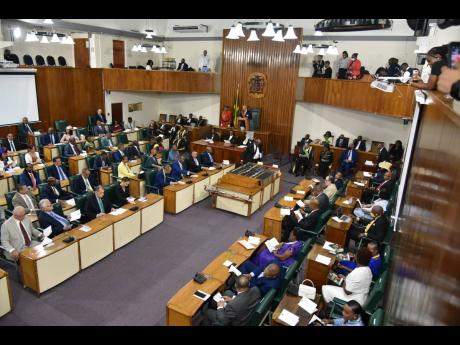

Across the world and in Jamaica, December 10 is being recognised as International Human Rights Day. It was on this date in 1948 – 75 years ago – that the nations of the world agreed and signed the Universal Declaration of Human Rights.
Article 21 affirms, “everyone has the right to take part in the government of his country, directly or through freely chosen representatives … by universal and equal suffrage”. This right to choose and remove those who make laws over us, and our authority to hold the politicians we elect to account, is the foundation stone of democracy.
Believe it or not, we Jamaicans laid this foundation stone in our country even before this right was acknowledged by the United Nations, much less achieved by the majority of states in the world. So, as we prepare to enjoy Christmas and to find a way for a better 2024 amid all the ‘trials and tribulations’, we need to spend some time to ask ourselves: how did we Jamaicans achieve this world historic feat, not in track athletics nor in entertainment, but in governance? Since 1944, what structures have we erected on this foundation to protect against the termites of authoritarianism, of crime and of corruption? And, how do we ensure that these guarantees of our democracy are not undermined by dictatorial tendencies?
Please take note, as I did, that just a few weeks ago on November 26, the prime minister himself, at the Jamaica Labour Party’s 80th annual conference, acknowledged quite accurately that Jamaica is the “oldest democracy in the black world”. The prime minister could have gone further and pointed out that this historic achievement of Adult Suffrage in 1944 made us not only the first in the black world; it put us ahead of over 100 other countries, including many in the white world such as the United States of America, Canada and France, to name but a few. How come?
The fact is that our parents and grandparents from all different sections of the Jamaica populace became fed up and decided that they would no longer put up with slave-like conditions after 289 years of British colonial rule and over 100 years after the abolition of slavery. Our cane cutters and factory workers, our household helpers and dock workers, came together and demanded a better life. Our ambitions then, made us determined to end the injustice where only three out of every 100 Jamaicans of high school age could find a place in secondary school; and 99 out of every 1,000 babies born died in infancy. We were no longer prepared to put up with a situation, where no matter how bright or intelligent a black Jamaican woman was, she could not rise above the level of a secretary or postmistress in the civil service.
ENJOYED PRIVILEGES
Foreigners, colonial officials, whites and the light-skinned Jamaican minority enjoyed privileges of all kinds, withheld from the black majority. So we came together; our national hero Marcus Garvey had been building our self-esteem in the 1920s and 1930s; leaders like Norman Manley and Alexander Bustamante came forward to overcome their own doubts that Jamaicans who could neither read nor right had enough sense to choose and to remove lawmakers. Our citizens associations, at home and abroad, came together to demand and to insist that every Jamaican must have the right to vote. They did not take “no” for an answer from the British. Ultimately, the power of the people overcame the people with power.
But fundamental as it is, on this foundation of Universal Adult Suffrage, successive leaders had to erect institutions, pass legislation and develop conventions to ensure that once elected, political leaders could not become a law unto themselves, had to keep us informed and provide the means to hold them to account. Towards this end, prime ministers of different administrations, despite serious shortcomings, made important contributions, which we need to strengthen and not dismantle.
• In 1973, the first Michael Manley administration passed the law requiring members of parliament to declare their assets liabilities and income.
• In 2017, the first Andrew Holness administration, built on the Manley law and established the Integrity Commission with powers – which some in the second Andrew Holness administration are now seeking to get rid of – to investigate and prosecute politicians and public servants for corruption, including illicit enrichment.
• In 1983, the Edward Seaga administration passed the Contractor General Act, giving the Contractor General’s Office the power to expose and advocate prosecution of those guilty of awarding or receiving contracts on the basis of politics or cronyism.
• In 2000, the second P.J. Patterson administration established the Office of the Public Defender, with the authority to investigate and reverse efforts to take away our people’s rights.
• In 2006, under Portia Simpson Miller’s leadership, the Electoral Commission was established to guarantee that free and fair elections were not undermined by politicians exercising the powers to draw election boundaries to suit themselves and to manipulate voters’ lists.
• In 2002, the third Patterson administration passed the Access to Information Act, to reinforce our people’s right to information on how the government is being run.
• Most important, in 2011, the Bruce Golding administration passed the Charter of Fundamental Rights and Freedoms, which amended Jamaica’s Constitution to protect our rights to free speech; freedom of movement; and others that guard against autocratic violation from whatever source – from government, from Parliament, from the police or from the army.
• In 2021, the second Andrew Holness administration strengthened the Public Bodies Management and Accountability Act (PBMAA). This act, passed in 2001, requires the approximately 160 public bodies, spending billions of dollars of taxpayers’ money, to report to Parliament, through their responsible ministers, within three months of the end of the parliamentary year. With the support of civil society, regulations were passed to ensure that directors were now appointed primarily on merit, and no longer based mainly on politics.
LAID MEASURES
So, we can see that in the 75 years since the foundation of Universal Adult Suffrage was laid, measures and practices to make government more accountable and transparent, as well as to protect our people’s rights from authoritarian tendencies, were developed. It is now our responsibility to resist any attempt to reverse good practices developed by current and previous administrations. We must preserve and strengthen, not reverse and dismantle, “the oldest democracy in the black world”.
As such we must insist that:
• States of public emergency not be declared and used to infringe on the rights of our people in a manner that cannot be “demonstrably justified in a free and democratic society”.
• The Speaker’s ruling be reversed, to prevent delaying our Parliament and people being informed of the contents of reports from the Auditor General and the Integrity Commission.
• The bill drafted by the Bruce Golding administration in 2010 be dusted off and implemented to give constitutional protection to our Electoral Commission, the Office of the Public Defender and the Office of the Political Ombudsman – as promised in the very laws establishing these bodies.
Towards this end, we the people must heed the call from newly installed hall of famer and former president of the Private Sector Organisation of Jamaica, Howard Mitchell, to “speak up … speak out and act …” otherwise “the gate to autocracy is opened”. And, in the words of Supreme Court Justice David Batts, in a recent outstanding address to the St Ann justices of the peace, “help guarantee equality and justice for all our citizens”.
Professor Emeritus Trevor Munroe is the founding director of National Integrity Action. Send feedback to info@niajamaica.org or columns@gleanerjm.com.