
Ella Hoyos | Woman time has come!
Published:Saturday | November 16, 2024 | 12:06 AM

On Wednesday, November 20, the board of governors representing member countries will vote to elect the seventh president of the Barbados-headquartered Caribbean Development Bank (CDB). The successor to Dr Hyginus ‘Gene’ Leon will be selected following an interview process led by the board of directors from a shortlist of three internal candidates.
Civil engineer and project management specialist Daniel Best, director of projects of Barbados; accountant and career banker Gregory Hill, vice-president finance and corporate services, of Trinidad & Tobago; and Development Specialist Therese Turner-Jones, vice-president operations (acting) of The Bahamas; are the three candidates in the running.
Across Caribbean institutions, one area where female leadership has remained elusive is at the level of the presidency of the Caribbean Development Bank. This fact was highlighted by Prime Minister Mottley of Barbados at the 2021 Women in Leadership Conference when she pointed to the non-inclusion of women at the level of the presidency of the CDB and the secretary general of the Caribbean Tourism Organization (CTO), noting that “these terribly lopsided statistics scream inequity”. The CTO, last year, appointed St Lucian Dona Regis Prosper its first female secretary general and CEO.
In fact, one could argue that, in the 54 years since the founding of the CDB, that institution has remained a bastion of the Old Boy’s Club, being led at the apex by men and men alone, with any competent or aspiring women being effectively shut out from consideration at the highest level. This is not to suggest that the CDB has been led by anything other than a cadre of the region’s finest male economists and development specialists. Among them: Nobel Laureate Sir Arthur Lewis of St Lucia as the first president; he was followed by Dr William Demas (Trinidad & Tobago); Sir Neville Nichols (Barbados); Dr Compton Bourne (Guyana); Dr Warren Smith (Jamaica); and Dr Gene Leon (St Lucia). Their selection to the leadership of the CDB has been forged in a process which involves nomination at the country level, invariably heavily influenced by ministers of finance of the members, all of whom, coincidentally, have been men.
TAKEN BOLD STEP
For the first time in 54 years, The Bahamas has taken the bold step of nominating a female in the person of experienced Development Specialist Therese Turner-Jones, who has deep experience serving the region at the highest levels at the International Monetary Fund and the Inter-American Development Bank, who appears eminently qualified to lead the CDB, where she is currently engaged, and is one of three internal candidates in the running for the position of president. It is hoped that the other member governors of the bank will affirm the vision of The Bahamas and elect Turner-Jones, who has led many developmental projects in this region, on merit, as the CDB’s first female president. The time is now to break down this last bastion of male dominance in our region.
History will record that, when Portia Simpson-Miller served as the first female prime minister of Jamaica, The Economist magazine hailed her leadership as impacting the advancement of women in all spheres of life. Her being prime minister was viewed as placing Jamaica in a pre-eminent position among the countries in the world, for leadership by women generally.
As a region, the Caribbean, in the six decades since Independence, has produced six female prime ministers and one elected president, namely:
Dame Eugenia Charles, of Dominica (1980-1995);
Portia Simpson-Miller, of Jamaica (2006-2007 & 2012-2016);
Michèle Pierre-Louis, of Haiti (2008- 2009);
Claudette Werleigh, of Haiti (1995-1996);
Kamla Persad-Bissessar, of Trinidad & Tobago (2010-2015)
Mia Amor Mottley, of Barbados (2018 - present)
Janet Jagan, president of Guyana, December 1997 - August 1999.
Even as Vice President Kamala Harris (who has a claim to being Jamaican by descent from her father’s side) failed in her bid to shatter the glass ceiling to end the 235 years of male-only presidency in the United States – female leadership at the highest level of government in these parts is neither novel nor untried.
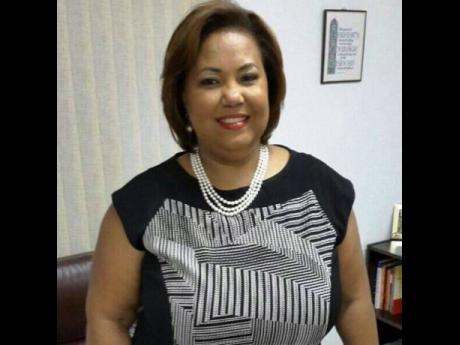
Ella N. Hoyos is an attorney-at-law, former journalist, former senior regional bank executive, and governance practitioner. The views expressed in this article are personal and not those of any office or organisation with which she is associated. Send feedback to columns@gleanerjm.com