
Andrew Holness | Time to build
Published:Sunday | February 23, 2025 | 12:06 AM

Housing is the foundation of stability, dignity, and opportunity, but the lack of adequate housing has been a seemingly insurmountable challenge for Jamaica for most of our collective living memory. This challenge demands our urgent attention and action now, more than ever, and my administration is prepared to meet it.
When the People’s National Party government launched Operation PRIDE (Programme for Resettlement and Integrated Development Enterprise) in 1994, its primary goal was to provide affordable housing solutions to low-income individuals by regularising informal settlements and enabling land ownership for the landless in planned settlements complete with infrastructure development.
Good idea, lousy execution. Mismanagement and corruption doomed PRIDE from the start. Billions spent on the programme remain unaccounted for, with contracts bypassing standard procedures leading to massive overpayments on uncertified works. Many planned houses were never built, and existing schemes lacked infrastructure and security. In Retirement, St James, homes for civil servants were abandoned after targeted attacks by criminal groups, leaving beneficiaries with financial losses and uninhabitable conditions.
Evidenced by their negligence, the PNP did not appreciate that the challenge of informality represented perhaps the most critical barrier to Jamaica’s development. Efficient land use governance is imperative for all countries, especially Small Island Developing States.
Widespread informality fuels violence, poverty, and public health challenges while limiting housing availability. Around 20 per cent of Jamaicans still live in informal settlements. In most cases, successive governments have tacitly accepted their permanence but failed to formalise their property rights. This absence of property rights prevents residents from leveraging land for investment, hindering upward mobility. These settlements often lack sanitation, potable water, and waste disposal, worsening health conditions. Poor health lowers productivity, reduces incomes, and weakens communities, perpetuating the cycle of poverty.
CANNOT FULLY REALISE
Because informal residents cannot fully realise the value of their holdings, neither can the rest of society. The problem is even more acute in our urban areas, as around 60 per cent of our urban population lives in informal settlements. Proportionally, this means that we have the highest degree of urban informality among Caribbean and Latin American countries, with the exception of Haiti. This presents a particular challenge for the formal housing sector. The 2023 National Housing Policy highlights that housing demand is outpacing supply, driving up costs – especially for young Jamaicans seeking to start independent lives and families. The primary constraint is the limited available land near urban centres. Development economists note that high levels of urban informality “squeeze” the formal housing market, worsening affordability. The Ministry of Housing estimates that Jamaica needs to produce 15,000 additional units annually to stabilise prices. The closer we get to that target, the cheaper housing will become. The solution is to build.
Promoting property ownership and tackling informality are key to liberty, civic order, citizen security, economic growth, and a healthy democracy. Secure tenure empowers residents to invest, build wealth, escape poverty, and take responsibility for their communities. In 2008, the JLP reformed the corrupt, loss-making National Housing Development Corporation (NHDC), which housed Operation PRIDE, into the Housing Agency of Jamaica (HAJ) to regularise informal settlements and develop affordable housing. By 2010, HAJ was profitable; by 2011, it had spent $2 billion regularising informal communities and providing infrastructure, with $350 million remaining in the account.
When we resumed leadership of the HAJ in 2016, the entity was once again making a loss, poorly run, and not delivering on its mandate. Indeed, I contemplated closing the entity, however after a review we decided to put in strong leadership and governance, and today HAJ is not a fiscal risk to the government and is successfully delivering housing solutions across Jamaica like Catherine Estates and Edmund Ridge.
Since 2016, my administration has advanced overdue land tenure regularisation and housing sector reforms. We have invested in a National Digital Cadastral Map to support electronic land titling, environmental management, and faster development approvals. In 2019, we reduced transfer tax from 5 per cent to 2 per cent and set stamp duty at a flat rate of $5,000, mitigating barriers to real estate transactions. We are also piloting the use of drone technology in the expansion of Systematic Land Registration, to speed up the titling process for entire communities. These reforms will enable the redevelopment of our urban areas to boost housing supply. The government alone cannot meet the additional 15,000-unit annual target – we must leverage the market to achieve this goal.
PUBLIC-PRIVATE PARTNERSHIPS
We are not waiting for the market to respond but actively engaging it through public-private partnerships such as the Greater Bernard Lodge Development Project in St. Catherine. Since 2018, this initiative has aimed to build 15,000 low- and middle-income housing solutions within a model municipality. To date, 2,000 units have been completed, with the remainder under construction or in procurement. The planned town centre is also in the procurement phase, and social services – including a STEAM school, hospital complex, police post, fire station, and transport hub – are set for implementation. Bernard Lodge serves as a blueprint for future planned developments nationwide.
Social housing for vulnerable individuals remains a priority, but we are mindful not to repeat the mistakes of the past with regard to building social housing in concentrated locales. When we established the New Social Housing Programme in 2018 it was with a view to improving housing conditions for the nation’s poor and disadvantaged by providing quality, affordable, and sustainable housing solutions across the country. As of 2025, the programme has delivered 280 housing units with 648 rooms, impacting 968 individuals across 57 constituencies.
A successful housing strategy must cater to all income levels, otherwise the competition for housing could lead higher income earners to crowd out low-income earners. Government policy, executed by agencies like the National Housing Trust, the Jamaica Mortgage Bank, the HAJ, and the New Social Housing Programme, serves all segments of the housing market to ensure social equity, affordability, quality, and sustainability in the supply of housing. The government is targeting the construction of 70,000 housing units over the next three to five years.
Unfortunately, not only did the COVID pandemic derail our plan with regard to timelines but also astronomical inflation in building costs, leading to universal upward adjustment in housing prices and a recalibration of market segment price points. I am however happy to report that we are back on track and, for the NHT, over the past year, Cabinet approval has been granted for over 10,000 solutions under the Guaranteed Purchase Programme and the Developers’ Programme, the majority of which will be low-income affordable housing solutions. Recognising that the challenge is to increase the pace of housing delivery, we have taken the steps to do this by partnering with the private sector on financing, derisking projects, master planning, making lands available, and streamlining the approval and permitting procedures.
We understand the frustration of that hardworking Jamaican who wants to buy a home suited to his means but cannot find one. The solution to these frustrations lies in a stronger partnership between the public and private sector, constituting the engine of housing production, well-oiled with land, financing, master planning and a supportive, and efficient bureaucracy. This engine is now shifting into full gear, like never before.
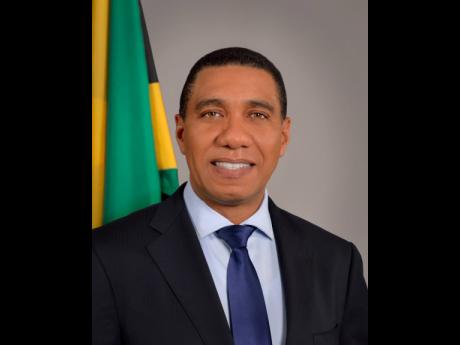
Dr Andrew Holness is prime minister of Jamaica and member of parliament for West Central St Andrew. Send feedback to columns@gleanerjm.com.