
The Inside Opinion
Gender inequality among business owners hurting Jamaica
Published:Tuesday | March 30, 2021 | 10:25 PM
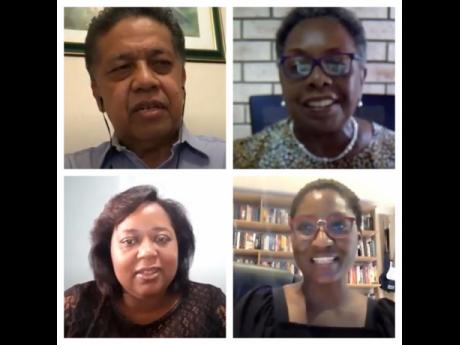
(Kingston, Jamaica): A recently released study from the International Labour Organization (ILO) finds that a majority of institutions in Jamaica providing micro, small and medium enterprises (MSMEs) with financing and business development services do not consider the specific needs of women entrepreneurs.
Launched on International Women’s Day (8 March 2021), Women's entrepreneurship development assessment: Jamaica, acknowledges a solid national legal and regulatory framework on which to build a more enabling environment for women’s entrepreneurship development (WED). However, it finds significant gaps between policy and practice. The report contends that much needs to be done to make regulations gender-sensitive and translate them into gendered actions that close those gaps.
More importantly, the report signals ways in which Government and its agencies, employers’ organisations and business networks, financial institutions as well as international organisations, can cooperate through a strategic national action plan.
Supported through the European Union (EU)-funded Programme Win-Win: Gender equality means good business, the publication was prepared in collaboration with the Jamaica Employers’ Federation (JEF).
“While it is a well-known statistic that 59 per cent of managers in the Jamaican workplace are female there is still much to be done because nationally, unemployment is always higher among females than males,” explains David Wan, President of JEF. “Most all of our small islands don’t have enough jobs for all us. We don’t have the IBMs and the Amazons here, so entrepreneurship becomes important for creating jobs. A very high percentage of jobs in any economy including ours comes from small enterprises.”
The WED assessment was conducted by Dr Leith Dunn, former Head of the Institute for Gender Development Studies, Mona Campus, University of the West Indies (UWI). Institutions can use the findings to critically evaluate their policies and strategies and develop Gender Action Plans to make their operations more responsive to the real needs of women entrepreneurs.
“The study showed us new opportunities and areas for expanding women’s entrepreneurship. For example, the impact of COVID-19 has turned things upside down and it underscores the importance of women’s entrepreneurship to regain some of the ground we have lost because of the pandemic,” explained Dr Dunn. “All of the inequalities were exacerbated. So I’m seeing opportunities in the green economy entrepreneurship in environmental areas and also in the blue economy, which relates to tourism and using the sea, well as the creative industries -- the orange economy -- because we need to look at new and innovative ways in promoting entrepreneurship.”
Also featured is a profile of women entrepreneurs to highlight major challenges that need to be addressed in order to support women’s economic empowerment. Among these are: informality; sole proprietorship as the dominant ownership structure; limited skills and access to business support services and affordable financing; operation in a narrow range of sectors with a high concentration in the wholesale and retail sector, which prevent a balance business with family responsibilities; and limited capacity to own and use information communication technologies (ICTs).
The report concludes with a three to five year national action plan that can be supported by the ILO in partnership with the Government, JEF and donors to implement the recommendations of the WED Assessment Report for Jamaica.
The national action plan sets the foundation for increased dialogue with ministries, departments, and agencies (MDAs), as well as banks and financial institutions, to fulfil Jamaica’s commitment to mainstream gender in all policies and programmes consistent with the National Policy for Gender Equality.
It seeks to achieve six strategic objectives: (i) strengthening legal and regulatory frameworks; (ii) improving coordination of policy and leadership frameworks; (iii) expanding access to services and products from financial institutions; (iv) growing gender-sensitive programmes and services from business development organisations; (v) boosting the number of women-owned enterprises in export, procurement, supply chains and ICTs; and (vi) increasing representation and participation in policy dialogue and influence.
“The action plan is needed more than ever,” explain Vanessa Phala, Senior Specialist for Employers’ Activities, at the ILO Caribbean Office. “As a result of the COVID-19 pandemic, many businesses are trying to survive so now is the time to close the gaps identified in the report such as transitioning women-owned enterprises from informality to formality; developing and offering female-friendly business financial services; and increasing access to export markets for women entrepreneurs.”
For more information and to download the report, visit: https://www.ilo.org/caribbean/information-resources/publications/WCMS_77...