
Phillip Paulwell | Let’s get the voters back
Published:Sunday | March 6, 2022 | 12:06 AM
As we move towards our 60th anniversary of independence, we can benefit from reflecting on the forces that drive the underbelly of our political system. As a people, we are deeply patriotic, and a national consensus pervades our society on all things Jamaican. However, the cross-current of tribalism in our politics and our voting behaviour have consistently impeded Jamaica’s becoming the paradise that we all want our country to be.
Our political system requires us to be divided into a Government and an Opposition, with power passing back and forth by rotation. That process expects one party to have power over the other for a term of office that usually lasts up to five years in each cycle leading up to an election. This zero-sum game makes the contest a desperate one that has been associated with violence and bloodshed. The winners attempt to govern in the best interest of the society as they see it and as they proposed in their manifestos. The government of whichever party must fail for the electorate to mandate a change.
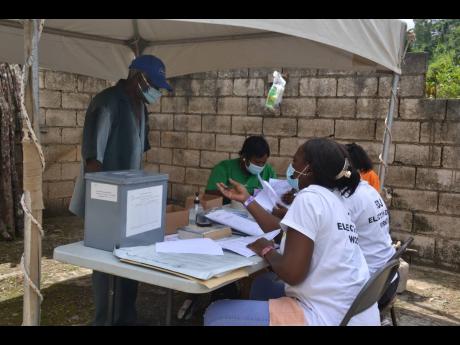
However, the deeper question we have to ask ourselves is whether this model of government is working now that we have reached our 60th year of independence. The voter turnout in the last four general elections declined from 61.46 per cent in 2007, to 53.17 per cent in 2011, to 47.7 per cent in 2016, and to 37.85 per cent in 2020.
Regardless of which side we are on, these figures tell us something about voter participation in our elections. The formal processes are being satisfied in that we are electing our MPs and we are appointing our senators. We also continue to enact legislation in accordance with our constitutional and parliamentary provisions. But are we missing something deeper?
SYSTEMATIC ISSUE
A 24-percentage point drop in voter participation over a spread of four general elections between 2007 and 2020 must be of concern to those of us who are elected MPs. This is not a partisan issue, but rather a systemic one. We need to engage in some deep introspection and possibly undertake some reforms to our constitutional process if we are to convince our electorate that their participation is important. Voter apathy on this scale is deeply disturbing.
In its editorial on February 6, The Sunday Gleaner proposed introducing some kind of proportional representation on a mixed-system basis. This would be accomplished by retaining the first-past-the-post method for constituencies and increasing the number of seats on a proportional representation basis.
This measure is certainly worthy of further consideration. It has the potential to ensure that no votes will be wasted regardless of whether someone is voting in a stronghold of the PNP or the JLP. Voters will still elect MPs as they do now. However, the vagaries of the first-past-the-post system can be offset by another cohort of representatives for political parties calculated on the actual number of votes cast for them nationally.
These are systemic arguments. We also have to interrogate the societal arguments surrounding the voter apathy. The tribalism produces its own variant of support for the parties of choice. However, it can be a deeply divisive tool of societal decay if it is allowed to get out of hand.
The Jamaica Independence Conference was held at Lancaster House in London from February 1 to 9, 1962. Our delegation was bipartisan. According to the official report, the members of the delegation were (i) Hon. N.W. Manley, MM, QC, premier; (ii) Dr I.S. Lloyd, minister of health; (iii) Hon F.A. Glasspole, minister of education; (iv) Hon.V.L. Arnett, minister of finance; (v) Sir Alexander Bustamante, leader of the opposition; (vi) Mr. D.B. Sangster, deputy leader of the opposition; (vii) Mr. R.C. Lightbourne, member of the House of Representatives; (viii) Mr. D.C. Tavares, member of the House of Representatives.
There was no government majority or opposition minority, and they negotiated an independence constitution on the basis of consensus. Even though the roles changed after the April 10, 1962, general election, we started off as a nation on a consensus footing. As a matter of interest, the turnout in that general election was 72.88 per cent.
TRUST DEFICIT
After 60 years, we are facing a trust deficit among our electorate. The prime minister has created a portfolio in his Cabinet to address constitutional reform. What we need going forward must reflect what is best for the country.
Norman and Busta were able to go to London and come away with a consensus that has served us for 60 years. What we need is another PNP-JLP moment of consensus to drive a constitutional reform agenda. We need to inspire voters of all political hues by showing that we, as parliamentarians, can meet across the aisle without the supervision of the former imperial power. We can exercise power in the people’s interest by constructing the reformed system that will continue that process of evolution that Norman spoke about in the House of Representatives on January 24, 1962.
To accomplish this, we have to put aside tribalism; we have to act in the best interest of the country; we have to set aside wanting the Government to fail and wanting to keep the Opposition where they are. The struggle for constitutional reform and societal advancement is bigger than that.
Sometimes politicians can be their own worst enemies, causing the disaffection of the general population. We say such bad things about each other. Our recent voter turnout decline may be inversely related to that. We can reach inside of ourselves and take a moment to search for consensus, which can lead to an all-party agreement to hit the reset button in the interest of Jamaica.
The Gleaner’s voting proposal is worthy of further interrogation. Cross-party understanding and informal alliance leading to a consensus on constitutional reform will inspire our population to regain their faith in our electoral and parliamentary system.
My call to the Government is, let us do it together the way that Norman and Busta did it 60 years ago. The prime minister recently announced that the Vale Royal talks will resume That will be a good time to start.
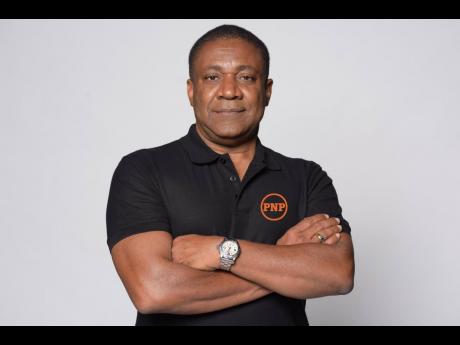
Phillip Paulwell is member of parliament for Kingston East and Port Royal and former minister of science, technology, energy, and mining. He is the managing director of Cite Consulting Services Limited. Send feedback to columns@gleanerjm.com