
Give INDECOM the power - JFJ calls on Gov't to implement agreed reforms of the INDECOM Act 2015
Published:Thursday | March 22, 2018 | 12:00 AMErica Virtue
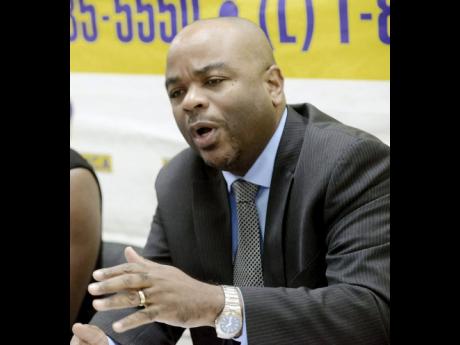

Human-rights group Jamaicans for Justice (JFJ) is calling on the Government to urgently act on agreed amendments to the Independent Commission of Investigations (INDECOM) Act, given the decision of the Appeal Court two weeks ago to bar the body from arresting and charging members of the police force.
JFJ said that in 2015, Parliament agreed to settle this issue by amending the INDECOM Act to clarify the oversight body's power to charge, arrest, and prosecute police officers by explicitly placing it in law. However, nothing was done, leaving the law unclear.
The watchdog group said that given the court's decision about INDECOM's legal powers, the fate of hundreds of victims who have active cases of alleged police abuse is now uncertain.
"Jamaicans for Justice is deeply concerned by the present situation and calls on the Parliament to speedily execute the delayed reform of the INDECOM Act. We urge Parliament to keep its promise to maintain an effective and balanced police oversight body," a release from JFJ said.
It said bipartisan consensus on enshrining INDECOM's power to arrest, charge, and prosecute members of the Jamaica Constabulary Force who commit wrongdoing in law has existed since 2015.
Parliament, in reviewing the INDECOM Act, determined that "INDECOM's entitlement to prosecute" needed to be clarified in law and it drafted the new subsections 4(1)(d) and (e) to the INDECOM Act that explicitly gave it power to "institute and undertake criminal proceedings" or delegate that power to "any person qualified to practise as an attorney-at-law".
According to JFJ, "Parliament also agreed to explicitly clarify INDECOM's powers to arrest and lay criminal charges by adding a new subsection to Section 20 of the INDECOM Act that confirms INDECOM officers' 'powers, authorities, and privileges, including:
(a) To arrest as is given by the law to a constable;
(b) To lay criminal charges and to serve summonses as are given by law to a constable.'
If it had implemented these reforms, the present problem would not exist."
INDECOM had maintained that under Section 20 of the act, it had such powers, but the court ruling said that INDECOM's Commissioner Terrence Williams and his investigators only had power to investigate and make recommendations.
ONLY IN PERSONAL CAPACITY
The court's decision required INDECOM's officers to charge, arrest, and prosecute officers in their private, personal capacity, making the oversight body the only state entity where officers are personally linked to and exposed to outcome of the criminal matter.
Now JFJ is saying that INDECOM's officers working for and paid by the public should not be acting privately.
"The implication of this is that INDECOM's officers who carry out a public function assigned by Parliament, funded by public funds, can only do so in a private capacity. Moreover, they may be privately responsible for any suit based on 'wrongful arrest' or 'malicious prosecution'," the release said.
"At present, when a police constable arrests or the Director of Public Prosecution prosecutes someone as public officials, they are not privately exposed. By failing to execute the reforms to the INDECOM Act achieved through bi-partisan consensus, successive governments may compromise the efficacy of INDECOM."
It continued, "Given the fact that arrests and prosecutions will continue, Parliament must resolve this impasse quickly, as it may negatively affect the work of both INDECOM and the security forces."
On March 16, the Court of Appeal ruled that INDECOM had no statutory authority to charge, arrest, and prosecute members of the security forces who commit unlawful acts, such as extrajudicial killings.
The court ruled, however, that INDECOM's officers could charge, arrest, and prosecute under common law - just like any other member of the public. This means that INDECOM's officers must now make private arrests and prosecutions in their personal capacity, despite working for and being paid by the public.