
Sav Inclusive students epitomise 3Rs on ‘Eco Champions Day’
Published:Thursday | December 14, 2023 | 12:09 AM
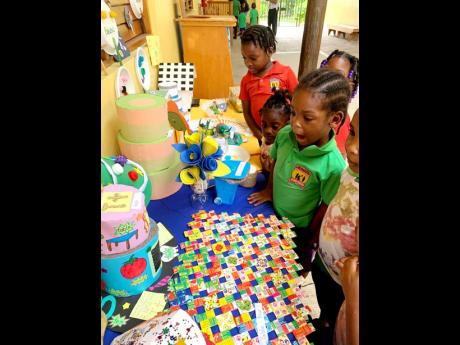
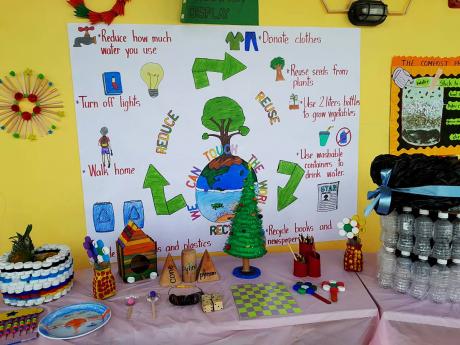
Reduce, reuse, and recycle, known commonly as the 3Rs, were the focus of classroom displays on Tuesday’s ‘Eco Champions Day’ at the Savanna-la-Mar Inclusive Academy (Sav Inclusive), located in Westmoreland.
This event is just one of the numerous activities that are part of the three-year ‘TUI Junior Academy Jamaica’ initiative. The TUI Care Foundation and the Rockhouse Foundation partnered to create this project, which was launched in January.
The project seeks to inspire young people to recognise the need to preserve the environment and wildlife and equips them with the know-how to become ‘Eco Champions’ in their communities.
Aiming to address climate change-related issues, the project also provides support for the creation and execution of a sustainability curriculum that will benefit roughly 1,400 students in six Rockhouse Foundation-supported schools.
The Sav Inclusive campus will also be powered by solar energy and rainwater harvesting systems through the project, and environmental lessons like the 3Rs and water harvesting are being incorporated into the school’s curriculum.
Sheneka Robinson-Wright, the project director of TUI Junior Academy Jamaica, stated in an interview with The Gleaner that the day’s events included kids performing plays, singing songs, and reciting dub poetry under the theme ‘reduce, reuse, recycle’.
A tour was also held to view the projects that students had completed for the semester. Such exhibits featured products composed of recyclable materials.
For example, a food basket and classroom bin were made from plastic bottles. They also made an exhibit of a Taino village from cardboard, plastic bags, coconuts, palms, and so on.
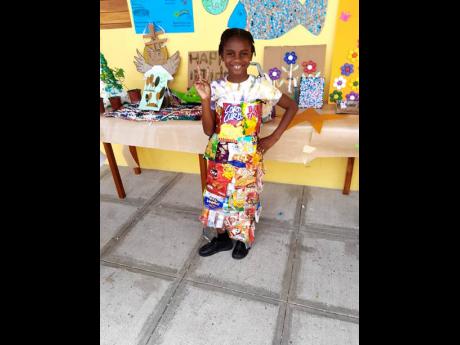
“They were very creative, I’ve seen where mats were made from discarded juice boxes and even one or two children who were wearing items of clothing made out of plastic bags or other disposable materials,” she said.
“We’re trying to look at things in a holistic way, so we’re really encouraging children to minimise waste and just to show them and teach them to engage in the practical ways of not just discarding them, but how they can be used,” she added.
‘I’m really proud’
Following a full year of a variety of educational events, Robinson-Wright expressed immense pride in the way youngsters embraced the concept of sustainability.
“I think that the students have been so enthusiastic about it, [and] the teachers have spent so much time working with the students ...[to] develop environmentally aware students,” said Robinson-Wright, noting how essential it was for the little ones to understand why it was important to take care of the environment.
“I’m really proud of them, and I only see the project growing from strength to strength,” she added.
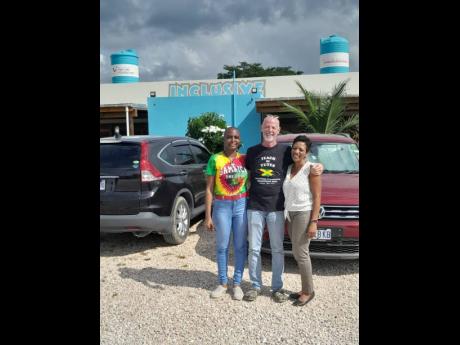
Sav Inclusive is a public school that was built by the Rockhouse Foundation. It serves special-needs children, those living with and without a disability, and typical learning for children in grades three and four.
Additionally, it has physiotherapists and speech therapists present, with each class consisting of a teacher, an assistant, and a caregiver.
Rockhouse Foundation president Peter Rose informed The Gleaner that since the project began, the foundation has raised and expended approximately US$8.5 million.
According to Rose, the foundation completed the construction of the administration centre for both Sav Inclusive and the Savanna-la-Mar High School over this year’s summer, which helped to expand and renovate the school’s campus.
“Next summer, we’ll complete the primary campus with the construction of six additional bathrooms, and then, after that, we’ll move on to start building the high school,” he stated.
Rose noted how crucial it is to encourage youngsters to lead sustainable lives, stating that surely, they would graduate from school “with an understanding of how much mankind is doing to the planet and [will become] a counter force to that in Jamaica”.
The children have already established a school garden measuring approximately 75 by 40 feet, and with seeds already sown, they are now starting to practise the technique of composting, setting aside the essential materials in a compost bin to utilise for nurturing plants.
“My hope is that it will provide sustenance to the school, particularly healthy sustenance [as] we’re in [the] process of trying to adjust the kinds of foods that children take in at the earlier stages that are full of sugar and get them addicted to things that are unhealthy for them,” Rose said.
He further stressed the need for more like-minded collaborative efforts from institutions.
“The needs are just so great, there’s no possibility of making impact unless there’s collaboration amongst all people that see the eminent danger that we all face and try to confront it, even if it’s confronting it in small ways or ... in large ways,” he said.