
Letter of the Day | Charles Rangel – Our champion in Congress
Published:Friday | June 6, 2025 | 12:05 AM
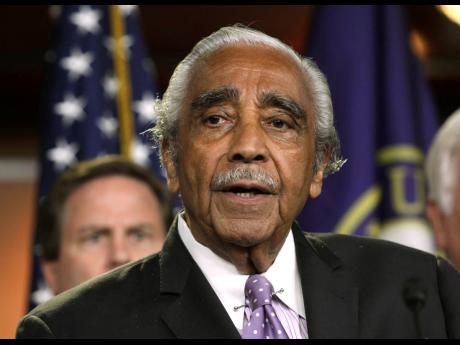
THE EDITOR, Madam:
The corridors of power in Washington have lost one of their most compelling voices: Charlie Rangel – he died at the age of 94.
For those of us who worked the trenches of Caribbean diplomacy through 1970s and 1980s, Rangel’s passing marks the end of an era when kindred minds could bridge the chasm between Caribbean developing states and the world’s most powerful democracy. For he was a colleague, in the struggle for racial equality and justice.
We became political colleagues and personal friends. As Jamaica’s Deputy Prime Minister and Minister of Foreign Affairs during the critical years of the late 1970s, and later as Prime Minister for fourteen years, I witnessed first-hand Charlie Rangel’s unwavering commitment to Caribbean development.
This was no mere diplomatic pleasantry. When Jamaica faced the crosswinds of global ideological turbulence and conflict our commitment to non-alignment was unequivocal, Charlie provided crucial balance in Congress.
Congressman Rangel understood that small nations needed room to breathe, space to develop their own foreign policies without being forced into rigid hegemonic boxes.
His support helped Jamaica maintain its independence while building constructive relationships with the United States.
Charlie often reiterated the long and continuing friendship between himself and Jamaica emphasizing: “I have warm feelings for Jamaica and will continue to be a friend to Jamaica.”
Charlie’s advocacy went beyond trade policy to encompass the full spectrum of bilateral relations. During my Prime Ministerial term, he was rewarded with membership in the Order of Jamaica for his outstanding contribution in promoting the interests of Jamaica and the Caribbean. This honour, rarely bestowed upon non-nationals, reflected genuine appreciation for four decades of consistent support through both Republican and Democratic administrations.
In a world increasingly dominated by algorithms and artificial intelligence, Charlie Rangel represented something irreplaceably human: the capacity to see beyond boundaries, to build bridges across difference, and to use power in service of those who have none of it except the democratic exercise of the right to vote.
That may be the most fitting epitaph for a man who travelled from the streets of Harlem to the pinnacles of American political power, never forgetting where he came from or who sent him there.
Rest in peace, Charles Rangel. Your work is done, but your legacy endures in every Caribbean success story, in every trade agreement that opened markets rather than closed them, and in every reminder that we share a single planet on which all mankind should dwell in harmony.
P.J. PATTERSON
Former Prime Minister of Jamaica