
NCU president wants greater investment in youth to reduce crime
Published:Tuesday | February 9, 2021 | 11:46 AM
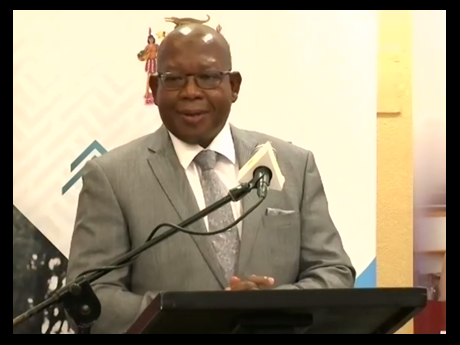
Northern Caribbean University (NCU) president, Dr Lincoln Edwards, has called for increased investment in youth development, including the greater use of church facilities to implement training and empowerment programmes, as a crime-prevention strategy.
“Private educational institutions must be empowered with additional resources to capture these youths and bring them into the mainstream. This is a matter of national security,” Dr Edwards stated, highlighting the RESCUE (Restoring Every Student’s Confidence Using Education) initiative being implemented by NCU to steer at-risk youths away from a life of crime.
He was delivering the keynote address at the launch of the Inter-Agency Network Youth Programme of Kingston and St. Andrew at the Knutsford Court Hotel in Kingston.
At the event, Dr Edwards signed a memorandum of understanding which formalised the university’s outreach arm, the Morris Entrepreneurial Centre (MEC), as a member of the project steering committee of the Inter-Agency Network.
The MEC has offered training to youth, 17-29 years, as part of the Inter-Agency Network Youth Programme, aimed at giving youth life and career skills, getting them active in community development and building their entrepreneurial prowess. In January 2021, representatives of Community Development Committees and 13 youth clubs participated in the MEC’s ‘Development of Community Projects for Implementation’ programme. This exposed participants to proposal writing, business model canvassing, project management and a practicum. The MEC curriculum received accreditation from the National Council on Technical and Vocational Education and Training.
In supporting his proposal for the utilisation of church facilities in carrying out youth empowerment programmes, the NCU President noted that “churches have prime buildings that sometimes are only used two to three times per week and can be utilised as learning centres, internet sites, and places of refuge for unattached youth.”
He argued that the efforts of agencies like police youth clubs and the Peace Management Initiative were inadequate to address the high numbers of youth who are Not in Employment, Education or Training (NEET).
Edwards said that he wanted to see youth change their status from NEET to E.E.T.E. - Ethical, Educated, Trained and Employed.
Meanwhile, Dr Wayne Henry, director general of the Planning Institute of Jamaica, pointed to the relationship between the Inter-Agency Network Youth Programme and the Community Renewal Programme during his remarks at the launch.
“Our society has for decades been battling with the scourge of crime, and violent crimes, in particular, which primarily involves our youth both as victims and perpetrators. This programme, therefore, provides a timely intervention to give youth the opportunity to become active participants in their community development process,” said Henry.
Follow The Gleaner on Twitter and Instagram @JamaicaGleaner and on Facebook @GleanerJamaica. Send us a message on WhatsApp at 1-876-499-0169 or email us at onlinefeedback@gleanerjm.com or editors@gleanerjm.com.