
Salt Spring Literacy Summer Camp to benefit 100 children
Published:Friday | July 23, 2021 | 12:08 AM
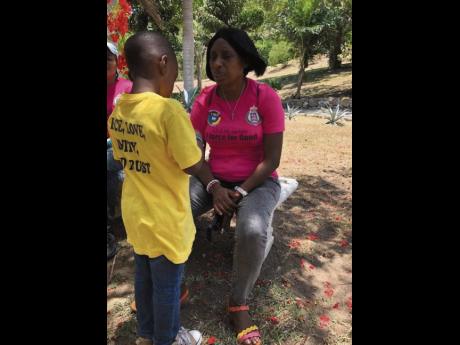
Preparations are in high gear for this year’s staging of the annual Salt Spring Literacy Summer Camp, which is being spearheaded by the St James Police Community Safety and Security Branch (CSSB).
Some 100 children between the ages of six and 17 years are expected to benefit from the camp, which will include virtual classes and field trips.
The camp will commence on Monday, July 26 and end on Friday, August 13.
The initiative, which started in 2019, forms part of social-intervention efforts by the St James Police Division, supported by agencies such as the Jamaica Social Investment Fund and the Planning Institute of Jamaica, as well as corporate entities.
In an interview with JIS News, head of the CSSB in St James, Deputy Superintendent of Police Yvonne Whyte-Powell, said that registration for participation in the three-week initiative is now under way.
“Right now, we are in the preparation phase. We are doing registration, procurement and we are meeting to put the plans together,” she said.
She noted that the focus of the camp will be on building the literacy and numeracy capabilities of the children.
“We will have four teachers that are assigned to the camp; they will be assisting us. We will do mathematics, English, spelling and comprehension. We will teach children to write poems [and] bring out their creativity,” she said.
DSP Whyte-Powell said that the children will be taken on field trips, which will include visits to police stations where they will get the chance to learn more about and interact with their local law-enforcement officers.
“They will not all go at once. They normally enjoy coming to the station(s) as they get to interact with police … showing them the other side of the police,” she noted.
Whyte-Powell said the community has embraced the annual initiative, which has helped to foster a more positive relationship between the police and citizens.
“We want to say that the programme is gaining momentum because the partnership with the community has grown even stronger,” Whyte-Powell said.
“We have seen, for example, a parent having an issue with a child not behaving as they ought to [and] they use us as resource persons to come and mentor that child and try to see if we can help to change that child’s behaviour,” she noted.
Whyte-Powell added that the social-intervention strategy has also helped to reduce crime and violence in the Salt Spring community.