
Holness: Mandatory youth service coming
Published:Tuesday | April 12, 2022 | 12:05 AMAlbert Ferguson/Gleaner Writer
WESTERN BUREAU:
WITH YOUTH responsible for most of the over 1,000 murders committed in Jamaica annually, Prime Minister Andrew Holness says there is an urgent need to rescue them through a national compulsory youth programme.
Holness said the perpetrators of crime in Jamaica, by and large, are young men 16 to 24 years old and that equally, the victims of crime are from the same age group. This demography of society, he noted, has reached emergency status for which new legislative measures are needed.
“In other countries where they have similar problems or other problems that require the use of laws and strategies to bring young people into consolidated programmes, they call them programmes of national service. Others call them national military service,” the prime minister stated.
“But it is clear to me that a part of the solution to our problem is that we must be out there literally recruiting the young men before the gangs recruit them,” said Holness.
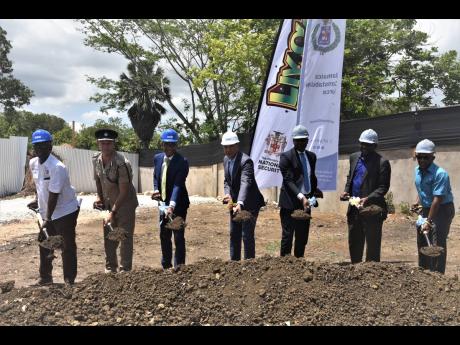
Addressing a groundbreaking ceremony for the construction of the new Little London Police Station in Westmoreland on Thursday, Holness said the compulsory youth programme will capture the problematic demography of society.
Further, he said the mandatory exercise will strengthen the resolve of the Jamaica National Service Corps (JNSC), under the guidance of the Jamaica Defence Force, which was established in 2017, but which was affected by the coronavirus pandemic.
“We’re going to expand this and we’re going to create, genuinely and truly now, a national compulsory service programme because we will not be able to make a very quick and radical change in the trajectory of youth-generated crime, crime generated by young people, without getting our youngsters into a proper programme of socialisation,” he explained.
The prime minister argued that even though crime is driven by economic considerations, social considerations have a greater impact.
“That is the real issue, and we are not going to change the trajectory of the society without taking this kind of action to radically shake up the system to bring those young men in particular, (those) who went to school and achieved nothing. (They) will never achieve anything in life other than to brag about the notches on their pistol and the number of children they sired but didn’t father. We have to make a change there,” the Holness said.
The JNSC is the standard mode of enlistment for persons joining the JDF to serve as full-time soldiers.
Prior to the introduction of the JNSC, persons joining the JDF to serve in a full-time capacity would enlist in the regular force for a standard term of six years, with the option to re-engage for further periods up to retirement. The JNSC service is different from service in the regular force in that it is not a career service, but rather a preparatory phase for future careers.
The JNSC is a new category of military service that sees approximately 1,000 persons aged 18-23 being enlisted in the JDF annually and trained over a one-year period in military, vocational, and life skills.
At the end of training, the majority of participants will be accepted to join the JDF as regular soldiers, while others will be eligible candidates for employment in the private and public sectors.
Over 4,000 youngsters have been engaged in the programme since its inception.
The Government is seeking to engage and rescue approximately 130,000 unattached youths across the island.