
Bath: From bustling to understated
Published:Monday | September 26, 2022 | 12:05 AMPaul H. Williams/Gleaner Writer
Beauty queens Toni-Ann Singh and her cousin, Tashoma Calvin, did not put Bath, St Thomas on the map. That honour goes to Jacob, a runaway enslaved African who worked on Colonel Stanton’s estate, located in the east of the parish.
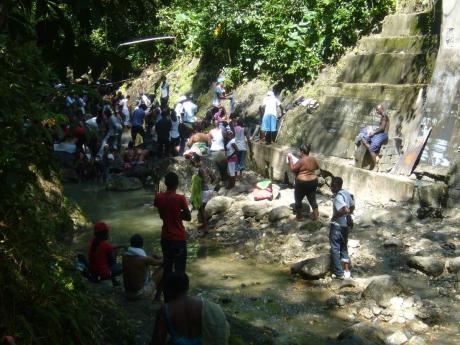
It was on the backlands of said property, about 1695, that Jacob discovered pools of piping-hot water that had seeped from rocks into a river, now known as Sulphur River, below. After soaking his leg ulcers in the hot water over time he was healed serendipitously. The joy of the ‘miracle’ was too sweet to keep, so he risked being maimed or killed for his truancy by returning to his keepers to tell them about the hot-water pools and how they amazingly healed his sores.
After the discovery of the curative nature of the springs they became popular among the local people. The waters were eventually found to contain sulphate, calcium, magnesium, sodium, bicarbonate, silicate, chloride, etc, and Colonel Stanton sold 1,130 acres of the land to the Government in 1699, and the district of Bath of St Thomas the Apostle was established. This change of ownership did not stop the interest in the springs.
The first decades of the 1700s saw a rise in their popularity. They became famous for their healing and therapeutic properties. The news had spread wide and far, and people travelled from far and wide to Bath to heal their gouts, rheumatism, arthritis, stomach disorders, ulcers, skin diseases, venereal diseases, etc. Over time, the place to which Jacob’s discovery had pulled the sick, the maimed, and the lame had turned into a nature hospital for many.
In 1731 Bath became Jamaica’s first city when an Act in the House of Assembly was passed and 500 pounds were released for the development of the town, which was laid out. A road was established, public buildings, including a hospital and a courthouse, were built, and lots sold for dwelling houses. These were not only for people from the local gentry, but also for rich and ailing white Americans and Europeans.
The new village of Bath itself was established on the northern banks of the Plantain Garden River, which runs from west to east, by people who built town houses on lots they had purchased. “Twice a day they would ride up the hill to the spring, sheltering from the sudden rain showers at sheds conveniently placed by the road,” Olive Senior writes in Encyclopedia of Jamaican Heritage. The wealthy ones, who could not get enough of the ‘medicine’, began to build dwelling places not far from the springs further north. Bath was now the social haunt of the aristocracy.
One piece of literature said, “In short, from a destitute and desolate rural area, Bath grew into a rendezvous for the polite and social amusement for the most privileged”. They lived for the spring waters, which some people drank, and the night life. Even pirate Henry Morgan revelled there. Politicians and jurists mingled and debated amid the gaiety and revelry. The politics of England was on their minds and tongues.
Among other things, it is said that it was these strong political sentiments that made the air at Bath toxic, and people were no longer interested in visiting. They were there for the restoration of their health and, ironically, the debauchery. So, the glory days of Bath was short-lived. Now, it was no more a laid-back rendezvous for the elite and the empowered. People drifted away gradually, and the traffic into the place also dwindled. Since then, it is the domicile mainly for the laity.
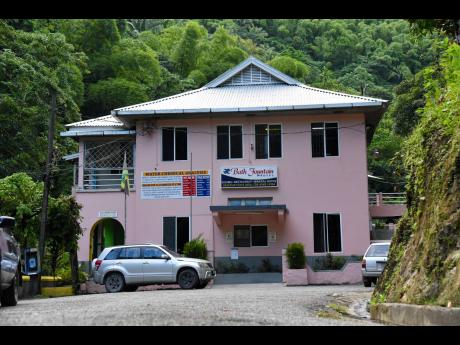
Today, Bath is an understated and quiet town where the once magnificent botanical garden, established in 1779, is dowdy and forlorn. The farming of subsistence and cash crops is the main endeavour of the people. Many of the youths depend on the money they get from doing ‘massage’ work on visitors to the springs to survive. The government-owned hotel and spa is still there, competing with residents for prospective clients daily.
The hot sulphur-laden water is still luring people from all over the country and the world, but the town itself is in need of a revival. Time for Toni-Ann Singh, Tashoma Calvin, and the Government to act.