
A ship that brought a cultural change to Britain
Published:Friday | June 16, 2023 | 1:08 AMClayton Goodwin/ - Gleaner Writer
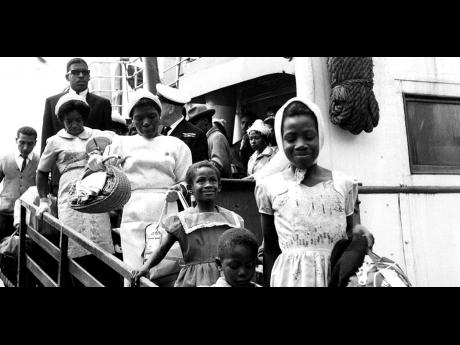
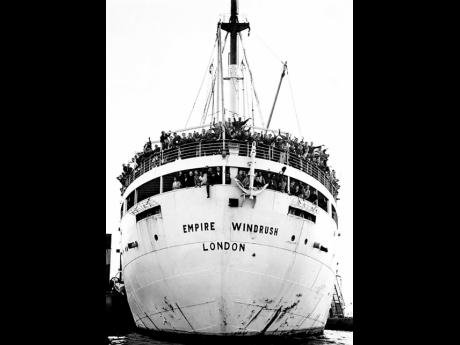
The Empire Windrush, which sailed into Tilbury Dock carrying 1,027 passengers and two stowaways in June 1948, 75 years ago, has come to symbolise the birth, and even the existence, of the Jamaican/West Indian community in the UK.
It wasn’t exactly like that, of course. Much has become myth. West Indians had been here already for many a long year, and the arrival did not make any great impression at the time. By coincidence, I happened to be at Tilbury Dock that same month. My recently retired grandfather, a former decorator/painter there, had taken me with him when he returned to see his former work colleagues. Everybody was talking excitedly about the arrival of the Australian cricketers led by Don Bradman (the legendary Invincibles), but they did not remark on that of the Windrush.
Even so, the impact of the Windrush’s coming has been seismic. Although West Indians, Africans, and Asians had settled here previously in considerable numbers as individuals, this was the first serious attempt towards engaging as a community.
The UK needed help to restore the war damage, and many West Indian servicemen, who had been given a warm welcome when they were here during that conflict, looked forward to renewing that happy experience. They were in for a surprise. Attitudes had become soured through the experience of racial segregation shown by the American forces stationed here as well as by the natural wartime wariness of treating all people who were not local as outsiders.
PREMATURE SENTIMENT
These pioneer immigrants, most, though not all, of whom were Jamaicans, did not expect to stay for long. Much like their immediate forebears at the construction of the Panama Canal and the workers in the Cuban cane fields, they would return “home” when the job was done. It didn’t work out that way. Oswald Denniston, a street trader who settled in Brixton, south London, was among those passengers. He symbolised the entry into a New World by taking the trade name Columbus, the “discoverer”, when he sold his wares in London and the towns around about. Then a schoolboy, I can remember him working his pitch at Rochester Market. Denniston later reflected to the BBC, “Many of us thought we would come here to get a better education and stay for about five years, but then some of us have ended staying for 50 years.”
It is well recorded how those new arrivals who had not made independent arrangements were put in deep shelter at Clapham South underground station. Because the nearest employment office was at Cold Harbour Lane, Brixton, a distinctive Jamaican community grew up in that neighbourhood, where the island’s influence still remains strong.
Friends and relatives soon joined them, as well as others who had been influenced by the premature sentiment of Calypsonian Lord Kitchener, another of the Windrush passengers, singing “ London is the place for me”. That performance was captured on news films, an indication that the coming of the Windrush was also the first time that the British media had recognised the West Indians in their midst as being a distinctive community.
It took 10 years for the realisation to sink in that most of these immigrants would not return to the islands/territories of their birth and the UK would be their new “home”. Racism and antipathies manifest in the riots of 1958 made clear that not everybody in this country welcomed their presence. A new social structure was needed, both positive and protective. The West Indian Standing Conference, and similar community associations, were formed, West Indian businesses established (hairdressers/stylists, food and travel leading the way), media and communications grounded, and a new spirit of arts and entertainment created. Although Jamaica remained “back home”, here was the place they were to live and bring up families.
A demographic shake-up occurred in the decade from the early 1960s. More people flowed in from the erstwhile colonies to join friends and families, and to take up new opportunities, before the Commonwealth Immigration Act of 1962 squeezed the door shut if not quite closed. There was also emigration from the UK as some pioneers thought they might be better off socially and economically with colleagues, compatriots, and relatives in North America.
CULTURAL “NO-MAN’S LAND”
A former Jamaican high commissioner, Derick Heaven, pointed out that urban Jamaicans tended to emigrate to the USA and Canada while those from the countryside came to the UK. For a while, UK Jamaicans seemed to be caught in a cultural “no-man’s land”. In fact, though, they had many cultural roots, which took the experience of years and struggle to fuse.
A definite UK Jamaican/West Indian identity was projected almost as soon as unrestricted entry to the country was cut off.
These few years were indeed the hopeful Season of Camelot. Jamaica and Trinidad and Tobago achieved Independence in 1962, which was a source of pride to their people wherever they were living; the West Indies cricket team of 1963 led by Frank Worrell in the most sporting and harmonious series of matches in the history of the game enhanced a feeling of West Indian togetherness and the sensation of success; the emergence of Millie Small (My Boy Lollipop) in 1964 as the first international entertainment star from the UK-based community boosted confidence; and together with the establishment of Dyke & Dryden Ltd (‘they made a million’) as a profitable commercial enterprise in 1965 constituted a succession of landmarks testifying to the talents of the Windrush passengers, those who came before/after, and their children/grandchildren.
The passengers aboard the Windrush could not have imagined what their arrival had started. Immigrants, from the Caribbean, as much as elsewhere, had come and gone before. These people, though, were here to stay. The docking of one ship, hardly noticed at the time, was a small event in itself. Yet, the impact of its coming has been immeasurable. It is more than a myth. It has provided a focal point for a people’s experience and shaped the society in which we share today.
We have scarcely begun to appreciate the effect.