
Peace Corps exposes youths to realities of climate change
Published:Monday | November 27, 2023 | 12:09 AMGareth Davis Sr/Gleaner Writer
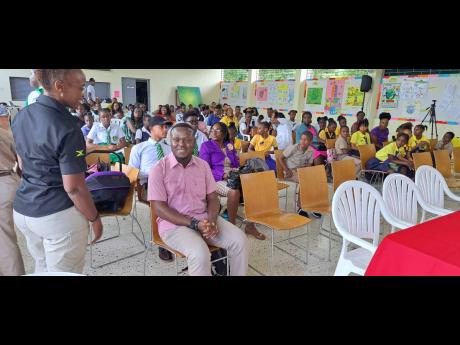

Clon Mel, St Mary
The Peace Corps in Jamaica last Wednesday hosted the Highgate Youth Climate Exposition and Fair at Cape Clear in St Mary, which was aimed at raising awareness and inspiring climate-change mitigation action through informational presentations.
The climate-change expo and fair also targetted children and youths from the early childhood, primary, and secondary levels, as well as the 4-H Club and environmental clubs as it seeks to promote the importance of safe environmental practices to mitigate against the ravages brought about by climate-change.
Peace Corps Country Director Glenda N. Green pointed out that emphasis was on the importance of addressing local climate issues, which would required the attention and input of every resident, so as to adequately deal with climate-change to at least see how best that process can be slowed down.
Green pointed out that the change in weather pattern, which brought about humid conditions over a prolonged period is evidence that climate-change is taking place globally and that farmers in Jamaica had to endure drought conditions, which affected their crops significantly.
“We are trying to increase literacy among the young ones and to expose them to the reality of climate change, so that they know that they have a role to play in making a difference,” she commented.
“Climate-change is real … like the storm last week … the drought that we had earlier this year. People don’t have to be told, but they are looking for answers. And I think that’s what the young people here will get. They will get some answers to take back to parents and others. We have heard that there is a way to slow down climate-change and this can be done by composting, harvesting water, and recycling plastic bottles. Everyone has a role to play and everyone can do something in helping with climate-change,” she added.
Odane Brooks, CARICOM youth ambassador, spoke about the need to have all hands on deck to adequately tackle climate-change, which he said is affecting every country worldwide.
According to Brooks, climate-change is real and Jamaica, as a Third World country, is unable to successfully tackle the problems presented by climate-change. He argued that unless the leaders of developed countries (First World) join together in what he referred to as a collaborated initiative, countries like Jamaica will not reap the desired success in tackling climate-change.
“We are facing a crisis and if we are going to respond effectively, we have to integrate young people into the actual response. And what we’re seeing here today is focally showcasing to young people that you have a role,” he said.
“Our leaders nationally and internationally have to be held to account ... and held to the standard where they take sustainable actions to protect our people. It is not going to be solved by one country or one individual, because we might be doing all the things right here in Jamaica, but on the international stage it is not being done. So it will have the same negative impact, “he added.