
Exploring Guyana from coast to rainforest
Published:Thursday | June 6, 2024 | 12:13 AMDave Rodney/Gleaner Writer -



Guyana is a vast country located in South America. Because of our shared history of British colonialism, slavery and sugar plantation life, we have been, culturally, peas in the same Caribbean pod for generations. CARICOM is headquartered there. Fortunes have changed dramatically for this nation of warm welcomes. Suddenly, thanks to the discovery of oil and natural gas, Guyana has become the world's fastest-growing economy at present. I visited recently to explore the scenic side, and to learn about its glorious past, as well as to take a peek into its promising future.
Nearly six hours of flying direct to Georgetown from New York had rendered my party officially tired, but after checking in at The Georgetown Pegasus at midnight, we braved fatigue and headed straight for a nightclub called the Palm Court, where the vibe was upbeat and the reggae music was pounding. We sampled the popular Guyanese Chinese cuisine there and paired the early-morning meal with an aged El Dorado rum, unquestionably one of the finest rums in the world. The following day, we travelled to the West Bank of the capital city, crossing the Demerara River to have lunch with Grumble's family in Plantation Walk on the West Bank. Grumble is a popular humanitarian and concert promoter there. His large family, including parents, siblings, children and grandchildren, were graciously accommodating and his mother, Pamela Gordon Daniels, had cooked up a feast for us that included roti, curried beef, curried chicken, cook-up rice, chow mein and other delights. Outside in the yard, sheep and goats were grazing together. The livestock must have been wondering what the commotion was about on the upstairs verandah as visually impaired Jamaican artiste Nigy Boy, who was with us, was teaching Mother Pamela how to do the latest Jamaican dancehall moves. The entire family roared with happiness and laughter, and the time spent in the hospitality of a private home was priceless. More important, it was a powerful reminder of the deep love that is shared between Guyanese and Jamaicans.
A SUNSET CRUISE ON THE DEMERARA
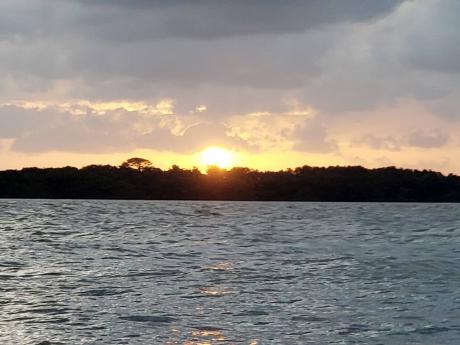
My eco adventure in Guyana began in earnest on Thursday evening, when I joined two other visitors for a sunset cruise in a private boat along the Demerara River. We boarded near Stabroek Market, in the bustling heart of town. The Demerara River is the central nervous system for the city of Georgetown. It dissects the city in east and west sides, and it is an important artery for moving goods to and from the interior. We spotted a massive Japanese ship that had just sailed in from Kingston, where it had offloaded cars, and it was doing the same thing in Georgetown. In GT, as the city is familiarly called, thousands cross the river each day to go to work and return home either in commuter ferries or driving across the world's once-longest floating bridge. And grown Georgetown men tell lavish tales about how they would swim across the one-mile rippling river as boys, defying both gravity and the warnings of their parents.
We did an easy and relaxing three-hour sunset cruise on the river in a small speed boat manned by a captain, his assistant, and our very knowledgeable tour guide, Nadir 'Carlos' Allie. We went under the floating Harbour Bridge and watched the sun begin its plunge over the glistening western horizon. We studied flocks of a variety of colourful birds, including the scarlet ibis, glide across the evening sky as they returned to roost in the thicket of emerald and olive-green mangroves. Guyana boasts over 820 species of birds and some can be seen along the river. Perfect peace! An easy, rejuvenating ride with no push and no shove.
Along the way, we learned about sugar plantation days on the West Bank, and that the eastern side of the river is much deeper than the western side. Indians arrived in Guyana in large numbers around 1838 to join the workforce after the emancipation from slavery. The whole business of tides is very important to the management of the river, especially since a part of the city is below sea level. Our guide brought lots of drinks on board, including more aged El Dorado rum. I refrained, opting instead for chilled coconut water. He brought along cutters, too, which are snacks that accompany drinks during a lyme. On the insistence of the guide, I succumbed to sampling a most delicious local beer called Banks. We all enjoyed an absolutely beautiful evening on the waters of the Demerara.
EARLY-MORNING VISIT TO TOWN
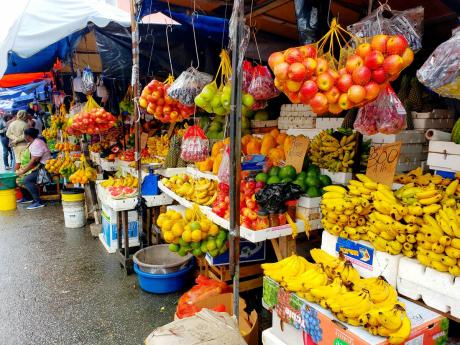
We started Friday morning very early at Bourda Market, the largest of four city markets. Pretty displays of all the fruits and vegetables you'd expect to see in a tropical region, and a few new ones, too. We had breakfast with Auntie Sattie, a local Indian vendor who prepares breakfast for early risers. The food is cheap and delicious and the variety is astounding: curries, chutneys, breads, eggplant fritters, roti in all its varieties, fish, meats, porridge, you name it. The plan for the remainder of the morning was to see a few iconic buildings downtown. Some of the tour had to be aborted due to heavy intermittent showers, with raindrops big like guinep seeds. However, I still managed to see the Cara Lodge, a charming colonial-style hotel built in the mid 1800s but still in use, with its lush, cool courtyard. I also saw the Walter Roth Museum of Anthropology and St George's Cathedral, one of the world's tallest free-standing wooden structures. The Botanical Gardens is a must-see. It is a jaw-dropping display of rare tropical flora, and a nearby pond is home to the endangered West Indian manatee. On Friday night at a busy reggae bar called White Castle, I feasted on a most delicious fish called Banga Mary, fried in a batter, with chips. Then we went to check out the Sea Wall at the edge of the Atlantic Ocean. That night, it was the venue for a lively, unending stretch of party people of all ages, vendors, sound systems, food aromas of many ethnic origins and an array of beverages. It was a holiday weekend, too, so the energy there felt like an all-night carnival. All I could do was a quick walk-through. I had an early start on Saturday morning to explore Guyana's remote rainforest at the edge of the border with Brazil.
WATERFALLS AND ECO ADVENTURE IN THE HIGHLANDS
The following morning, it rained cats and dogs as I studied the shape and size of the small plane that was to take us to the mountainous interior. Small planes and bad weather don't mix well. But my spirit was boosted when I learnt that the weather south of Georgetown was postcard-perfect. The flight was surprisingly smooth and the first stop was Kaieteur waterfalls, the crown jewel of Guyana's tourism. This magnificent vista is the highest single-drop waterfall in the world, and it plunges its gold-coloured spray 741 feet down in the valley below on the Potaro River. One has to be in fairly good physical shape to endure the hike from the welcome house where the plane lands to the lookout point for the waterfalls, but the invigorating walk is more than worth it. This majestic sight makes perfect Instagram memories. The falls are located on the Guiana Shield in raw jungle and this area is said to be roughly two billion years old, making it this planet's oldest surface. The region includes a rainforest system that is part of a vast watershed between the Amazon and the Orinoco rivers. Along the hike one can see creeks, crystal-clear streams rippling over rock stones, rare plants that ingest insects, and the golden frog whose entire life cycle is spent in the water that collects in the massive Tank Bromeliads. On a clear and lucky day, in the distant highlands, one could have the good fortune of spotting a condor, the largest bird in the Western Hemisphere, gliding in the sky. Or a sighting of the Harpy eagle, arguably the world's most powerful bird of prey.
We ended the Kaieteur leg of the trip with a tasty chicken and rice and peas lunch.
"Dem cook good up here in the bush", a Jamaican man who was a part of the group of eight exclaimed to his English wife, wiping away beads of sweat with a towel in his left hand, and slapping his belly with the right.
His loud belch seemed to announce that it was time to board the waiting plane for our next stop. This was a shorter ride than the first, and the pilot flew low, enabling us to take photos of the unexplored, verdant mountain range below, disturbed only by meandering rivers. I wondered if some of Guyana's big cats lived below, like the elusive puma, the daring jaguar or the solitary ocelot. And perhaps a congress of baboons scampering in tree tops. In less than half-hour we arrived at the border of Brazil, at Orinduik Falls. This was another jaw-dropping natural wonder. The Ireng River that forms the border with Brazil cascades over terraces of solid jasper, a semi-precious stone that is abundant in this area. The river is fairly shallow and inviting, so most of us jumped in for a refreshing swim. The surrounding grasslands are a hand-painted canvas of lime- green with the Pakaraima Mountains forming the backdrop. Brazil lies on the other side of the river and when the plane lands, a few Amerindian mothers and their children wade across the river to the Guyana side with souvenirs for sale. We were told that once we depart, they wade back. On an interesting note, the Ireng River is the only major river in Guyana that flows from north to south, and its waters eventually flow into the mighty Amazon River system.
There is still so much more to do and see in this cricket-loving land, where rivers have islands within them that are bigger than Barbados. More airlines than ever before are now flying into Guyana's two Georgetown airports. New hotels, eco lodges, resorts and tour companies are popping up all over the country to respond to the growing tourist industry. Guyana's number two overseas market region for visitors is the Caribbean. Making a visit there is now as easy as ABC, whether you're in the USA, the Caribbean, UK or Canada. For more, go to guyanatourism.com .