
The road to the Garvey pardon – Part IV
Garvey charged and convicted
Published:Saturday | January 25, 2025 | 4:12 AMPaul H. Williams/Gleaner Writer
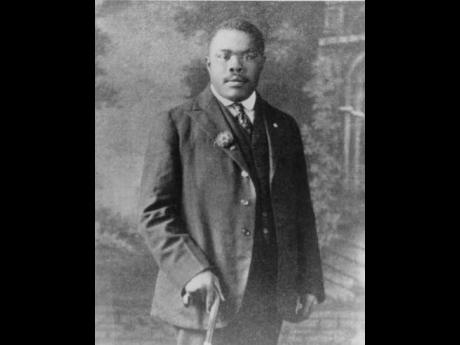
WHILE MARCUS GARVEY’S popularity and influence were growing in the USA, so was the suspicion with which he was held by US government officials. They had never seen the likes of him, and the fact that he was not an American made the suspicion even stronger, and they embedded informers, some black people, to spy on Garvey’s Universal Negro Improvement Association (UNIA) activities.
They continually harassed Garvey and legitimate UNIA officers. And, in July 1919, the Bureau of Investigation (BOI), a forerunner to the Federal Bureau of Investigation, began to seriously monitor the activities of Garvey. The head of the Bureau, J. Edgar Hoover, led the government’s campaign against Garvey, and he stopped at nothing to get evidence against him.
Hoover hired the bureau’s first black agent, James Wormley Jones, and one of Garvey’s closest confidants, Herbert Boulin, a Jamaican, was also a spy for the BOI. The agents followed Garvey in over 24 cities. Other federal agencies were brought in and, in New York, the Police Department, and the Office of the District Attorney, too, were on Garvey’s trails.
Black American politicians, hell-bent on destroying Garvey, complained to Edwin P. Kilroe, then a New York City assistant district attorney. He started to investigate the UNIA and constantly summoned Garvey to his office for ill-timed meetings, during which he kept raising concerns about the Black Star Line, Garvey’s shipping company.
After about the ninth visit, Garvey published an anti-Kilroe article in The Negro World newspaper, alleging that the district attorney had offered former UNIA auditors immunity from prosecution for supplying incriminating information against Garvey.
This action was regarded as criminal libel, for which Garvey was arrested and held at the Manhattan Detention Centre in 1919. He was released after posting bail in the sum of $3,000. The matter was later concluded when Garvey offered a public apology and printed a retraction.
Things got very serious when, on the 19th of October 1919, a man named George Tyler went to Garvey’s office at 56 West 135th Street, New York City and informed him that Kilroe had sent him there to “get Garvey”. Suddenly, he fired four shots at Garvey from a .38-calibre revolver.
Garvey was wounded in his right leg and the right side of his skull, but survived the attempted assassination. His attacker was arrested. The next day, it was reported that Tyler committed suicide in jail, just before he was to be taken before a city magistrate. It seemed that he was silenced, because Garvey had to go, and nothing was going to keep him in the States.
While Garvey was on a business trip to Central America and the Caribbean in early 1921, he was purposefully kept out of the US for several months. His absence provided a great opportunity for the US government to get important information on his operations, especially those of the Black Star Line.
In January 1923, eight prominent black leaders wrote a letter to the US attorney general urging him to “use his full influence to disband and completely destroy this vicious movement … and vigorously and speedily push the government’s case against Marcus Garvey for using the mail to defraud”.
Soon after that letter, Marcus Garvey and three UNIA officers were arrested and charged with mail fraud. Garvey, Orlando Thompson (vice-president), Elie Garcia (secretary), and George Tobias (treasurer) of the Black Star Line Shipping Company were charged with fraudulently collecting money through the US mail services to purchase a ship, the SS Phillis Wheatley, that was never delivered.
Though they were released on bail, the trial did not start until summer 1923. While they waited for the trial, another letter, this one written by eight prominent black leaders, was sent to the US attorney general urging him to use everything at his disposal to push the government’s case again Garvey.
The four-week trial ended on June 18, 1923. After 10 hours, the jury returned with a guilty verdict, on one count of mail fraud. He was sentenced to a maximum of five years in prison. He was also fined US$1,000 and ordered to pay the entire cost of the trial. His three co-defendants were found not guilty.
Garvey was locked up in the Manhattan Detention Center, as the court had initially refused to give him bail. A stay of execution was granted, however, pending appeal. After three months, he was granted a $15,000 bail on September 10, 1923. The conviction and the pending appeal did not tear down Garvey’s resolve, as he was all over the place again with his messages of black pride and unity.
Yet, the authorities would not leave Garvey alone. In August 1924, while he was still on bail, the Justice Department issued another indictment against him, this time on income tax fraud. He eventually lost the appeal against the mail fraud and was taken into custody in early 1925. In February, he began serving his sentence at the Atlanta Federal Penitentiary in Georgia.