
Rabbi Yaakov Raskin | Two freedoms, and what Passover means in Jamaica
Published:Sunday | March 22, 2026 | 12:05 AM

Every year when April arrives, lines from two different songs find their way back into my head, and I find myself thinking about how much they have in common.
The first is from Paul Robeson: “when Israel was in Egypt land, let my people go.” The second, which any Jamaican can finish from memory: “ Emancipate yourself from mental slavery, none but ourselves can free our mind.”
Both speak to freedom – something that every human being, in every generation, understands without needing an explanation. The hunger for freedom which is alive in all of us is celebrated in the upcoming holiday of Passover, beginning at sundown on Wednesday, April 1, and continuing until nightfall on April 9.
I have been thinking about why this holiday, after more than 3000 years, is as important now as it was the first Passover, when the Jewish people left Egypt.
Like the two songs above, Passover celebrates two different kinds of freedom:
The first is the freedom most people think of when they hear the word: freedom from. Freedom from oppression, from a system that holds you down, from a Pharaoh who has decided your life belongs to him.
That is the story of the Exodus. A people enslaved in Egypt, crying out, and being brought out by a power greater than any empire. It is a story that has given courage to the oppressed on every continent, and for Jamaica, with its own history of bondage and resistance, has understood this story in its bones.
But the Rebbe, Rabbi Menachem M. Schneerson, of blessed memory, taught that Passover comes around every year not only to remind us of what our ancestors escaped from, but to inspire us toward a second kind of freedom: freedom to. Freedom to live as our truest self. Freedom to pursue a life of meaning and purpose rather than one driven by anxiety, distraction, or the pressure to simply survive.
Every year, the Rebbe would wish people a Passover holiday that brings “true freedom, freedom from anxiety, material and spiritual, from anything which might distract from serving G-d wholeheartedly and with joy.” That is a wish about the world we live in right now, this April, on this island.
HOW TO CELEBRATE PASSOVER
For those in Jamaica’s Jewish community preparing to observe Passover this year, let me explain what the holiday asks of us.
In the weeks before April 1, Jewish families clean their homes thoroughly, searching for and removing all chametz, which is any leavened product: bread, pasta, cereals, anything made from grain that has been allowed to rise. The tradition is to go room by room, checking corners and cabinets, making sure nothing is overlooked. On the morning before Passover begins, any remaining chametz (leavened products) is burned.
In place of bread, we eat matzah: unleavened flat bread, made from flour and water, prepared and baked in under 18 minutes so that it has no time to rise. This is the bread our ancestors carried out of Egypt in haste, with no time to wait for the dough to leaven. Eating it today connects us, physically, to that original departure.
Chabad has hand-baked shmurah matzah available for the community this year. Please reach out and I will make sure you have a box for the Passover Seder.
The heart of Passover is the Seder, the ceremonial meal held on the first two nights of the holiday, April 1-2 after nightfall. At the Seder table, families gather to retell the Exodus story using symbolic foods, four cups of wine, bitter herbs, and the Haggadah, the ancient text that guides the evening. The word “seder” simply means “order,” because the evening follows a sequence designed to bring the story alive, not merely to recite it.
CENTURIES OF PASSOVER IN JAMAICA
What struck me deeply when a community member began searching The Gleaner archives was discovering how Jews in Jamaica have been holding these same seder meals for centuries. Long before I arrived on this island, Jamaican Jewish families were gathering in April with the same Haggadah, the same matzah, the same questions and the same answers. And they called their seder gathering not a “seder” but a “haggadah,” a distinctly Jamaican Jewish custom found nowhere else.
In the late 1800s, the Sollas family would bake matzahs for the community, and imported special equipment to bake it specially on the island. Additionally, grocery stores such as S. M. DaCosta & Co. would stock kosher products such as tongues, sausages and cheese for the Passover holiday. As far back as the 1700s, Jewish people would apply to the government for special permits to import Kosher meat.
Since the 1830s, companies and businesses on the island would close for Passover and place a formal announcement in The Jamaica Gleaner to say so. Up until the 1980s, the Kingston Industrial Garage, founded by the Henriques brothers, would announce their closure on Passover as well. For a business to publicly close its doors and tell the whole city why, is not a small thing. It’s a statement that we are here, this is who we are, and this is what we are going to do.
PASSOVER IN JAMAICA THIS YEAR
This year, if you are Jewish and living in Jamaica and wondering how to observe the holiday properly, please do not hesitate to reach out. If you need matzah, kosher meat for your seder, a haggadah, or simply a seder to go to, Chabad of Jamaica is here. No one should spend Passover alone.
We will be hosting two communal seders across the island on both seder nights (April 1-2). There will be one in the capital of Kingston and one in the tourism capital of Montego bay. We will be having a delicious four course meal with fish, famous matzah ball soup, kosher jerk chicken and kosher brisket.
And for those who don’t celebrate, the holiday’s message is for you as well. The importance of finding freedom from whatever holds you back, and the freedom to become who you were meant to be. That is a lifelong journey, and Passover says you do not have to wait until conditions are perfect to take the first step.
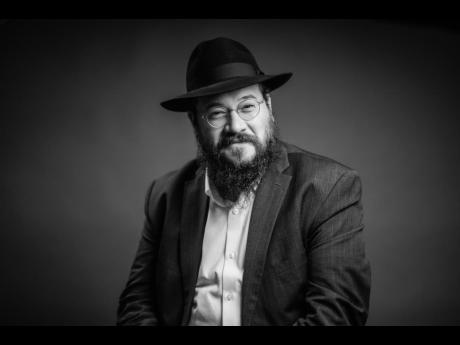
Rabbi Yaakov Raskin has served as the Chabad-Lubavitch emissary to Jamaica since 2014. Known to many as “Jamaica’s rabbi,” he and his wife Mushkee direct Chabad Jamaica, providing Jewish education, community services, and humanitarian outreach to locals and visitors across the island. You may reach him at Jewishjamaica.com