
Unemployment surge pushing state funds in US toward insolvency
Published:Wednesday | April 29, 2020 | 4:32 PM
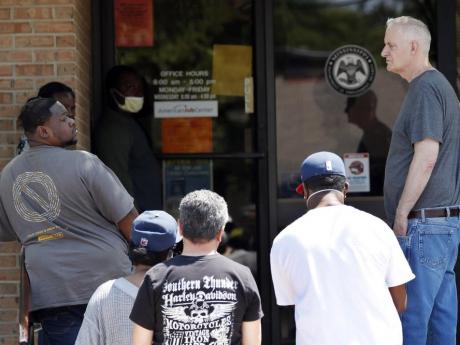
JEFFERSON CITY, Missouri (AP) — A surge in unemployment stemming from the coronavirus shutdown of large parts of the US economy is starting to push some state jobless funds toward insolvency.
At least a half-dozen states already have notified the federal government that they could need to borrow billions of dollars to pay unemployment benefits because their own trust funds are running out of money.
While the shortfalls won’t prevent unemployed workers from getting government aid, the federal loans could lead to higher taxes for businesses in future years to repay the debt.
US Treasury data shows California, Connecticut and Illinois all expect to borrow soon from the federal government to prop up their unemployment funds.
Officials in Massachusetts, New York and Texas confirmed to The Associated Press that they also have notified the federal government of their anticipated need for loans.
All six of those states’ unemployment funds ranked among those at the greatest risk of insolvency because they didn’t have adequate reserves to weather a recession, according to a US Department of Labour report released before the coronavirus outbreak.
Many more states also could need federal loans given the widespread economic damage.
“I can’t imagine a state that’s not going to have to borrow by the end of this year,” said Michele Evermore, a senior policy analyst at the National Employment Law Project, a New York-based group that advocates for low-wage workers and the unemployed.
As of mid-April, about 26 million Americans had filed unemployment claims in the first five weeks since governments began ordering people to stay home and some businesses to close as a precaution against spreading the virus that causes the COVID-19 disease.
It’s already the worst stretch of job losses in US history.
New unemployment data to be released Thursday is expected to push that total even higher.
State unemployment benefits are funded by special taxes on employers and paid through state trust funds. Each state sets its own tax rate and benefit payment amounts.
When trust funds run low, states can get federal loans that must be repaid with interest.
Loans taken out this year would need to be repaid by November 2022, or else the federal government could raise taxes on businesses to recoup the money.
Follow The Gleaner on Twitter and Instagram @JamaicaGleaner and on Facebook @GleanerJamaica. Send us a message on WhatsApp at 1-876-499-0169 or email us at onlinefeedback@gleanerjm.com or editors@gleanerjm.com.