
India fights virus surge, steps up jabs amid export row
Published:Thursday | April 1, 2021 | 9:51 AM
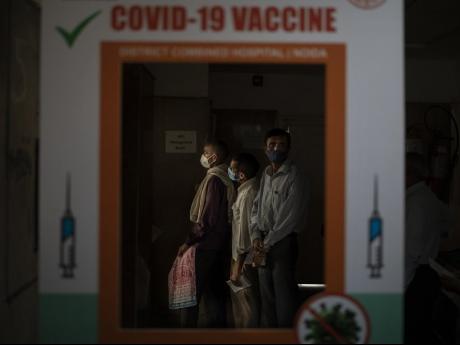
NEW DELHI (AP) — There isn’t any room at Sion Hospital in India’s megacity, Mumbai - approximately all 500 beds reserved for COVID-19 patients are occupied.
And with new patients coming in daily, a doctor said the hospital is being forced to add beds every second day.
Waiting lists in some hospitals in the city are so unreasonable that “numbers can’t define the burden on hospitals,” said Dr Om Shrivastava, an infectious diseases expert.
Scenes like this were common last year when India looked set to become the worst affected country with daily cases nearly crossing 100,000.
For several months, infections had receded, baffling experts, then since February, cases have climbed faster than before with a seven-day rolling average of 59,000.
On Thursday, India reported more than 72,000 cases, its highest spike in six months.
“I think it’s going to be worse (than last year),” said Shrivastava.
“If it doesn’t quell in a few months time, we may be in for the long haul.”
Experts say there is a pressing need for India to bolster vaccinations, which started sluggishly in January.
The country is expanding its drive to include everyone over 45 years from Thursday.
But scaling up vaccinations in India has implications beyond its borders.
Spotlight on Serum Institute of India - the world’s largest maker of vaccines and key global supplier - to cater to cases at home has resulted in delays of global shipments of up to 90 million doses under the World Health Organization-backed COVAX programme, an initiative devised to give countries access to vaccines regardless of their wealth.
Serum Institute declined to comment.
This could have negative consequences worldwide, setting back supplies in developing countries reliant on Indian exports. But some health experts argue that India’s rising caseload is a global public health problem too.
India has exported more vaccines, 64 million doses than it has administered its own population at 62 million doses, official data showed.
Irrespective of where vaccines are being made, we need to send them to “places where you’re seeing an upward trajectory,” said Bhramar Mukherjee, a biostatistician at the University of Michigan who has been tracking the pandemic in India.
And India certainly qualifies: Nearly all its 28 states have seen a rise.
Six states account for more than 78% of India’s total caseload, which at 12 million is the third-highest in the world.
Cases have increased six-fold in less than two months, and deaths - a lagging indicator in the pandemic that follows hospitalisation - are rising too.
Follow The Gleaner on Twitter and Instagram @JamaicaGleaner and on Facebook @GleanerJamaica. Send us a message on WhatsApp at 1-876-499-0169 or email us at onlinefeedback@gleanerjm.com or editors@gleanerjm.com.