
Hurricane Ida strikes Louisiana, New Orleans hunkers down
Published:Monday | August 30, 2021 | 12:06 AM
NEW ORLEANS (AP):
Hurricane Ida blasted ashore on Sunday as one of the most powerful storms ever to hit the US, rushing from the Louisiana coast towards New Orleans and one of the nation’s most important industrial corridors.
The Category 4 storm with winds of 150mph (230kph) hit on the same date Hurricane Katrina ravaged Louisiana and Mississippi 16 years earlier, coming ashore about 45 miles (72 kilometres) west of where Category 3 Katrina first struck land.
The rising ocean swamped the barrier island of Grand Isle as landfall came just to the west at Port Fourchon. Ida made a second landfall about two hours later near Galliano. The hurricane was churning through the far southern Louisiana wetlands, with the more than two million people living in and around New Orleans and Baton Rouge up next.
“This is not the kind of storm that we normally get. This is going to be much stronger than we usually see and, quite frankly, if you had to draw up the worst possible path for a hurricane in Louisiana, it would be something very, very close to what we’re seeing,” Gov John Bel Edwards told The Associated Press (AP).
People in Louisiana woke up to a monster storm after Ida’s top winds grew by 45mph (72kph) in five hours, as the hurricane moved through some of the warmest ocean waters in the world, in the northern Gulf of Mexico.
FAST GROWTH
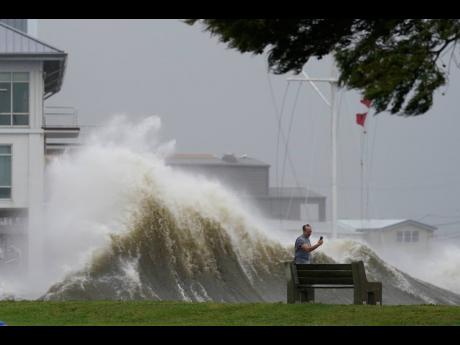
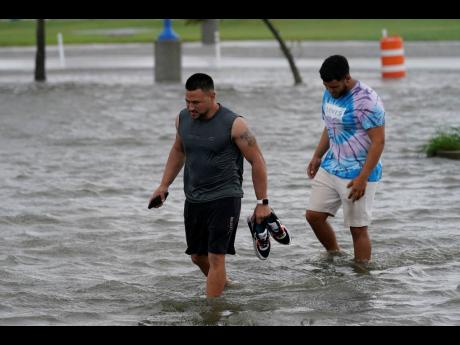
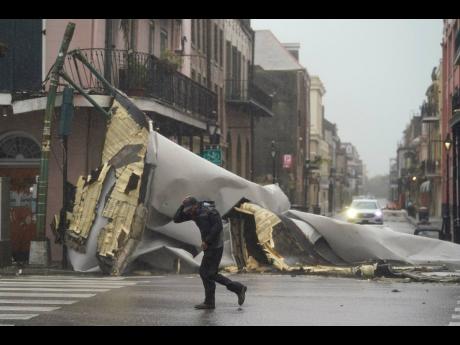
Wind tore at awnings and water spilled out of Lake Ponchartrain in New Orleans before noon on Sunday. Officials said Ida’s swift intensification from a few thunderstorms to a massive hurricane in just three days left no time to organise a mandatory evacuation of the city’s 390,000 residents. Mayor LaToya Cantrell urged residents to leave voluntarily. Those who stayed were warned to prepare for long power outages amid sweltering heat.
“This is the time. Heed all warnings. Ensure that you shelter in place. You hunker down,” Cantrell told a news conference.
Nick Mosca, out walking his dog on Sunday morning before the storm hit, said he’d like to have been better prepared. “But this storm came pretty quick, so you only have the time you have,” Mosca said.
Ida’s 150mph winds tied it for the fifth-strongest hurricane to ever hit the mainland US.
Those winds whipped through Port Fourchon, where boats and helicopters gather to take workers and supplies to oil platforms in the ocean and the oil extracted starts its journey towards refineries. The port handles about a fifth of the nation’s domestic oil and gas, officials said.
Edwards said he watched a live video feed from the port area as Ida came ashore.
“The storm surge is just tremendous. We can see the roofs have been blown off of the port buildings in many places,” Edwards told the AP.
Along with the oil industry, Ida threatened a region already reeling from a resurgence of COVID-19 infections, due to low vaccination rates and the highly contagious Delta variant.
New Orleans hospitals planned to ride out the storm with their beds nearly full, as similarly stressed hospitals elsewhere had little room for evacuated patients. And shelters for those fleeing their homes carried an added risk of becoming flashpoints for new infections.
Forecasters warned that winds stronger than 115mph (185kph) were expected in Houma, a city of 33,000 that supports oil platforms in the Gulf.
Gulfport, Mississippi, to the east of New Orleans, was seeing the ocean rise and heavy rainbands. Empty lots where houses once stood before Katrina are still common in coastal Mississippi, and Claudette Jones evacuated her home east of Gulfport as waves started pounding the shore.
“I’m praying I can go back to a normal home like I left,” she said. “That’s what I’m praying for. But I’m not sure at this point.”
Comparisons to the August 29, 2005 landfall of Katrina weighed heavily on residents bracing for Ida. Katrina was blamed for 1,800 deaths as it caused levee breaches and catastrophic flooding in New Orleans and demolished oceanfront homes in Mississippi. Ida’s hurricane-force winds stretched 50 miles (80 kilometres) from the storm’s eye, or about half the size of Katrina.
Ramsey Green, who is in charge of New Orleans infrastructure, emphasised before the worst of the storm that when it comes to protections against storm surge, the city is in a “very different place than it was 16 years ago”.
FRAGILE SYSTEM
Water should not penetrate the levee system, which has been massively overhauled since Katrina. But if forecasts of up to 20 inches (50 centimetres) of rain come true, the city’s underfunded and neglected network of pumps, underground pipes and surface canals likely can’t keep up, Green said.
“It’s an incredibly fragile system,” he said.
About 350,000 customers were already out of power as of Sunday afternoon, according to PowerOutage.US, which tracks outages nationwide.
The region getting Ida’s worst could face devastation to its infrastructure, which includes petrochemical sites and major ports, said Jeff Masters, a former National Oceanic and Atmospheric Administration hurricane hunter meteorologist and founder of Weather Underground.
The state’s 17 oil refineries account for nearly one-fifth of the US refining capacity, and its two liquefied natural gas export terminals ship about 55 per cent of the nation’s total exports, according to the US Energy Information Administration. Louisiana is also home to two nuclear power plants, one near New Orleans and another about 27 miles (about 43 kilometres) northwest of Baton Rouge.
The Interstate 10 corridor between New Orleans and Baton Rouge is a critical hub of the nation’s petrochemical industry, lined with oil refineries, natural gas terminals and chemical manufacturing plants. Entergy, Louisiana’s major electricity provider, operates two nuclear power plants along the Mississippi River.
The Louisiana Department of Environmental Quality was in contact with more than 1,500 oil refineries, chemical plants and other sensitive facilities and will respond to any reported pollution leaks or petroleum spills, agency spokesman Greg Langley said. He said the agency would deploy three mobile air-monitoring laboratories after the storm passes to sample, analyse and report any threats to public health.
President Joe Biden approved emergency declarations for Louisiana and Mississippi ahead of Ida’s arrival. He said on Sunday the country was praying for the best for Louisiana and preparing for the worst.
“As soon as the storm passes, we’re going to put the country’s full might behind the rescue and recovery,” Biden said.
Edwards warned his state that they face difficult days, if not weeks, recovering from the storm.
“Many, many people are going to be tested in ways that we can only imagine today. But I can also tell you that as a state, we have never been more prepared,” the governor told a news conference.