
SRI LANKA
PM sworn in as interim president
Published:Saturday | July 16, 2022 | 12:07 AM
COLOMBO (AP):
Sri Lanka’s prime minister was sworn in on Friday as interim president until Parliament elects a successor to Gotabaya Rajapaksa, who fled abroad and resigned after mass protests over the country’s economic collapse.
Lawmakers were to convene today to choose a new leader who would serve the remainder of Rajapaksa’s term, which ends in 2024.
A tenuous calm was restored in the capital of Colombo on Thursday after protesters who had occupied government buildings retreated, but with the political opposition deeply fractured, a solution to Sri Lanka’s many problems seemed no closer.
As people celebrated in the streets, Parliament speaker Mahinda Yapa Abeywardana promised a swift and transparent political process that should be done within a week.
The new president could appoint a new prime minister, who would then have to be approved by Parliament. After Rajapaksa resigned, pressure on the Prime Minister Ranil Wickremesinghe was rising.
In a televised statement, Wickremesinghe said he would initiate steps to change the constitution to curb presidential powers and strengthen Parliament, restore law and order and take legal action against “insurgents”.
It was unclear to whom he was referring, although he said true protesters would not have gotten involved in clashes near Parliament on Wednesday night, when many soldiers reportedly were injured.
“There is a big difference between protesters and insurgents. We will take legal action against insurgents,” he said.
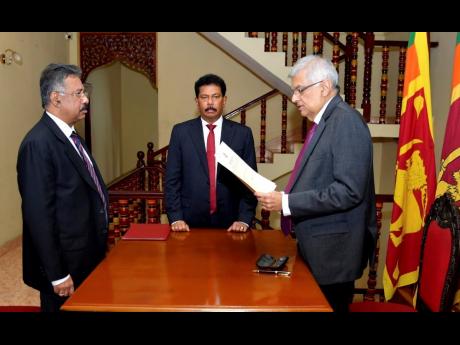
Wickremesinghe became acting president after Rajapaksa fled Sri Lanka on Wednesday, flying first to the Maldives and then to Singapore. The prime minister’s office said Wickremesinghe was sworn in Friday as interim president by Chief Justice Jayantha Jayasuriya.
Sri Lanka has run short of money to pay for imports of basic necessities such as food, fertilizer, medicine and fuel for its 22 million people. Its rapid economic decline has been all the more shocking because, before this crisis, the economy had been expanding, with a growing, comfortable middle class.
The protests underscored the dramatic fall of the Rajapaksa political clan that has ruled Sri Lanka for most of the past two decades.
The Rev. Jeewantha Peiris, a Catholic priest and protest leader, said the country had “come through a hard journey”.
“We are happy as a collective effort because this struggle of Sri Lanka was participated by all the citizens of Sri Lanka, even diaspora of Sri Lanka,” he said.
Protesters cooked and distributed milk rice – a food Sri Lankans enjoy to celebrate victories – after Rajapaksa resigned. At the main protest site in front of the president’s office in Colombo, people welcomed his resignation but insisted Wickremesinghe also should step aside.
“I am happy that Gotabaya has finally left. He should have resigned earlier, without causing much problems,” Velayuthan Pillai, 73, a retired bank employee, said as patriotic songs blared from loudspeakers.
“Ranil is a supporter of Gotabaya and other Rajapaksas. He was helping them. He also must go,” he added.
Sri Lanka remains a powder keg, its economy in ruins. And the military warned Thursday that it had powers to respond in case of chaos – a message some found ominous.