
Trump pauses tariffs on most nations for 90 days
Raises taxes on Chinese imports
Published:Thursday | April 10, 2025 | 12:09 AM
WASHINGTON (AP):
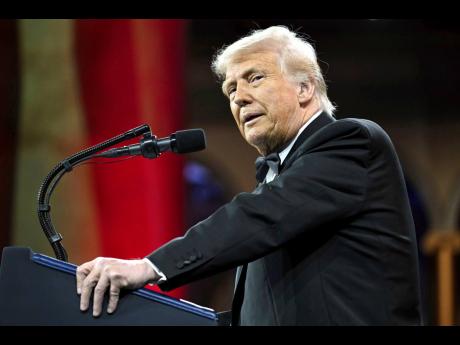
Facing a global market meltdown, President Donald Trump on Wednesday abruptly backed down on his tariffs on most nations for 90 days, but raised the tax rate on Chinese imports to 125 per cent.
It was seemingly an attempt to narrow what had been an unprecedented trade war between the US and most of the world to a showdown between the US and China. The S&P 500 stock index jumped nearly seven per cent after the announcement, but the precise details of Trump’s plans to ease tariffs on non-China trade partners were not immediately clear.
Trump posted on Truth Social that because “more than 75 Countries” had reached out to the US government for trade talks and have not retaliated in meaningful way “I have authorized a 90 day PAUSE, and a substantially lowered Reciprocal Tariff during this period, of 10%, also effective immediately”.
The 10 per cent tariff was the baseline rate for most nations that went into effect on Saturday. It’s meaningfully lower than the 20 per cent tariff that Trump had set for goods from the European Union, 24 per cent on imports from Japan and 25 per cent on products from South Korea. Still, 10 per cent would represent an increase in the tariffs previously charged by the US government.
The announcement came after the global economy appeared to be in open rebellion against Trump’s tariffs as they took effect Wednesday, a signal that the US president was not immune from market pressures.
Business executives were warning of a potential recession caused by his policies, some of the top US trading partners are retaliating with their own import taxes and the stock market is quivering after days of decline.
White House press secretary Karoline Leavitt said the walk back was part of some grand negotiating strategy by Trump.
“President Trump created maximum negotiating leverage for himself,” she said, adding that the news media “clearly failed to see what President Trump is doing here. You tried to say that the rest of the world would be moved closer to China, when in fact, we’ve seen the opposite effect the entire world is calling the United States of America, not China, because they need our markets.”
But market pressures had been building for weeks ahead of Trump’s move.
Particularly worrisome was that US government debt had lost some of its lustre with investors, who usually treat Treasury notes as a safe haven when there’s economic turbulence. Government bond prices had been falling, pushing up the interest rate on the 10-year US Treasury note to 4.45 per cent. That rate eased after Trump’s reversal.
Gennadiy Goldberg, head of US rates strategy at TD Securities, said before the announcement that markets wanted to see a truce in the trade disputes.
“Markets more broadly, not just the Treasury market, are looking for signs that a trade de-escalation is coming,” he said. “Absent any de-escalation, it’s going to be difficult for markets to stabilise.”
John Canavan, lead analyst at the consultancy Oxford Economics, noted that while Trump said he changed course due to possible negotiations, he had previously indicated that the tariffs would stay in place.
“There have been very mixed messages on whether there would be negotiations,” Canavan said. “Given what’s been going on with the markets, he realised the safest thing to do is negotiate and put things on pause.”