
Jimmy's solution
Published:Sunday | September 5, 2010 | 12:00 AM


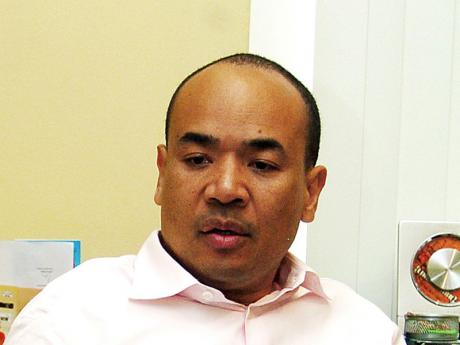
Ian Boyne, Gleaner Writer
His ancient namesake, Solomon, the Jewish king, had an early test of his wisdom. Two prostitutes came to him with a baby, each claiming that the child was hers. One claimed that the other's baby was accidentally killed by mommy in the night, who then cleverly switched the corpse for the disputed infant. Solomon was to judge whose child it really was, and hence who had right to the surviving baby. He drew for a sword and demanded that the child be split in two so they could each share the baby.
The true mother, her maternal instincts prevailing, said let the child live, give her to the other woman. The feigned mother said yes, do the split. Last week, private sector bigwig Jimmy Moss-Solomon split from three government boards on which he was serving in protest over what he said was poor governance of the country and the failure of the two political parties to give appropriate leadership to crisis-ridden Jamaica.
Apparently, it is our latter-day Solomon's feeling that we could well say to our political leaders today, seeing that you are contending so bitterly for power, glory and the ownership of Jamaica, "why don't we just slice up the country and let you share it up among yourselves?" hoping that someone among them would have enough concern for Jamaica to say, no, "country before my party's interests."
Jimmy Moss-Solomon is fed up with the political class. He thinks it's hopeless trying to change the present players. He wants to send a strong message to them. But he deprived the People's National Party (PNP) and its supporters in media a major clobbering tool, when, instead of joining the choir singing out the Jamaica Labour Party (JLP), he set a plague on both their houses. What a delight it would have been for PNP partisans if such a celebrated private-sector man, and highly respected voice of moderation, were added to those signalling their disgust with the Golding administration! And on the eve of its third anniversary at that. Naughty of Jimmy, to rob the PNP of that exquisite pleasure! Hence, the level of resonance he could be getting in the media is lessened for, in this tribalised society, he softened the impact he could have by damning both.
Prestigious conglomerates
So the poor man ends up being whipped by both sides, rather than celebrated by one, and, at best, is being simply ignored by some who would normally be vocal.
Jimmy Moss-Solomon, a key figure in one of Jamaica's most prestigious conglomerates and a protege of the late esteemed power broker and entrepreneur extraordinaire, Carlton Alexander, carries weight. That is why he has received so much publicity for his dramatic action last week.
The Moss-Solomon action affords us an excellent opportunity to discuss a number of issues: What should be our response to the gnawing and appalling failures of the post-Independence political project in Jamaica?
How should we relate to the political parties? How can we signal our disenchantment and disillusionment with them? How can we signal to them that we are fed up with them, that enough is enough?
Should we work from inside the parties, or in Government, maintain their confidence and use that to influence them? Should we adopt a position of passive resistance - or active, belligerent resistance? How can we take back Jamaica, what are the strategies we should use? Wayne Chen has raised an important point: "If all of us were to resign tomorrow in a sort of mass protest, nobody can predict what would happen, in terms of the quality of people, who would take up the vacuum."
But what are we achieving when we stay? Isn't our staying - those who serve the Government or the PNP in some way - making us complicit in their alleged corruption, mismanagement of trust and squandering of hope? Don't we tacitly support their complacency and contempt for the people by sticking around with them and serving on their boards like Wayne Chen? Perhaps if more of us deserted them - and do so loudly like James Moss-Solomon - that would shake them up and create a tipping point. Perhaps.
Betty Ann Blaine strongly urged us in the last election to boycott the whole charade, as she would see it. Having ignored her - with dire consequences, she would say - she has given us an alternative by launching her own political party. The National Democratic Movement is promising to reform to make itself attractive to us. Moss-Solomon told Garfield Burford on CVM's Direct that others are about to follow his example. Is the moneyed class beginning to stir, and who will earn their trust to offer a viable alternative?
For, we have to come back to Wayne Chen's point. Forget the fact that he is so closely connected with this administration and, therefore, he has an axe to grind. Contemplate his point: If all good and decent people abandon the Government and the PNP - refusing, for example, to serve on their newly-formed Integrity Commission - then what will Golding and Portia be left with? And what would we gain by that unintended consequence?
Positively detested
This issue of how one deals with a regime with which one is uncomfortable or one which is positively detested is a long-debated one, especially in international relations. It's the same issue which is raging in foreign policy circles in the United States, over its (US) relations with Iran, North Korea and Venezuela. Should the US talk to its enemies or isolate them and talk through sanctions? This is still a vexing issue.
Diplomatic history, I think, confirms the view that it is better to have a relationship with enemies or with undesirable, pariah regimes. Not having a relationship with them consolidates their cosiness with precisely the people you don't want in bed with them. It hardens them. The United States realised in the Cold War that it made sense to put stubbornness aside and engage China and Russia. Diplomacy is often about engaging with adversaries. That's why it's an art.
In the context of Jamaica, the Moss-Solomon Solution, or option, cannot be ridiculed. He has achieved his point to get a discussion going about what is wrong with our political system and where it's going. The resignation of others would prolong the discussion. It's an important discussion to sustain until we reach a crescendo, a critical mass. The political class needs to be jolted. It needs to know that the same old political games are no longer amusing, and that the masses have long since ceased being entertained.
Moss-Solomon's action cannot be condemned. It has its place. The PNP partisans might say it's cowardly, that he deliberately adopted the plague-on-both-your-houses approach because he is afraid of JLP hostility and doesn't have the guts to face it, while, realistically, it's the JLP in power and, the PNP would insist, they are the proximate cause of our deepening levels of mistrust and alienation. So PNP partisans are not likely to have much respect for the integrity of Moss-Solomon's decision.
In the struggle for political reform, there are many strategies which can be employed. No one political strategy, by itself, might provide the silver bullet. But a combination of strategies by different actors can create a perfect storm. But still, Wayne Chen's point cannot be dismissed lightly. There is a place for those who are still engaging the political class.
Preaching fire
If those of us who are non-partisan abandon the political space to party hacks, tribalists and cultists, then what reform of the political system will result? If all of us are preaching fire and brimstone and casting our political leaders into the uttermost parts of hell, " chanting down Babylon", then who will have their confidence to sit with them and offer balanced advice? Critics must beware the same arrogance, stubbornness and stiff-neckedness which they accuse politicians of when they condemn any and everyone who is involved in our political parties or the state.
There is a place, I grant, for the strident, angry, belligerent, even bellicose and condemnatory critic of both Government and Opposition, or one or the other. My problem is that usually these critics are contemptuous of those of us who don't adopt their style. In their view, we have no purpose as commentators, that we are really prostitutes who have sold body and soul to those offering favours. Some who are soft on Government and/or Opposition have, indeed, mortgaged their integrity and prostituted themselves.
It is possible that what is paraded as balance and fairness is just the lack of guts, fear masquerading as virtue, expedience under the guise of even-handedness. I grant that. I even grant you the right to judge my own motives. But what must be incontestable is that it is possible for there to be some souls out there - however few - who genuinely aim at fairness and balance, who genuinely and wholeheartedly feel that they would accomplish more liaising with power brokers rather than avoiding them like the plague and leaving them in the arms of the greedy and the gullible.
There is a place for both the Moss-Solomons who, like John the Baptist, is a voice in the wilderness, and the Wayne Chens who, like Jesus, don't abandon the cities, and who engage the Scribes and the Pharisees and who don't abandon their synagogues. We must avoid the genetic temptation as Jamaicans to intolerantly believe our way is the only way.
The Moss-Solomon action has its place and power. Someone needs to blow the whistle on the political class and who better than one whose blowing would elicit such front-page, prime-time attention? It's called effective use of cache. They also serve who stand (away from the political system) and stare.
But so, too, those who have still maintain access to the corridors of power. And they don't have to check their integrity at the door.
Ian Boyne is a veteran journalist who may be reached at ianboyne1@yahoo.com or columns@gleanerjm.com.