
Keith Garvey targets grass-roots development
Published:Saturday | September 18, 2010 | 12:00 AM
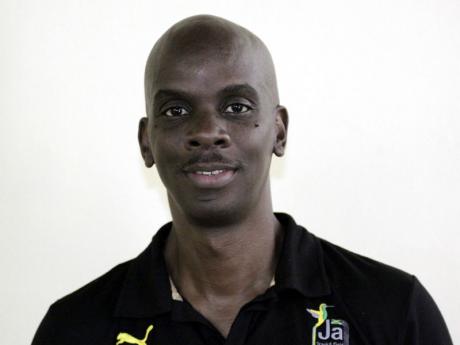
Rayon Jones, Gleaner Writer
Table tennis is one of the many sports in Jamaica that need strong and innovative leadership to bring them to the forefront. The man who has been given the responsibility to do this over the last four years is Jamaica's Table Tennis Association (JTTA) president, Keith Garvey.
Garvey has many issues that he has to tackle in the sport if it is to be properly developed across the island. The sport has not been garnering the desired interest from youngsters and females. There is also the issue of rural parishes no longer being as strong as they were in past.
Garvey has, however, identified means by which he can address these issues, as he intends to place emphasis on the schools.
"There are between 400 and 500 primary and all-age schools in the country and the way the association is looking at it is to form a partnership, which has been formed already with the Government through the Sports Development Foundation," said Garvey. "Seventy-five tables were brought into the country through this partnership and we are targeting primary and all-age schools.
"We are in dialogue now to purchase another 60 boards. So eventually, over the next three-year period, our goal and objective is to ensure that all the primary and all-age schools have at least one table tennis board," he added.
The association has already taken steps to ensure that there will be qualified persons to guide the youngsters. Close to 100 coaches have undergone the International Table Tennis Federation (ITTF) Level One training. Table tennis is also now an elective at the G.C. Foster College and the University of Technology.
Established system
"If you are going to produce more coaches who can coach the game, you have to broaden the scope at the bottom," said Garvey. "In terms of all-age, primary and prep schools, when these kids leave those schools they will go into the established system at the high schools."
He also plans to tackle the current disparity between the achievements of the females in the sport and their male counterparts through the school system.
"The fact is, the standard of the males is always superior to the females," said Garvey. "It is one of the weaknesses of the system, but it is not just a Jamaican phenomenon. It is a global phenomenon and the ITTF has identified that we do not have enough females playing the sport.
"We have to come up with systems and incentives to have the females come and stay with the sport. There are so many distractions these days and it seems to hurt the female table tennis players more than the male players," he pointed out. "So when we start up these programmes in the all-age and primary schools, we have to specifically focus on the young females. So the coaches will have to place a lot of emphasis on developing female players."
There are currently only five active table tennis associations across the island, and Garvey is of the view that this is crippling the development of the sport.
Programmes
Garvey said: "Every year we need to form three or four new parish associations. We need the parish associations to be very active because the JTTA cannot run all the programmes in every parish. We will be looking to have these associations set and operating by themselves and reporting to the JTTA," he added.
Garvey also disclosed that the national association does not have any money to give to the parish associations at this time, as attention has to be placed on the national team.
"Regardless of the amount of development you are doing, one of the things you have to get going is your national team," said Garvey. "Right now, we have identified six young talents who we think can make Jamaica very proud, so that we can be competitive to participate in the 2016 Olympics. Emani McPherson, Kane Watson, Simon Tomlinson, Don-Walker Petinaud, Kareem Flowers and Michael Cai will be the heart of Jamaica's table tennis over the next decade.
"With Yvonne Foster only 17, Kristen McKenzie 16, Ashli Alexander 14 and young Janique Lee, who is just 12, we think that those will be the base. What we are going to do, come next summer when the kids get breaks from school, is try and send four of them to China for at least two months," he concluded.