
Old-age prisons
Published:Sunday | December 12, 2010 | 12:00 AM
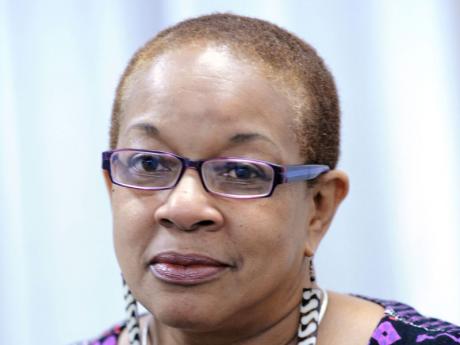
Peta-Anne Baker, Contributor
An Associated Press report last weekend high-lighted the rapid increase in the number of inmates aged 60 years and over in the Japanese prison system. In fact, one wing of the Onomichi prison near the city of Hiroshima had been converted into a geriatric unit, and the report states that the government of Japan was investing US$100 million in creating facilities for its older prison population at three other institutions around the country.
Japan has the oldest population in the world with one-fifth of its citizens already being 65 or older. Traditional values would previously have virtually guaranteed that this group would have had a network of immediate family and friends on which to rely for support. A relative decline in the size of the "working age" adult population, the dispersion of family members, and the effects of the global recession have all had an effect on this value system and have resulted in a fraying of the traditional web of support, leaving that country's older members facing increasing hardship.
While many of Japan's prison inmates are persons who have aged in prison as they served sentences handed down when they were much younger, an increasing number of persons are being imprisoned in old age. In fact, prison authorities point to the fact that many of their older inmates are repeat offenders, responding to economic hardship and social isolation by repeatedly committing petty offences such as shoplifting, and more serious ones such as robbery and arson as they come to see prison as an alternative retire-ment home.
Developments in Jamaica have not been as dramatic, but like several other Caribbean territories, our demographic profile is looking more like that of a developed than a developing country. The percentage of older persons in most developing countries is usually no more than five or six per cent of the total population. In Jamaica, persons aged 60 and over already constitute 11 per cent of the population, with projections for a continued substantial increase over the next 10 to 20 years.
Indeed, recent Survey of Living Conditions data indicated that the shift is well under way with the under-15 age group now comprising less than 30 per cent of the total population. While this has been accompanied by an increase in the size of the 'working age' population, high unemployment and underemployment, low wages and limited social-protection measures mean that this group will enter its later years with few, if any, economic resources, and a declining pool of younger relatives and friends on which to rely.
The signs of this trend are already visible. While our older persons constitute a minuscule proportion of the island's prison population, a large and increasing number of older persons are imprisoned in their homes due not so much to disability, but more to the levels of violence and abuse that they encounter when they venture out of their homes.
Available statistics can only provide a partial image of the extent to which older persons are victimised. One could argue that given the high rates of crime in the society, we cannot expect older persons to be protected from its impact. Precise data is hard to come by. The Jamaica Constabulary Force seems to stop paying attention to specifics once you are over 50. However, a 2005 newspaper report provided an account of persons aged 51 years and over who were murdered over the previous four years. Seventy-three persons were murdered in the year 2000; eighty-nine were killed in 2001; ninety in 2002; ninety-four in 2003; and 123 in 2004. In the space of five years, the number of middle-aged and older persons murdered in Jamaica increased by 68 per cent.
No Rights for Older People
Last Friday, Jamaica joined with countries around the world to observe International Human Rights Day. However, I would not be surprised if this occasion passes yet again without hearing from either state or civil-society organisations on the situation facing older people in Jamaica.
Does it matter that the much-touted Jamaican Charter of Rights, soon to be added to our Constitution and referenced last week by the minister of education in relation to the rights of children, will provide no protection from discrimination on the grounds of age?
Does it matter that the thousands of women who created and sustained the now highly regarded early childhood education system are facing futures without the prospect of even an NIS pension because of the perpetuation of the official myth that early childhood institutions are "community-owned"?
Does it matter that employers will continue to be able to throw older workers out of their jobs, not because of any significant decline in performance, but to make way for younger workers (whom they can pay less)?
Does it matter that banks and other financial institutions will continue to deny credit to persons solely on the grounds of their age?
Almost 20 years ago, the United Nations set out five Principles for Older Persons to inform member states' policy making and action. The Principles addressed the topics of participation, independence, care, dignity, and self-fulfilment. The year before, in 1990, the UN declared October 25 as the International Day for Older Persons. Jamaica dutifully participates in these events, in much the same way as it will become a signatory to the new UN Convention on the Rights of Older Persons, work on which is under way.
At regional and international levels, this work is in its early stages. It took almost 60 years for the UN Convention on the Rights of the Child to come into being in 1989, although once it did, it rapidly came into force. It took 15 years of concerted effort from national and international civil society groups and their supporters to get Jamaica to translate the convention into domestic legislation in the form of the Child Care and Protection Act. There is little sign of any similar co-ordination among key actors in the aging sector in Jamaica.
This situation needs to be urgently remedied if any of us would like to live to enjoy an old age under the protection of a Convention on the Rights of Older Persons.
Dr Peta-Anne Baker is the co-ordinator of the Social Work Programme at the University of the West Indies, Mona. She may be contacted at pab.ja2009@gmail.com. Feedback may be sent to columns@gleanerjm.com.