
JEEP, JDIP need each other ... And the country needs both
Published:Sunday | September 25, 2011 | 12:00 AM
Martin Henry, Contributor
Whatever its off-road capabilities might be, the JEEP of the Opposition PNP will need the JDIP of the governing JLP. Or to put it another way, Jamaica's development will need cross-party government and opposition collaboration on a number of critical things. But the way criticism and condemnation have been poured upon JEEP and JDIP, the prospects do not look good at all.
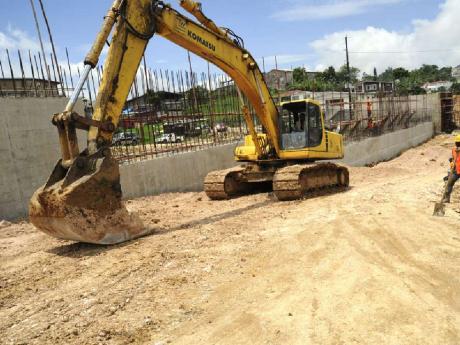
A party which came to power - and only marginally so, after nearly two decades in the wilderness - partly on the basis of promising jobs, jobs and more jobs - has very good reason to be afraid of JEEP. A party hungry to return to power and struggling to differentiate itself from the Government, which has moderately held its own under very difficult external circumstances, has very good reason to be afraid of the JDIP. The Jamaica Development Infrastucture Programme is the largest public infrastructure development project in the history of the country with all the temptations and possibilities of being a mega pork barrel.
Public-works programmes
With proper respect for the market, I am one of those who believe and have regularly advocated public-works programmes for the multiple benefits of stimulating the economy, job creation, and capital development of public infrastructure.
In what may well be the biggest party conference ever in Jamaica, leader of the Opposition, Portia Simpson Miller, used a substantial portion of her presidential address to present the Jamaica Emergency Employment Programme. The party leadership has been buoyed by the crowd and is virtually already declaring victory in the next general election.
But numbers can be deceiving, and memories can be short. Michael Manley had exuberantly declared in 1980 that the overestimated 150,000 strong corking Sam Sharpe Square can't be wrong. And when Portia charges that things have never been so bad in the country, she is conveniently forgetting that when she entered politics in the mid-1970s, unemployment stood at 25 per cent, and both the shelves and the public coffers were bare, with nary a global recession in sight. Not only people were getting married, but salt fish and syrup too. The tsunami [P.J. Patterson] and the river which come down bank to bank [Roger Clarke] could produce some unexpected drownings.
JEEP has promise
But JEEP has promise. Much of the criticism of the last week, and in particular the demand for cost details, has been quite unreasonable and unfair. Neither the circumstance of a party conference nor the circumstance of being in opposition would allow a plan with fine details. The broad outlines make good politics and, generally, good sense. The PNP, back in government, will target six key areas of the economy, including the non-traditional areas of the cultural and creative industries, sports, and community transformational projects; will provide tax incentives for investments which create jobs; and will provide funding for a National Export Strategy, prioritising production and export rather than consumption and imports.
But now for the hard part. The party is proposing, in government, a renegotiation of the current agreement with the International Monetary Fund (IMF), which sounds ominously like a move towards a 'run-wid-it' relaxing of fiscal discipline to pay for JEEP. If the JEEP is to run without stalling or crashing, very limited resources will have to be strategically shifted around.
The success of JEEP, the party leader said, will depend on collaboration with the nation's stakeholders, with partnership and consultation at the centre of the initiative. Job creation would be primarily private sector-led, with incentives fuelling the drive; and Joseph M. Matalon, president of the PSOJ, was a special guest at conference. But only two days later, the Opposition refused to participate in the signing of the long-dangling Code of Conduct for the Partnership for Transformation, pleading insincerity and disrespect on the part of the Government. Hours after Portia's performance at conference, Minister of Finance Audley Shaw told a JLP party meeting that she was behaving like a 'leggo beast', a remark for which he subsequently apologised.
At the signing of the PFT Code of Conduct, prime minister and leader of the ruling party, Bruce Golding, again mouthed the need for cross-party collaboration, saying that "unless we find a common purpose and unless we find a way to place all hands on deck, we will not achieve the growth and prosperity that we seek; not in a sustained way, not in a way that will traverse changes in political administration that will survive the setbacks that we will encounter from time to time."
The Partnership for Transformation is an initiative of the PNP in office. The Code of Conduct was signed by the Micro, Small and Medium Enterprises Alliance, representing a sector of the economy which the PNP says is critical to the movement of JEEP, and the PSOJ is represented on its 38-member board. A super-sized board, which may be great for participatory democracy but utterly bad for planning and action.
Why not promote JEEP?
Now, why wouldn't a meagre majority government in office and desperate to retain power do all these nice things with the JEEP, if it could? And why didn't the Government before, which lost office a mere four years ago after 18 years in power, implement these nice, simple, not new, basic ideas for job creation, economic growth and balancing people's lives?
The effort of the member for South West St Ann, Ernest Smith, to have JEEP debated in Parliament was quickly punctured by parliamentary technicalities.
The PNP clearly intends to ride in JEEP from Opposition to Government. The JLP, in government, clearly intends to wring maximum political mileage from riding on the JDIP highway, despite short-changing the Road Maintenance Fund component of the programme by failing to honour commitments to pay over to the RMF committed proportions of the special consumption tax on gasolene. The Opposition has lodged several complaints about the fairness and transparency of the operations of JDIP, and even a JLP councillor has publicly expressed concerns about the programme.
Rather than the parties trading insults and statistics of discrimination in road repairs, the simple solution is to let the public-works agencies run JDIP under broad policy directions set by political leadership, but managing the specifics of priorities and procedures and reporting to Parliament and public. But one thing on which both parties are in 110 per cent agreement is that 'it caan go so'.
Our dirty political history and culture, which is the greatest inhibition to national development, has provided another ugly twist to JDIP. Garrison-based extortionists, rechristened as 'community liaisons', have emerged to plague the largest JDIP project to date, the upgrade of the Palisadoes road. The charges and countercharges between the works minister and the MP for the area simply expose the known connections between all kinds of liaising and politics which have so badly damaged the development of this country.
The PNP annual national conference last Sunday has launched the election campaign. It is likely to be a long campaign since it is highly unlikely that the prime minister will call the election before the feel-good Olympics and 50th anniversary Independence celebrations, something which four-time former prime minister and former PNP President P.J. Patterson has seized upon. And also allowing maximum time for JDIP to deliver more benefits to more people. Dependence on sports achievements and cultural celebrations for national pride and a sense of accomplishment is worrying, to say the least.
It is likely to be a bitter campaign, as two centrist and highly tribalised political parties fight for a narrow-margin victory. But, thank God, there is little chance of any return to the raw political violence of the long and bitter campaign of 1980. This is in no small part linked to the successes of one of the most important initiatives on which the PNP and the JLP have collaborated, what is now the Electoral Commission of Jamaica. The guns and the gangs are still very much there but cannot now deliver political victories.
Despite the broad base of mindless party diehards, Jamaicans are now more politically mature and cynical and wanting rational answers not just empty sloganeering. There have been calls for ongoing debates, unusually loudly from a governing party. Let the debates begin, now that the campaign has been launched. We need more reasoned assessments and counterassessments of the performance of the JLP and the PNP in government like that from a self-described non-tribal Jamaican which Kevin O'Brien Chang ran in his column last Sunday.
Role of non-tribalists
Non-tribalists can and should control the outcome of the election. The PNP, as Opposition, must be squeezed hard to pinpoint what the Government is doing wrong and badly and how it proposes to do better, and must have its recent 18-year track record intensely scrutinised. The Government formed by the JLP must be called upon to account for its stewardship around clear specifics of governance, and its proposals for continuation intensely scrutinised for practicality and feasibility.
But at the end of the day, it is not which of two market-oriented, middle-of-the-road parties form the government, nor the personal competence for governance of their respective leaders that will matter most. What will matter most is the capacity of the parties to reduce tribalism and to collaborate on the critical issues which have compromised the nation's development and which are determining its future.
Martin Henry is communication consultant. Email feedback to columns@gleanerjm.com and medhen@gmail.com.