
India's spinners mesmerise England's batsmen
Published:Sunday | October 30, 2011 | 12:00 AM
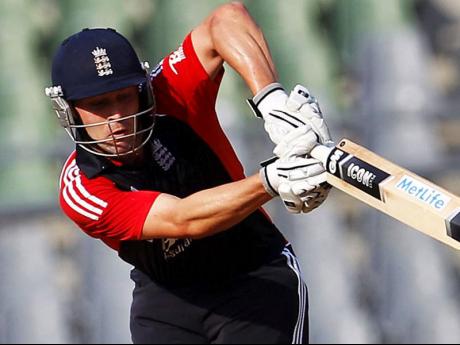
Tony Becca, ON THE BOUNDARY
The late, great Sir Neville Cardus, famous for his days at the Manchester Guardian and as a cricket scribe in the first half of this century, once sent a staff member to Old Trafford to cover a Lancashire county match and when he returned and wrote his copy and presented it to Cardus, Cardus read it, crushed it and threw it in the waste-paper bin.
Rain had fallen at Old Trafford, Lancashire lost the toss and were sent to bat, they were dismissed for a low score, their opponents were struggling at close of the day's play and there was not a word about the state of the pitch in the copy.
Cardus believed a cricket copy without a mention of the state of the pitch and the conditions, especially when a team batting first managed only a low total, was not properly written.
His reasoning was that a pitch, and the general conditions, can be the difference between batsmen scoring runs or not, bowlers taking wickets or not and oftentimes, as it usually leads to the difference between a huge score and a small one, who wins or who loses a match.
If Cardus was alive today he would say loud and clear after India's victory over England, "I told you so".
Whitewash
Earlier this year at home in their cool and sometimes cold climate, England, paced by their fast bowlers, easily defeated India 4-0 for a whitewash in the Test matches, they won all five in the one-day internationals (ODI) and preened themselves as they sang the praises of the team which they said possessed many stars, several great players and acclaimed the England team as the best.
Recently, at home in their warm and sometimes hot climate, India, parading spin bowlers, easily defeated England 5-0 in the five-match ODI series to register a stinging victory.
It was a perfect example of the difference a pitch and the conditions can make in a cricket match.
In England, the home team's batsmen, including Alastair Cook and Jonathon Trott, Ian Bell and Kevin Pietersen, were uncontrollable and their fast bowlers, even the new ones, were unplayable while India's batsmen, none more so that Virender Sehwag and Sachin Tendulkar, could not find much more to play the ball and their bowlers were ripped to pieces.
This time, in India, it was a different story. The England batsmen were completely at sea against India's spin bowlers and England's fast bowlers were treated with disdain by India's batsmen, while India's batsmen enjoyed themselves and their spin bowlers almost begged captain Mahendra Singh Dhoni for the ball.
England lost the first match in Deccan by 126 runs after scoring 174 to India's 300 for seven; the second in Delhi by eight wickets after they were limited to 237 and India cruised to 238 for two; the third in Mohali by five wickets after scoring 298 for four and India rattled up 300 for five; and the fourth in Mumbai by six wickets after scoring 220 and India replied with 223 for four.
Crushing defeat
The most crushing defeat, however, was on Tuesday in Kolkata's Eden Gardens, where India's spin bowlers cornered England's batsmen and cut them down one by one.
After India's batsmen, without Sehwag, Tendulkar and Yuvraj Singh, had posted 271 for eight off the allotted 50 overs, after England had started like a house on fire with Cook and Craig Kieswetter posting 129 without loss off 20.1 overs, England collapsed dramatically on a slow pitch against India's spinners.
England lost all 10 wickets for a meagre 47 runs in 16.4 overs, including five for 12 in 5.3 overs and were bowled out for 176 in 37 overs.
It was embarrassing as England's batsmen, almost all of them, batted like novices, as if they were hypnotised, as the West Indians appeared a day or two earlier in Chittagong against Bangladesh.
Spinning the ball, sometimes prodigiously, looping it beautifully most of the time and employing a crippling change of pace and length, right-hander Ravinchandran Ashwin, with his many kinds of spin, off-spin, top-spin and the 'carom ball'; and left-hander Ravindra Jadeja, with his orthodox spin and the "chinaman", cut through the England batting like a hot knife through butter.
Ashwin and Jadeja were ably assisted by two part-time spinners, Manoj Tiwary and Suresh Raina, one tossing up leg-breaks and the other simple off-breaks as the Indian spinners mesmerised England's batsmen in a way that made broadcaster David Lloyd, the former England representative, wonder if, among other things, they had ever played against a left-arm spinner.
"I am sure," said Lloyd, "that I have seen a number of them (left-arm spin bowlers) in County cricket."
Lloyd is right, and so was Sir Neville.
Some batsmen are great in their own conditions but ordinary in foreign conditions, some bowlers are deadly in their own conditions but ordinary elsewhere, and some teams, like the West Indies in the 1980s and 1990s, and Australia recently, are great, really great, anywhere, against all opposition and in any condition.
The West Indies boasted great players, batsmen such as Viv Richards, Gordon Greenidge, Desmond Haynes and Clive Lloyd; fast bowlers like Andy Roberts, Michael Holding, Joel Garner, Colin Croft, Malcolm Marshall, Courtney Walsh, and Curtly Ambrose; and wicketkeeper Jeffrey Dujon.
Australia, on the other hand, paraded batsmen like Steve Waugh, Matthew Hayden, Justin Langer and Ricky Ponting, a wicket-keeper/batsman like Adam Gilchrist, and three bowlers like pacers Glenn McGrath and Brett Lee and right-arm spinner Shane Warne with his bag of tricks - leg-spin, googly, top-spin, the slider and more - including his uncanny change of pace.