
Young historians' challenge: a response
Published:Wednesday | April 24, 2013 | 12:00 AM
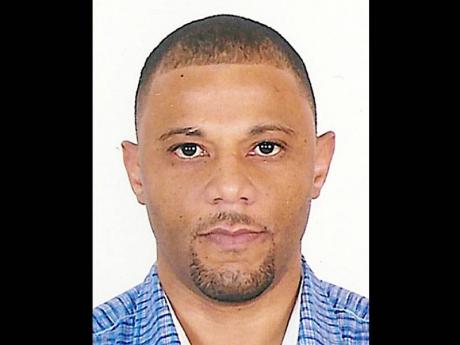
By DaiveDunkley, Guest Columnist
I read with interest the Rev Dr Devon Dick's brief remarks (published in this newspaper on April 11, 2013) about my book, Agency of the Enslaved, launched at Ardenne High School on March 23.
I take some delight in the good reverend's attentiveness to my work in this book, though it would have been more judicious if he had balanced his remarks with an actual analysis of the book by my colleague Dave Gosse, Abolition and Plantation Management in Jamaica, 1807-1838, also launched at the same event.
First, I wish to let the reverend know that I was not wrong in stating that "slavery was not practised in England". There is a difference between practice and presence, and I am well aware that enslaved Africans and their descendants were in England in the 18th century through to abolition in 1834.
But, to use this to argue for slavery being an actual practice of the English in England is entirely another matter. It was not accepted as a practice, and the disputes that erupted showed that this was the case. The presence of these slaves brought into England by slaveholders from the colonies sparked a series of court trials. Judges, including the famous Mansfield himself, had to contend with the fact that Common Law did not support the act of enslaving people on English soil.
In the Caribbean colonies, however, legislation had entrenched African enslavement as a practice since the 17th century, ironically while it was also banned in England. It is instructive that the English thought that African enslavement could exist in the Caribbean but not in England, where it was never made lawful following the Restoration.
Slavery in england not settled
The debate that erupted over slavery in England in the 18th century has been indeed examined by F.O. Shyllon and James Oldham, but also by a number of other historians who both agree and disagree with Shyllon's and Oldham's analyses. The matter of slavery in England is far from settled, but it is quite telling that the focus of much of the scholarship is on the issue of "slaves in England", whereas the practice of slavery remains to be seen.
As with all of the other cases over slavery in England, the Somerset case in 1772 did not abolish the presence of slaves on English soil. Nevertheless, it did conclude with a popular judgment by Mansfield that "the black must be discharged", which was taken up by the abolitionists and used in their fight against the transatlantic slave trade and later colonial slavery.
For clarity, my own interest in the James Somerset case was to show how the use of the powerful writ of habeas corpus provided evidence of Somerset's determination to assert his freedom. Whether or not it was his idea to use the writ does not negate his anguish from being enslaved. In any event, his revolt against repression was the reason for the writ and subsequent trial.
Oldham shares some of this view. In his own conclusion, Oldham suggests that among the implications of the Somerset trial was its connection with slave agency. He further states that "although not instantly eliminating slavery in England", the Somerset judgment empowered other slaves to take advantage of the "opportunity to assert their freedom".
Unavailability of data
On the matter of the table, Church Manpower (Priests and Pastors) in Jamaica, 1805, 1831, 1841, used in Agency of the Enslaved, a dash, when used in a table does not mean "nil". This word means zero or nothing, while a dash, when used in a table and especially by an actual historian, suggests only the unavailability of data.
While a more thorough search of contemporary documents - the approach I prefer - would have produced a table with no dashes, Rev Dick's book surely does not provide such data. He has no figures for the Anglican clergymen. As for the Native Baptist preachers, I required figures for specific dates, 1831 and 1841, not the extended versions, 1830s and 1840s.
Rev Dick's book is also not an apparent source for slave resistance in the Anglican Church, nor is it suitable for most of the subjects examined and analyses undertaken in Agency of the Enslaved. His book was used where this was most appropriate.
The work of the historian of ideas is about events, but more notably, perceptions. Rev Dick's final remark on applying "better research to making our society prosperous" is tantamount to the sin of passing judgement. My hope is that the book will not only continue to stimulate discussion, but also encourage the more important activity of further research.
Dr Daive Dunkley teaches history at the University of the West Indies, Mona. Email feedback to columns@gleanerjm.com and daive_d@hotmail.com.