
Revealing Jamaica's soul - How others see us
Published:Sunday | May 26, 2013 | 12:00 AM


This is the fourth in a series of columns by Jamaicans for Justice in commemoration of Child Month.
MAY 2013 has seen a profusion of voices speaking out, both in pain and in outrage, against the blatant disregard for children and their inherent rights. Newspapers, television stations and radio shows have showcased the voices of those children who have been damaged by our current system's endemic neglect.
These children bear the scars of the rampant emotional, physical and sexual abuse that is the result of the Government's treatment of them.
We have heard from survivors of the Armadale fire who have remained unacknowledged and uncompensated; young men who declare state care their own "personal hell"; overwhelmed foster families hushed and ignored by the same administration that relies on them to house many of its wards.
Among the many painful realisations that these stories uncover, one of the most difficult is that as Jamaicans, we seem to care less about our own children than strangers do. Despite our trademark national pride that disdains the voices of those that come from 'farrin', it would appear that in this sphere, they are the only ones that seem to care.
foreign pressure
When it comes to children's rights, Jamaica has become familiar with international pressure. The Inter-American Commission on Human Rights (IACHR) has been imploring the administration to act, making extensive recommendations in an effort to offer guidance. The 2012 IACHR report strongly criticised the island's treatment of children, writing that "the Jamaican Government's childcare system suffers from disturbing levels of sexual, physical and mental abuse of children at the hands of caregivers, and urgently requires reform and additional resources."
The State's response to this had two components: it first downplayed the extent of the problem, denying that it was a pervasive in the childcare system. It claimed that in the period under discussion, only 92 of its 2,402 wards had been exposed to some form of emotional, sexual or physical abuse. It then pledged to "continue to initiate intervention programmes to minimise such exposure" and "ensure that the physical environment in all children's homes and places of safety are in compliance with both national and international standards".
The reality of the situation is somewhat different. The number of reported 'critical incidents' was 490 - not 92. What this reply also fails to include is that the 'national standards' that it refers to are currently non-existent. There are no regulations that speak to the ratio of children to caregivers, no standards that designate a certain amount of space per child, and no rules regarding even the level of security for children's homes. With regard to many crucial factors, monitors sent to children's homes to ensure this compliance can offer no set standards for them to comply with.
When the IACHR also expressed concern about the psychological care of children in conflict with the law, it had been prompted by some alarming facts: suicidal wards, for example, are not considered an 'emergency' by the Child Development Agency (CDA), and often receive no psychological support after the fact. Children known to be abusive to other wards had been found being shuffled between placements with no assessments, counselling or even prior warning to new caregivers, affording them free rein to abuse again. After being admonished for this, the CDA advertised its establishment of a Smile Treatment and Recovery Centre to meet the psychological needs of children on remand.
Currently, no individual outside the CDA has ever heard of the Smile Treatment and Recovery Centre, and there is no evidence that any child has been treated there. The Department of Correctional Services continues to employ one psychologist to service the entire population: and he is on record as saying that the system that he works for is "criminalising and damaging (in some cases irreparably) the children".
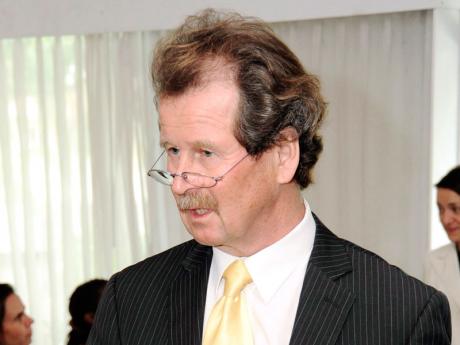
In 2010, Manfred Nowak, the UN special rapporteur on torture, spoke out against children in police lock-ups, which he described as "a complete disrespect for the human dignity of detainees". After his tour of Jamaica, he made clearer his deep concern about the treatment of juveniles under government protection, stating that current practices made it "extremely difficult, if not impossible, to address the individual needs of children, be it in terms of protection or rehabilitation".
Lock-up breaches
One of Nowak's immediate recommendations was to "reduce police custody to 48 hours and ensure that remandees are held in proper remand centres and not in police lock-ups". The State conceded, and advertised that the CDA, currently headed by Carla Francis-Edie, would begin monitoring lock-ups to protect children's rights from being infringed.
Three years later, they continue to be sent to these places, sometimes by the CDA itself, and may remain there for months.
As recently as 2012, UNICEF published a prescriptive report severely rebuking the treatment of children in state care. "Children are taken into children's homes because their present circumstances place them in danger," started its opening caution. "However, the evidence indicates that some of these children are also in danger while in state care."
This report found that the current system was simply unable to adequately oversee its charges, much less provide adequate care on an individual basis: children's homes often had a ward-to-staff ratio of up to 1:25 when the international standard is 1:15. The 60 CDA children's officers could have caseloads of more than 200 children.
cycle of inaction
Even the CDA's own documents corroborated Jamaicans for Justice and other local NGOs' complaints of "inadequate forms, no requirement for interviews of wards, insufficient response to recurring concerns, and many specific examples of breaches of the Child Care and Protection Act".
To date, no government official has publicly commented on the findings collected and published by this report.
These examples represent only part of a continuous cycle of foreign condemnation and pressure and resulting local prevarication and inaction. The international community has repeatedly pointed to Jamaica's childcare as a fundamental human-rights failure, and Jamaica has repeatedly brushed it off.
While the rest of the world looks on, Jamaicans continue to shrug off the mantle of responsibility, shielding themselves behind empty platitudes, ghost institutions and misinformation. While children are neglected, beaten and raped by those who should be raising them in full view of the public, the highest level of power on the island is content to shrug its shoulders and look the other way.
The time for action is, frankly, not now; it has long since passed. In full view of the international community, the state agencies charged with protecting Jamaican children have failed. It is time to take a good look at ourselves and our actions; everybody else already has.
Email feedback to columns@gleanerjm.com.