
Defence of Marriage Act ruling warped view of equal treatment
Published:Sunday | July 7, 2013 | 12:00 AM


Shirley Richards, GUEST COLUMNIST
In the case of United States vs Windsor, the United States Supreme Court held on June 25, 2013, that Section 3 of the Defence of Marriage Act (DOMA) was unconstitutional. Section 3 of DOMA provided as follows:
"In determining the meaning of any act of Congress, or of any ruling, regulation, or interpretation of the various administrative bureaus and agencies of the United States, the word 'marriage' means only a legal union between one man and one woman as husband and wife, and the word 'spouse' refers only to a person of the opposite sex who is a husband or a wife."
DOMA was passed by the Congress in 1996 before any state had passed legislation allowing for same-sex marriage. The case that was before the Supreme Court surrounded a lesbian 'married' couple, Edith Windsor and Thea Spyer, who lived in the state of New York. Same-sex marriage became legal in New York in 2011. Upon Spyer's death, the IRS declined to allow her estate "spousal estate tax exception on the grounds that, under the Defence of Marriage Act (DOMA), the federal government did not recognise same-sex marriages for the purpose of federal benefits".
Ms Windsor appealed the decision. In a 5-4 decision, the majority ruled that Section 3 of DOMA violated principles of equal protection by treating relationships with equal status under state law differently under federal law. What this means is that same-sex 'married' couples in the 12 states which have legitimised same-sex marriage are now entitled to federal benefits available to opposite-sex married couples.
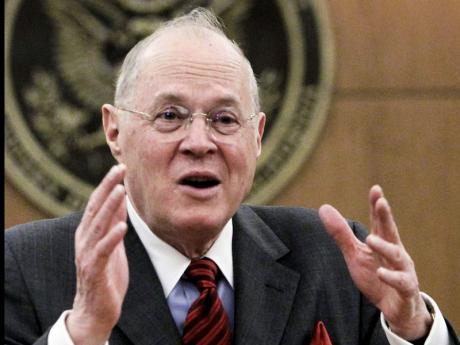
According to Justice Kennedy, who delivered the opinion of the court:
"DOMA seeks to injure the very class New York seeks to protect. By doing so, it violates basic due process and equal protection principles applicable to the federal government. The constitution's guarantee of equality must at the very least mean that a bare congressional desire to harm a politically unpopular group cannot justify disparate treatment of that group." p. 20.
Justice Kennedy further reasoned that:
"... DOMA undermines both the public and private significance of state-sanctioned same-sex marriages; for it tells those couples, and all the world, that their otherwise valid marriages are unworthy of federal recognition. This places same-sex couples in an unstable position of being in a second-tier marriage. The differentiation demeans the couple, whose moral and sexual choices the constitution protects, see Lawrence, 539 US 558, and whose relationship the State has sought to dignify." p. 23.
no desire to harm
The Lawrence case being referred to by Justice Kennedy is the 2003 Supreme Court decision Lawrence vs Texas which effectively made sodomy laws across the United States unconstitutional. Justice Kennedy was the judge who wrote the majority opinion in that decision.
Justice Scalia, who delivered one of the minority judgments in the DOMA case, did not see "animus" or a desire to harm in the actions of Congress. According to him, DOMA was just "stabilising prudence" on the part of Congress to make certain that there was no change "unless and until Congress made the further judgment to do so on its own". For Justice Scalia, in enacting DOMA, Congress:
"... Did no more than codify an aspect of marriage that had been unquestioned in our society for most of its existence - indeed, it had been unquestioned in virtually all societies for virtually all of human history. It is one thing for society to elect change; it is another for a court of law to impose change ..." p. 20.
According to Justice Scalia:
"This case is about power in several respects. It is about the power of our people to govern themselves and the power of the court to pronounce the law. Today's opinion aggrandises the latter with the predictable consequence of diminishing the former. We have no power under the constitution to invalidate this democratically adopted legislation. The court's errors on both points spring from the same diseased root; an exalted conception of the role of this institution in America." p. 1.
Justice Scalia bemoaned the reliance of the majority in the Windsor case, on the decision of Lawrence vs Texas:
"When the court declared a constitutional right to homosexual sodomy, we were assured that the case had nothing, nothing at all to do with whether the government must give formal recognition to any relationship that homosexual persons seek to enter." Id., at 578. Now we are told that DOMA is invalid because it "demeans the couple, whose moral and sexual choices the constitution protects". p.22.
Such reasoning of the majority in the Windsor case is eerily reminiscent of the assurances given in 1999 by Ann McLennan, the then Canadian minister of justice, who went on record as saying that the definition of marriage would not be affected by the ruling of the courts in the M vs H case. (The judgment in M vs H allowed for same-sex couples to be included in the definition of 'spouse').
Yet six years later, by reason of certain judicial decisions, the Canadian Parliament, under the same Liberal Party of Canada, found itself passing C38 legalising same-sex marriages. Could such assurances be classified as 'famous last words'?
EQUAL? REALLY?
But is equality the last and only word on these issues? How can same-sex relationships be considered to be equal with opposite-sex relationships? Thankfully, Justice Kennedy himself gave us the answer - when he told us that this is a relationship that the State "sought to dignify". The only way that same-sex and opposite-sex relationships can be made equal is by legislation.
However, legislation can only demand equal treatment of these relationships, it cannot cure the innate differences. A key difference between same-sex and opposite-sex relationships is that the former are ALL incapable of procreation by natural means.
Another difference is related to outcome. Truly all persons are created equal, but not all behaviours are equal in outcomes. Thus it is that the Centers for Disease Control and Prevention study published in AIDS Behav. 2011 Apr 15 Suppl 1:S9-17 states:
"The sexual health of gay, bisexual, and other men who have sex with men (MSM) in the United States is not getting better despite considerable social, political and human-rights advances. Instead of improving, HIV and sexually transmitted infections (STIs) remain disproportionately high among MSM and have been increasing for almost two decades. The disproportionate and worsening burden of HIV and other STIs among MSM requires an urgent reassessment of what we have been doing as a nation to reduce these infections, how we have been doing it, and the scale of our efforts." (Emphasis mine)
When is the US going to face the facts and admit to the world that this social experiment is not working? What would be the future of the human race if all persons were to adopt the same-sex lifestyle? Is a society not entitled to discourage behaviour which goes to the very core of its existence? What then is the basis for bestowing equality on same-sex relationships in defiance of reality?
"Look!" the little boy shouted, "The emperor is naked!"
Shirley Richards is an attorney-at-law and opposite-sex marriage advocate. Email feedback to columns@gleanerjm.com and sprichards@cwjamaica.com.