
Agriculture not a bad word
Published:Tuesday | May 13, 2014 | 12:00 AM
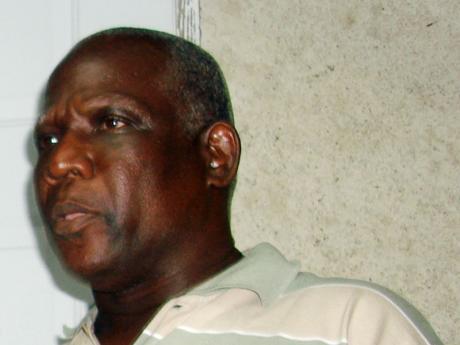
Webster W. McPherson, Guest Columnist
In an article captioned 'Pryce defends changes at Sydney Pagon High School' in The Sunday Gleaner of May 11, 2014, Raymond Pryce, the member of parliament of North East St Elizabeth, was quoted as having said the transformation of Sydney Pagon Agricultural School into a regular high school was "not an abandonment of an agricultural emphasis, but also it is to attract better crops of students".
The assertion by the MP represents an open admission that the students previously sent to Sydney Pagon were not "a good crop" largely, because it was an agricultural institution and the expectation was that removing 'Agricultural' from the school's name will automatically result in the attraction of "better crops of students" and improved academic performance. Having admitted that fact, how then could the MP have expected a stellar academic performance?
The situation that faces Sydney Pagon is the symptomatic manifestation of a widely held mindset in secondary education circles - that only students who are not so bright should pursue agriculture as a vocational subject. It is an open secret that, in most Jamaican high schools today, brighter students are actively dissuaded by principals and senior staff members from doing agriculture as their vocational choice. This is not a new phenomenon.
While I was head of the agriculture department at a high school in St Thomas 37 years ago, I had to fight the imprudent institutional culture where students were placed in streams starting with the letter A based on academic performance, and in which only the students from the D and lower streams from grades seven to nine were timetabled for agriculture, while the A, B and C streams were sent to do 'the better subjects'.
Many students were sent to the farm by staff personnel, ranging from vice-principal to classroom teachers, for work assignments, as punishment for misbehaviour committed elsewhere on the school's plant. On each occasion, during my tenure, they were sent back to the teacher who sent them, with the message that I was not operating a "prison farm". It did not take very long for this practice to stop.
TIME TO CHANGE MINDSET
If a child was taught to look down on agriculture and had never been to the farm during the formative grades seven to nine period, on the basis that only the lower achievers did that subject or that the farm was a place where people do forced labour as punishment, would it be logical to expect that child to voluntarily elect to specialise in agriculture during the vocational grades 10-11 and to choose the discipline as a profession?
Misguided policies of that sort still permeate much of the Jamaican education system today. The minister of education needs to take action..
The data from the most recent Economic and Social Survey of Jamaica which was quoted by the said article indicated that "while students in the regular high schools had average scores of 65 for English A and 44 per cent for mathematics, students in technical and agricultural high schools scored at an average 52 per cent and 25.4 per cent, respectively".
That was not news to me; it was just the manifestation of the long-standing untenable situation where students perceived as being not bright are shunted to technical and agricultural schools after the brighter ones are 'creamed off' and sent to high schools.
Maybe some good might come of the transformation of Sydney Pagon into a regular high school with the infusion of "better crops of students".
After all, Jamaica's agricultural future will be characterised by improved and efficient technology production systems that will have to be managed by persons with knowledge and skill competencies for the application of science, technology, engineering and mathematics, which the MP claimed will be emphasised at the transformed institution.
Webster W. McPherson is president of the College of Agriculture, Science and Education Alumni Association. Email feedback to columns@gleanerjm.com and webstermcpherson@gmail.com.