
Earth Today | Another voice for nature - UNEP officer adds to call for biodiversity protection
Published:Thursday | October 8, 2020 | 12:14 AM
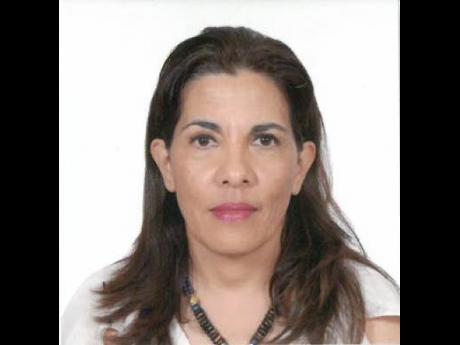
AN OFFICER with the United Nations Environment Programme (UNEP) has added her own voice to the recent call for attention for biodiversity protection, including for wildlife and their habitats, even as the world does battle with the COVID-19 pandemic.
“Earlier in September, a UN report revealed that the international community had failed to fully achieve any of the 2020 biodiversity targets agreed in 2010,” noted Ileana Lopez, Specially Protected Area and Wildlife/Marine Biodiversity programme officer with the entity.
Those targets included that by 2020, at the latest, biodiversity values have been integrated into national and local development and poverty-reduction strategies and planning processes and are being incorporated into national accounting, as appropriate, and reporting systems.
Another target included that by 2020 at the latest, incentives, including subsidies, harmful to biodiversity are eliminated, phased out or reformed in order to minimise or avoid negative impacts, and positive incentives for the conservation and sustainable use of biodiversity are developed and applied, consistent and in harmony with the convention and other relevant international obligations, taking into account national socio-economic conditions.
Still, Lopez said there is hope yet.
“Scientists at the environmental research organisation Resolve have drawn up a blueprint for a planetary “safety net” of protected areas they say could help halt catastrophic biodiversity loss,” she said.
According to Lopez, climate change and land-use changes are widely recognised as being among the most important threats to biodiversity and ecosystem services. And, she insisted, there are interventions that can be made and which should be made.
“Drastic modifications of biodiversity-rich ecosystems and many losses of species are occurring due to human interventions,” Lopez explained.
“Changes in the frequency, intensity, and extent of vegetation fires and habitat modification as a result of land-use change could negate natural adaptative processes and lead to extinction,” she noted.
“The effect of these negative impacts could be deep and widespread because changes in ecosystems will affect water supply, fuelwood, and other ecosystem services,” Lopez said further.
According to the programme officer, there is no question of the value of making the effort.
“Conserving biodiversity will support public health by reducing the potential for zoonotic diseases like COVID-19 from emerging in the future,” she noted as one example of the good that can result.
“According to a recent study published by Dinerstein, E. and col. 2020, widespread nature conservation offers fast and cost-effective measures to help stabilise the climate while providing co-benefits from ecosystem services such as the provisioning of clean air and water and the reduction in edge effects that could lead to future disease outbreaks,” she added.
At the same time, she said that according to Baudron, F. (2020), while the world’s attention is focused on controlling COVID-19, evidence points to the biodiversity crisis as a leading factor in its emergence and the outbreak of many past emerging infectious diseases.
“Agriculture is a major driver of biodiversity loss globally. Feeding a growing human population in ways that minimise harm to biodiversity is thus imperative to prevent the next COVID-19,” Lopez said further.
She went on to explain why humanity was seeing more cases of pathogens crossing from wildlife to humans.
“Several lines of evidence point to the current biodiversity crisis - which can be qualified as mass extinction - as one of the primary causes. Land-use change has been the leading driver in the emergence of zoonoses caused by a pathogen with a wildlife origin between 1940 and 2004,” she said.
“First, deforestation brings wildlife and people (and their livestock) into greater contact, increasing the risk of spillover. The fact that 70 per cent of forests are within 1km of a forest edge illustrates how pervasive ecotones, where wildlife, people, and livestock interact, are,” she noted.
“Second, species that survive (or thrive) during deforestation tend to be less sensitive to human disturbance (opportunistic/generalist species) and thus the ones most able to transmit pathogens to humans (or their livestock),” Lopez added.