
Britain to test mixing and matching of COVID-19 vaccines
Published:Thursday | February 4, 2021 | 9:41 AM
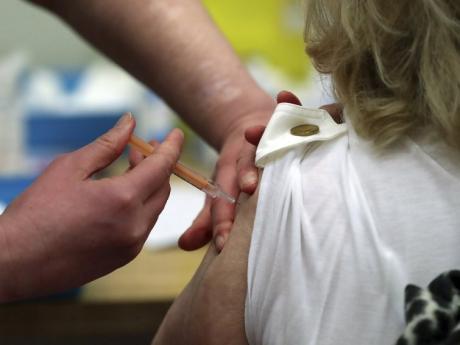
British scientists are starting a study Thursday to find out if it’s OK to mix and match COVID-19 vaccines.
The vaccines being rolled out now require two doses, and people are supposed to get two shots of the same kind, weeks apart.
Guidelines in Britain and the United States say the vaccines aren’t interchangeable but can be mixed if the same kind isn’t available for the second dose or if it’s not known what was given for the first shot.
Participants in the government-funded study will get one shot of the AstraZeneca vaccine followed by a dose from Pfizer, or vice versa.
“This study will give us greater insight into how we can use vaccines to stay on top of this nasty disease,” said Jonathan Van Tam, the UK’s deputy chief medical officer.
He said that given the challenges of immunising millions of people amid a global vaccine shortage, there would be advantages to having data that could support more “flexible” immunisation campaigns.
COVID-19 vaccines all train the body to recognise the coronavirus, mostly the spike protein that coats it.
The ones from AstraZeneca and Pfizer use different technologies.
AstraZeneca’s uses a common cold virus to carry the spike gene into the body.
Pfizer’s is made by putting a piece of genetic code called mRNA — the instructions for that spike protein — inside a little ball of fat.
The British research is scheduled to run 13 months and will also test different intervals between doses, four weeks and 12 weeks apart.
A study published this week on the Russian-made Sputnik V vaccine showed it was about 91% effective in preventing COVID-19.
Some immunologists credit the fact that the vaccine uses two slightly different shots, made with similar technology to AstraZeneca’s.
But the AstraZeneca and Pfizer vaccines are “so different that it’s really hard to know if that would work,” said Alexander Edwards, an associate professor in biomedical technology at Britain’s University of Reading.
Matthew Snape, the new study’s leader at Oxford University, which helped develop the AstraZeneca vaccine, called for British volunteers over age 50 to sign up; scientists are hoping to enrol more than 800 people.
If the vaccines can be used interchangeably, “this will greatly increase the flexibility of vaccine delivery,” he said in a statement. ”(It) could provide clues as to how to increase the breadth of protection against new virus strains.”
Follow The Gleaner on Twitter and Instagram @JamaicaGleaner and on Facebook @GleanerJamaica. Send us a message on WhatsApp at 1-876-499-0169 or email us at onlinefeedback@gleanerjm.com or editors@gleanerjm.com.