
HAITI
Country’s troubled history may slow aid to earthquake victims
Published:Tuesday | August 17, 2021 | 12:08 AM
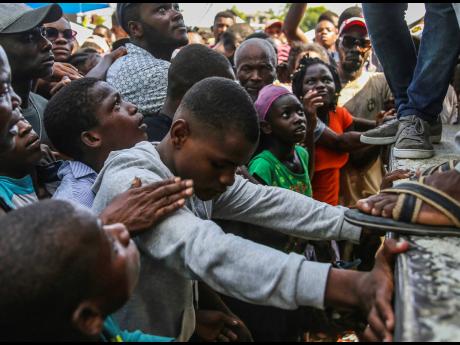
(AP):
Humanitarian aid is flowing into Haiti following Saturday’s 7.2-magnitude earthquake there and a death toll that has reached 1,297.
However, the Caribbean nation’s political unrest, as well as an approaching tropical storm, is complicating efforts.
Non-profit groups and philanthropy experts say the assassination of Haitian President Jovenel Moise, as well as accusations that money raised following the 2010 earthquake in Haiti never reached those in need, will make fundraising for the nation even tougher.
Art delaCruz, CEO of Team Rubicon, a non-profit that deploys emergency response teams to work with first responders in disaster areas, says the first briefing his teams in Haiti and the Dominican Republic had with support teams in the United States was about security.
“The assassination of the president, the almost gang-like existence there, it really increases the risk to organisations like ours that deploy into this situation,” delaCruz said. However, Team Rubicon, which was founded in 2010 by Marines Jake Wood and William McNulty in response to the 2010 earthquake in Haiti, has experience on the ground in the country and in similar situations around the world.
“It’s dicey for everyone because the information is incomplete and the situation is dynamic,” delaCruz said. “One way we have a competitive advantage on this is, we are an organisation where 70 per cent of the volunteers are veterans. They have seen this kind of an environment.”
Skyler Badenoch, CEO of the Florida non-profit Hope for Haiti, says the response has also been complicated because its staff has been directly affected by the disaster. The organisation is now gearing up to distribute US$60 million worth of first aid supplies and medical equipment to help those affected, he said.
Aid to Haiti has been probed for years and scrutiny intensified in 2015 when an investigation from ProPublica and NPR questioned where US$500 million raised by the American Red Cross was spent.
The American Red Cross says in an emailed statement that it is not seeking donations for Haiti relief at this time, but will work with its partners - including the Haitian Red Cross and the Red Crescent - to respond to the earthquake. “We will provide support to help meet the needs of families impacted by the quake, as we have done in the past,” the statement said.
It also disputed the ProPublica-NPR findings. “Contrary to accusations, the American Red Cross has made a significant impact in Haiti, including investment in more than 50 hospitals and clinics, safer housing for more than 22,000 families, funding for the country’s first wastewater treatment plant, support for Haiti’s first-ever cholera vaccination campaign, and so much more,” it said in a statement.
“Americans donated generously in the aftermath of the 2010 Haiti earthquake to save lives — which is exactly what their donations did. In fact, we spent nearly one-third of the donations on helping to keep people alive in the first six months alone.”