
CANADA
Church apologises: Top leaders say sorry for historical sins
Published:Monday | July 25, 2022 | 12:05 AM
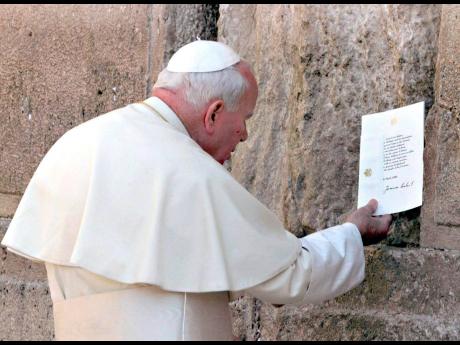
(AP):
When Pope Francis apologises to Indigenous groups on Canadian soil this week, he will make another effort toward healing harms inflicted at church-run residential schools – and add to the Catholic Church’s growing ledger of atonement for past transgressions.
Like the papacy, top Protestant leaders also have gradually issued institutional mea culpas for their churches’ historical wrongs. Many of the apologies on behalf of Christian denominations are for grave offences: genocide, sex abuse, slavery, war and more.
While increasingly common, the ecclesial apology is a relatively modern phenomenon, said Jeremy Bergen, a church apology expert and professor of religious and theological studies at Conrad Grebel University College in Waterloo, Ontario.
“For 1,900 years, churches didn’t apologize for the bad things that they did,” Bergen said.
He pinpoints the pivot to significant apologies coming in the aftermath of World War II, especially a declaration by Germany’s Protestant churches that they failed to adequately oppose the Nazis. It was among the first in a series of recognitions that Christian institutions themselves committed wrongs, Bergen said. In the 1990s, church apologies increased as more attention was paid to human rights following the Cold War, he said.
The pope flew to Canada on Sunday to apologise for abuses Indigenous people suffered in the country’s state-funded residential Christian schools. From the 1800s to the 1970s, Native children were forced to attend the schools where abuse was rampant.
The apology follows a similar one Francis made in April in Rome to members of Canada’s First Nations, Inuit and Metis communities.
The setting matters, said Fernie Marty, a member of the Papaschase, a Cree nation in Alberta. The 73-year-old is a survivor of a day school — part of a system that, like residential schools, aimed to assimilate Indigenous children.
He appreciated the pope’s Rome apology, but “this is where all the atrocities happened”, Marty said. It’s “more meaningful coming on Canadian soil.”
Marty, an elder at Sacred Heart Church of the First Peoples in Edmonton, a Catholic parish in Alberta’s capital oriented toward Indigenous people and culture, said the pope’s visit offers “a tremendous opportunity for my own personal healing”.
But George Pipestem, 79, a member of the Montana First Nation and a survivor of the Ermineskin Indian Residential School, questioned the relevance of a papal apology, just as he questioned apologies by Canadian prime ministers for the government’s role in the schools.
He said the abusers should be the ones apologising: “They’re all gone, though. This apologising, it doesn’t matter to me. It’s like nothing. It’s only a word.”
It is not uncommon for a leader who was neither involved nor alive when a wrong was committed to deliver a church’s apology. Some took generations to say sorry.