
Macron’s new pension age overcomes last hurdle amid protests
Published:Saturday | April 15, 2023 | 1:12 AM
PARIS (AP):
France’s Constitutional Council on Friday approved an unpopular plan to raise the retirement age from 62 to 64 in a victory for President Emmanuel Macron after months of mass protests that have damaged his leadership.
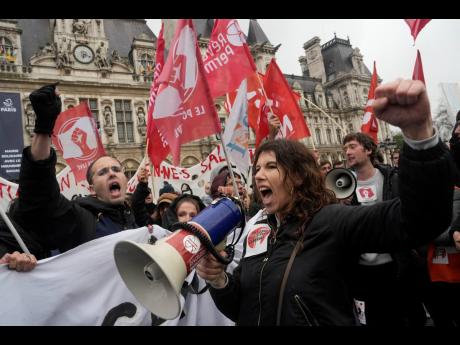
The decision dismayed or enraged critics of the pension plan. Hundreds of union activists and others gathered peacefully in Paris Friday evening before some groups broke off in marches toward the historic Bastille plaza and beyond, setting fires to garbage bins and scooters as police fired tear-gas or pushed them back.
Unions and Macron’s political opponents vowed to maintain pressure on the government to withdraw the bill, and activists threatened scattered new protests Saturday.
Macron’s office said he would enact the law in coming days, and he has said he wants it implemented by the end of the year. Prime Minister Elisabeth Borne said Friday’s decision “marks the end of the institutional and democratic path of this reform”, adding that there was “no victor” in what has turned into a nationwide standoff and France’s worst social unrest in years.
The council rejected some measures in the pension bill, but the higher age was central to Macron’s plan and the target of protesters’ anger. The government argued that the reform is needed to keep the pension system afloat as the population ages; opponents proposed raising taxes on the wealthy or employers instead, and said the changes threaten a hard-won social safety net.
In a separate, but related decision, the council rejected a request by left-wing lawmakers to allow for a possible referendum on enshrining 62 as the maximum official retirement age. The council will rule on a second, similar request, next month.
Carl Pfeiffer, a 62-year-old retiree protesting outside City Hall, warned that the Constitutional Council’s decision won’t spell the end of tensions.
The council members “are irresponsible, because the anger that will come right after in the country, it’s their fault, he said.
As tensions mounted hours before the decision, Macron invited labour unions to meet with him on Tuesday no matter what the Constitutional Council decision was, his office said. The unions rejected Macron’s invitation, noting that he had refused their previous offers of a meeting, and called for mass new protests on May 1, International Workers’ Rights Day.