
Sean Major-Campbell | Should lesbians receive holy communion?
Published:Sunday | July 2, 2023 | 12:47 AM
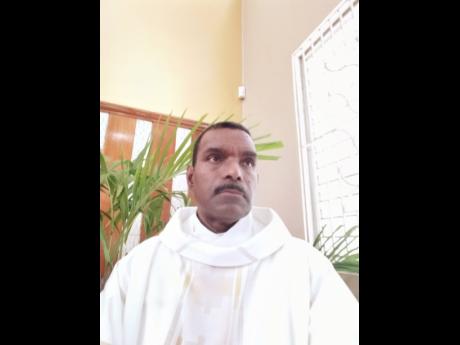

THANKS TO readers of Family and Religion, your questions and comments have been proving to be quite helpful in guiding our conversations. Today we reflect on same as earlier promised.
Q. Regarding “May we honour your divine presence in each one of us” , please direct me to the scripture(s) that teach that God’s presence is in everyone.
A. In the Genesis account, humanity is made in the Imago Dei or in the image of God. In the New Living Translation of the Bible, Genesis 1:27 states, “So God created human beings in his own image, in the image of God he created them; male and female he created them.” An even more inclusive translation may state, “So God created human beings in God’s own image…” The Catechism beautifully explains it this way: “It means that we are free to make choices; to love, to create and to live in harmony with creation and with God.” ( A Catechism, Book of Common Prayer, CPWI)
Q. I know the Holy Spirit has no gender but please explain addressing the Holy Spirit in the feminine, as I believe the Bible only uses the masculine.
A. I agree with you that the Holy Spirit has no gender, since none would be required. However, it is interesting to note that spirit in Hebrew is expressed with use of the feminine gender. Hebrew and Aramaic texts would therefore have followed suit. In translation, the New Testament refers to Holy Spirit with use of the masculine gender. Maybe this is due to the early failure to translate the English from the source text of the Hebrew and Aramaic, while depending on the Latin translation.
The Hebrew rûaħ’ for ‘spirit’ is grammatically gendered as feminine. The Greek ‘pneûma’ for ‘spirit’ is neutral. However, the New Testament translations have stuck with the use of masculine pronouns, giving the impression that the Holy Spirit is to be categorised as male. ‘Shekhinah’, another Hebrew word used to refer to the presence of God, is grammatically feminine. Increasingly, there is more appreciation for the value in avoiding the use of pronouns in reference to God.
Q. Honestly Sir, do you believe the devil is responsible for making people gay?
A. I do not believe that sexual orientation is determined by “the devil”. God made humanity with the gift of sexuality. There is diversity in this broad reality of human experience. Our task is to subject this reality to our capacity for reason and responsible behaviour. Someone, whether gay, straight or otherwise, should therefore be held accountable for how they express sexual behaviour in relation to others.
Q. Do you think it is time for the Church to allow gay marriage?
A. The Church has a duty to uphold the law of the land. Jamaica has much more urgent matters to address right now. We are not even ready to have conversations on the broad subject area of human sexuality. Talking about gay marriage currently only makes for one big quarrel. Better still, let the courts of the land decide.
Q. Would you give communion to lesbians?
Answer: I have no interest in how communicants identify prior to communion. I also never ask individuals, “Are you having sex?” Then say, “Body of Christ. Blood of Christ.” I am sure that thousands of lesbians and people of various gender and sexual identities have been having communion over the years. I am particularly interested in the awesome grace of God to all, rather than appointing myself as God’s judge determining who qualifies for holy communion on the basis my own views.
Q. This might sound strange. I am a strong Christian who accepts my gay son. My problem is, I do not know what to say when church brothers and sisters ask, “When is he getting married?”
Answer: Sometimes with the best of intentions, church brothers and sisters need to know when something is not exactly their business. Your concern is understandable in a cultural context where people have not yet been helped to get over asking such questions.
My hope is that as folks read this, they will get the conversation going in church about the pressure such questions may cause. It is not your business when somebody is getting married unless you got an invitation with a missing date. Stop depending on your children’s timetable and decisions to become your biography.
We do well to sit awhile with an excerpt from Khalil Gibran also known as ‘The Prophet’, as he spoke of children.
And a woman who held a babe against her bosom said
“Speak to us of children.”
Your children are not your children
They are the sons and daughters of life’s longing for itself
They come through you but not from you
And though they are with you yet they belong not to you
You may give them your love but not your thoughts
For they have their own thoughts
You may house their bodies but not their souls
For their souls dwell in the house of tomorrow
Which you cannot visit, not even in your dreams
You may strive to be like them
But seek not to make them like you
For life goes not backward, nor tarries with yesterday ...
Fr. Sean Major-Campbell is an Anglican priest and advocate for human dignity and human rights. Send feedback to seanmajorcampbell@yahoo.com and columns@gleanerjm.com