
Earth Today | Forestry Department sets rainwater harvesting example
Published:Thursday | August 31, 2023 | 12:06 AM
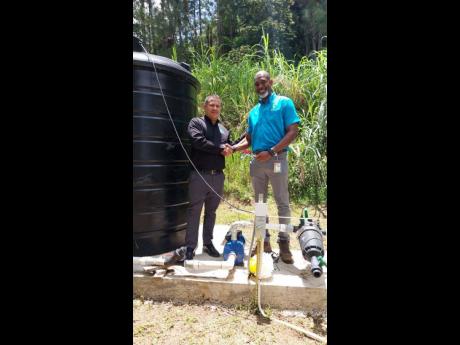
AS CONCERNS over freshwater security associated with a changing climate abound, one local entity has put on show a part of the solution that has long been championed by various stakeholders: rainwater harvesting.
This week, the Forestry Department officially commissioned its 15,000-gallon rainwater harvesting system, one that is anticipated to yield a good return on its multimillion-dollar investment.
“The system, which is comprised of roof gutters, storage tanks, a filtration mechanism and a distribution network, will supply the water-demanding operations of the agency’s head office nursery in corporate St Andrew and support other domestic services across the premises,” said a release from the entity.
“The rainwater harvesting system is expected to not only reduce the agency’s dependency on potable water supplied by the National Water Commission, but also save significantly on its utility bill and contribute to the production of higher-quality seedlings. The $9.1-million system is anticipated to yield a return on investment within three to four years,” it added.
Senator Matthew Samuda, minister without portfolio in the Ministry of Economic Growth and Job Creation, has commended the Forestry Department on the initiative, while encouraging the entity to recognise its role as a major partner in building Jamaica’s climate resilience.
“Forestry is, in many ways, the first line of defence. Forestry has to deliver day in, day out, with the understanding that it is the first line of defence,” he noted.
Ainsley Henry, CEO and conservator of forests, who gave remarks at the ceremony, gave every indication that they would strive to fulfil their role in helping to build Jamaica’s climate resilience.
“We are on a drive to improve efficiency, not just because it’s the right thing to do, not just because, as environmental stewards, it is necessary, but also importantly, because it makes dollars and sense. Our annual utility costs are not insignificant, and hence our savings will be profound,” he said.
Henry added that the agency is committed to environmental sustainability and has been deliberate in identifying strategies “to reduce costs, both in terms of dollars and environmental impact”.
News of the new rainwater harvesting system comes as Jamaica and other Caribbean islands work to safeguard readiness for climate change threats and impacts, including extreme droughts and sea level rise and the related risk to freshwater resources.
Speaking with The Gleaner about El Niño in June, climate scientist Professor Michael Taylor identified rainwater harvesting as an important part of the solution to the island’s water woes.
“We know that an El Niño affects our climate. It biases us to be dry, especially in the late rainy season (August to November). If that plays out, having already had water deficiency up to this point in the year, we could be in a lot of trouble,” he explained at the time.
“We should prepare for the scenario of a dry year. The very warm Caribbean Sea will also make it hot. Imagine being very hot and not having enough water. We need to be prepared,” added Taylor, a physicist and the dean of the Faculty of Science and Technology at The University of the West Indies, Mona.
That preparation, Taylor said then, should include water conservation, but also rainwater harvesting and storage, in addition to efficient usage and restrictions on usage.