
Editorial | Prepare for hot classrooms
Published:Tuesday | September 5, 2023 | 12:05 AM
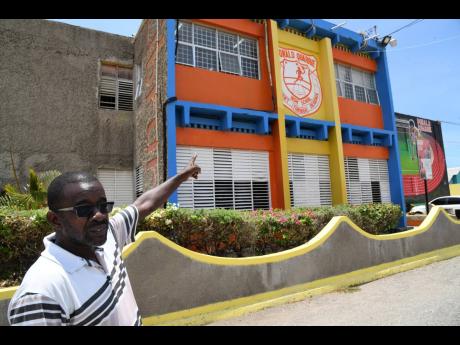
The excessively hot classrooms to which students and teachers are returning after the summer recess is another of the effects of the global climate crisis that could exacerbate learning loss in Jamaica even before the island has a chance to catch up on the deficit caused by the COVID-19 pandemic.
While the immediate situation may not be as bad as what was caused by the pandemic, the island’s health and education authorities, if they do not as yet have one, must formulate a short-term strategy to ensure the health and continued education of students as well as the welfare of teachers while the Government prepares its long-term policy to sustainably deal with the problem. Hotter temperatures are not a passing phenomenon. Global warming and climate change are realities that will not be reversed in the short term.
Mostly, Jamaican schools were designed and built in a different time when average global temperatures were lower and the fact that human actions were unsustainably warming Earth was not so much in the consciousness of Jamaicans.
On average, Earth is now 1.2 degrees Celsius (2.1 degrees Fahrenheit) hotter than when records began to be kept in 1850. Indeed, the eight hottest years have occurred since 2014, with 2022 tying with 2015 as the fifth-hottest. Scientists say it is more than 90 per cent certain that this year, which has already produced the hottest day (July 3) on record, will surpass 2016 as the hottest year.
SCORCHING
Heatwaves across the globe and Jamaica’s scorching summer temperatures – which experts say are set to continue into November – offer no prospect of an early reprieve.
Indeed, there are ongoing discussions about the precautions people who work outdoors should take to preserve their health, including suggestions of staggering working hours to get more done during the cooler earlier morning and evening periods.
Little attention, however, has been paid to what should happen in schools, which are usually overcrowded, are often poorly ventilated, and have limited cooling systems.
“The heat is terrible,” said Patrick Williams, vice-principal of Donald Quarrie High School in east Kingston, which was built over four decades ago. Most of the ventilation for the classrooms of its two-storey buildings is via louvred windows.
With the new school year having started this week, Jamaican teachers and health professionals, like their counterparts globally, fear that the hot, uncomfortable classrooms, such as at Donald Quarrie, may affect health. Students could become fidgety and distracted, affecting concentration, leading to learning loss.
Last October, well before this summer’s rash of heatwaves, the United Nations Children’s Fund (UNICEF) reported that 559 million children were subjected to heatwave frequency (an average 4.5 or more heatwaves per year), while another 624 million faced either high heatwave duration (heatwave event of 4.7 days or longer) , high heatwave severity (heatwave event of 2°C or higher than the local 15-day average), or extreme high temperatures (on average, 83.54 or more days a year exceeding 35°C).
“Currently, 23 countries fall into the highest category for child exposure to extreme high temperatures,” the UNICEF analysis said. “This will rise to 33 countries by 2050 under the low emissions scenario and 36 countries under the very high emissions scenario.”
The real world effects of heatwaves (which, given global warming, are poised to be the norm) were highlighted in a survey in India by researchers at Japan’s Kyushu University in Fukuoka, Japan.
LOST CONCENTRATION
“A total of 96 per cent of the teachers (in the survey) admitted that students often got distracted and lost their concentration towards studying due to heat, and 54 per cent of them completely acknowledged that this affects the students’ academic performance,” the researchers reported. “This observation is consistent with findings that academic learning and scholastic achievement are disrupted significantly by elevated temperatures.”
Further, nearly two-thirds (64 per cent) said hot conditions inside classrooms caused discomfort to students, with fatigue being the most commonly observed symptom, at 76 per cent.
Much of India’s situation, we believe, can be extrapolated to Jamaica. But there is the danger of the genuine distress of students being mischaracterised as lazy.
This requires sensitivity on the part of school administrators, who must also be alert to how heat-related discomfiture, whether in the classroom, at home, or in communities translates to behaviour at school. This preparation also requires contingencies to limit learning loss if schools have to be closed.
Jamaica, in this regard, hopefully, has learnt from the pandemic and how to now avoid some of the education pitfalls that may be caused by heatwaves.
In COVID-19’s first 12 months, 1.5 billion students in 188 countries could not attend in-person classes, severely setting back their education. Between 2020 and 2022, one hundred and forty-seven million students missed more than half of the classes that were held. Some have not returned.
During Jamaica’s lockdown, when online school was in session, up to 120,000 students did not log in to classes. Deep into the reopening, many were still missing.
Given Jamaica’s poor educational outcomes, we cannot afford a repeat of this scenario.