
Haiti named among 18 ‘hunger hotspots’ around the world
Published:Thursday | June 6, 2024 | 12:08 AM
UNITED NATIONS (CMC):
United Nations humanitarians on Wednesday warned that no less than 18 crisis locations already suffering from dire food insecurity could see a “firestorm of hunger” unless aid reaches them urgently.
Although many “hunger hotspots” are in Africa, fears of famine persist in Gaza and Sudan, where conflict continues to rage, fuelling the regional risk of new hunger emergencies, warned the Food and Agriculture Organization and the World Food Programme (WFP).
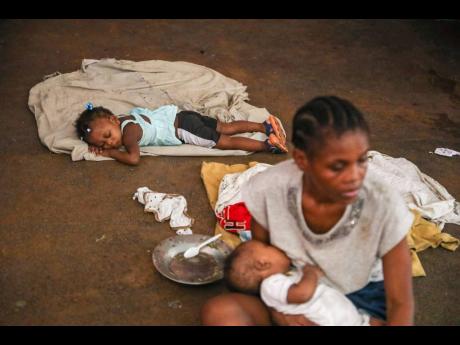
Haiti was also added to that list, amid escalating violence and threats to food security.
Earlier this week, UN humanitarians said they have finally been able to deliver truckloads of food to highly vulnerable people in Haiti’s capital, Port-au-Prince, after gang violence prevented access for more than two months.
But Country Director in Haiti for the WFP, Jean-Martin Bauer, said that the security situation remains “exceptionally complex”.
Haiti is facing a very challenging situation, with widespread violence that is also impacting the ability of young Haitians to receive basic education.
Last month, the UN Office for the Coordination of Humanitarian Affairs, said that the number of people in Haiti facing high levels of acute food insecurity could reach a record five million, or half of the population, by the end of June.
The price of staple food remains high in the capital and surrounding areas amid an already-dire food security situation and rampant gang violence, it added.
WFP Executive Director Cindy McCain said on Wednesday that “once a famine is declared, it is too late [as] many people will have already starved to death”.
McCain said in Somalia in 2011, half of the 250,000 people who died of hunger perished before famine was officially declared.
“The world failed to heed the warnings at the time and the repercussions were catastrophic. We must learn the lesson and act now to stop these hotspots from igniting a firestorm of hunger.”
The UN agency-partnered early-warning report which covers 17 countries and the drought-hit cluster of Malawi, Mozambique, Zambia and Zimbabwe, warning that Mali, Palestine, Sudan and South Sudan remain at the highest alert level and require the most urgent attention.
Turning to the potential impact and “looming threat” of La Niña between August and February 2025, the UN agencies’ assessment is that it is expected to “significantly” influence rainfall. This could lead to a climate shift with “major implications” in several countries, including flooding in South Sudan, Somalia, Ethiopia, Haiti, Chad, Mali and Nigeria, as well as Sudan.
Both weather phenomenons could bring further climate extremes “that could upend lives and livelihoods”, the UN-partnered report warned, in support of calls for immediate humanitarian action delivered at scale “to prevent further starvation and death”.