
Understanding jury duty in Jamaica: A pillar of justice
Published:Monday | October 7, 2024 | 12:05 AM


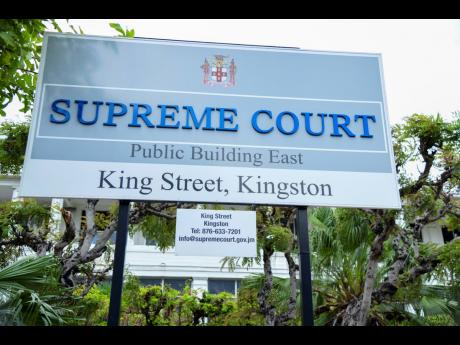
Today we begin a quarterly series from the Court Administration Division (CAD), aimed at providing insightful, informative, and accessible information on key legal topics that affect the daily lives of Jamaican citizens, fostering a better understanding of the nation’s legal system.
In this the first article, the CAD explains the jury duty process, the importance of jury service, the responsibilities of a juror, and the impact of jury duty on the justice system.
We speak of our rights as citizens, but rarely do we discuss our solemn responsibilities. The performance of jury duty is one of the most important civic responsibilities of citizens in a democracy. Trial by a jury of one’s peers is a cornerstone of our judicial process. This is one of the ways in which the citizen directly participates in the criminal justice system and the governance of the country. Unfortunately, many Jamaicans are either unaware of the importance of jury duty or view it as an inconvenient obligation. It is crucial to understand why jury duty matters and how it upholds the integrity of our legal system.
What is a Jury?
A jury is a body of people (ranging between seven and up to 12 in number) sworn to give a verdict in a legal case on the basis of evidence submitted to them in court. There is no right to a trial by jury in Jamaica (unlike the United States) ( Trevor Stone v Regina [1980] 3 All ER 148). The jury system is governed by the Jury Act in Jamaica and it is this legislation that sets out how juries are to be identified, summoned and selected to sit on a panel, as well as how jury trials are to be conducted.
What is a Jury’s Role
The function of the jury in criminal cases is to examine the evidence presented during a trial and, after being instructed in how to apply the relevant law to the facts as they have found, determining the guilt or innocence of the accused. In a civil case, it is to determine whether or not the claimant has established their claim. In a coroner’s inquest, it is to determine the cause of death and whether anyone should be tried criminally for the cause of the death. This collective decision-making process aims to ensure a fair verdict, reflecting the diverse perspectives and values of the community.
In Jamaica, juries are primarily used in criminal cases, especially serious offences such as murder, rape, and other violent offences. However, there are certain instances where a jury is very useful in civil cases. Some examples are defamation claims or claims where a special jury may be required to consider highly specialised and technical matters. Juries are also utilised in the Coroner’s Court to sit with the coroner for the parish to determine cause of death and whether anyone should be tried for the death. A very famous coroner’s case in Jamaica was the Bob Woolmer inquest, held to determine the cause of death of former Pakistan cricket coach Bob Woolmer, who died under questionable circumstances.
Why Jury Duty is Essential?
Jury duty is a fundamental way for citizens to participate in the justice system. It empowers ordinary Jamaicans to play a direct role in legal proceedings, promoting transparency and accountability within the judicial system.
A jury of peers helps to balance the power dynamics in the courtroom. Jurors bring varied experiences and common sense to the deliberation process, which can lead to more balanced and just outcomes.
It promotes and fosters public confidence in the justice system. When persons see that justice is administered by a representative cross-section of society, they are more likely to have confidence in the fairness of the system.
Serving on a jury is a civic duty of every citizen, in addition to voting and paying taxes. Indeed, in the swearing-in ceremony for new citizens in the United States, the new citizens are reminded of their responsibilities of serving on juries, voting and paying taxes. In this way, each citizen plays his or her part in all three branches of governance in Jamaica; the judicial branch, the executive branch, and the legislative branch. It is an opportunity to contribute to the community and uphold the rule of law, ensuring that the rights of both the accused and the victims are protected.
Who is disqualified from Jury Duty?
• Persons under 18 years of age or over the age of 70.
• A person who is not a Commonwealth citizen.
• A person awaiting trial in the Resident Magistrate or Circuit Court for an indictable offence, i.e. serious offences such as murder, shooting with intent and unlawful wounding, but not offences such as traffic violations.
• Persons serving or who have served a sentence of imprisonment of more than six months.
It is important to note that service on juries is not restricted to Jamaican citizens. Every person who is resident in Jamaica and not otherwise disqualified from jury duty is a potential juror. In fact, to serve on a jury, one does not even have to be served a summons. One can simply be asked to participate right off the street as what is known as a talesman in certain circumstances. So once you are able, we encourage everyone (summoned or called upon as a talesman) to do your duty.
Addressing Common Concerns
Despite its importance, many Jamaicans view jury duty with reluctance or even dread. Common concerns include time away from work, lack of understanding of the process, and fear of retribution in high-profile cases. Here are some responses to these concerns:
• Time Commitment: While jury duty can be time-consuming, the courts recognise this and strive to minimise disruptions to jurors’ lives. Employers are legally obligated to allow employees time off for jury duty, and some financial compensation is provided to cover basic expenses.
• Understanding the Process: The judicial system provides resources and guidance to help jurors understand their role. Orientation sessions and clear instructions are given to ensure that all jurors are well informed and comfortable with their responsibilities.
• Safety Concerns: In high-profile or sensitive cases, the court protects jurors’ anonymity and safety. This can include confidential proceedings and security arrangements.
The Call to Serve
Jury duty should not be seen as a burden, but as a vital civic duty that supports the very foundation of our democracy. When you receive a summons for jury duty, remember that your participation is crucial to ensuring justice for all Jamaicans. By serving as a juror, you are contributing to a fair and equitable legal system, reinforcing the principles of justice that our society holds dear. Indeed, many citizens who were at first hesitant and fearful, found that jury duty was a very good experience. They learnt a lot about the law and justice; they met new people from different spheres of life; and they left with a profound sense of satisfaction for having done their part.
Jury duty is a profound way for Jamaicans to engage with and uphold our judicial system. It is an opportunity to serve our community and ensure that justice is fairly administered. Let us embrace this responsibility with the seriousness and commitment it deserves, recognising that each of us has a role to play in the pursuit of justice.