
Earth Today | Lead Poisoning Prevention Week is here!
Published:Thursday | October 24, 2024 | 12:08 AM
JAMAICANS, LIKE others in the world, have the opportunity this week to learn about the dangers of lead poisoning, with the observance of International Lead Poisoning Prevention Week from October 20 to 26.
The week sees the World Health Organization (WHO) and the United Nations Environment Programme committed to spreading the word that ‘Bright Futures Begin Lead Free’, the theme for this year’s campaign efforts.
With lead counted among the top 10 chemicals of major public health concern, the aim of this year’s efforts is to expose the health effects of the chemical but also to highlight country efforts to prevent exposure and to urge countries to complete their actions to eliminate lead paint through national-level regulatory actions.
“The global elimination of lead in petrol for road vehicles in 2021 and reductions in the use of lead in paint, plumbing and solder have resulted in a substantial decrease in population-level mean blood lead concentrations. However, significant sources of exposure remain, particularly in low- and middle-income countries,” notes the lead campaign’s information page, https://www.unep.org/events/campaign/international-lead-poisoning-preven....
“Further efforts are required to continue reducing the use and release of lead, and decreasing environmental and occupational exposures, particularly in children and women of child-bearing age. Interventions include eliminating non-essential uses of lead such as in paint, ensuring the safe recycling of lead-containing waste, and educating the public about the importance of safe disposal and recycling of lead-acid batteries and electrical and electronic equipment. Measurement of blood lead levels in children, women of child-bearing age and workers can indicate the need for clinical intervention,” it added.
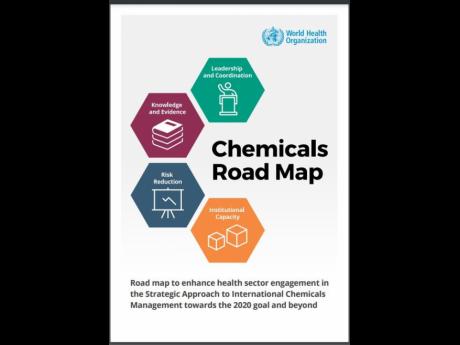
Among the action areas identified in the road map and which countries are encouraged to pursue are risk reduction, through the adoption of health protection strategies and institutional capacity building through attention to, among other things, training and education as well as international health regulations.
Knowledge and evidence, through measuring progress, sharing and collaborating is also counted among the action areas, along with leadership and coordination through health in all chemical policies and other interventions.
Its goals include that by 2030, water quality is improved by “reducing pollution, eliminating dumping and minimising release of hazardous chemicals and materials, halving the proportion of untreated wastewater and substantially increasing recycling and safe reuse globally”.
According to the WHO, people get exposed to lead through occupational and environmental sources such as through the inhalation of lead particles that result from burning items that contain the chemical and through the ingestion of contaminated substances.
“Young children are particularly vulnerable to lead poisoning as they may absorb up to four-five times as much lead as adults from an ingested dose. Moreover, children’s innate curiosity and their age-appropriate and frequent hand-to-mouth and object-to-mouth behaviours increase their risk of exposure to lead-contaminated dust, soil and paint,” the WHO has noted.
“Lead exposure can have serious consequences for the health of children. Exposure to very high levels of lead can severely damage the brain and central nervous system causing coma, convulsions and even death. Children who survive severe lead poisoning may be left with permanent intellectual disability and behavioural disorders,” it added.
“At lower levels of exposure that may have no obvious symptoms, lead can lead to a spectrum of injury across multiple body systems. In particular, lead can permanently affect children’s brain development, resulting in reduced intelligence quotient, behavioural changes, including reduced attention span and increased antisocial behaviour, and reduced educational attainment,” it warned.
It also causes hypertension, renal impairment and toxicity to the reproductive organs, among other things.
“There is no known safe blood lead concentration; even blood lead concentrations as low as 3.5 µg/dL may be associated with decreased intelligence in children, behavioural difficulties and learning problems,” it said.