
Editorial | Jamaica and International Olympic Committee’s new boss
Published:Saturday | March 29, 2025 | 12:06 AM
In the face of the bunglings and disenfranchised athletes and contentious quarrels between organisations ahead of last summer’s Paris Olympics, this newspaper called for a revamp of the island’s major sporting bodies to ensure greater transparency and accountability in their operations.
Our primary targets were the Jamaica Athletics Administrative Association (JAAA) and the Jamaica Olympic Committee (JOC). The Gleaner however notes that the entire sporting fraternity would benefit from this airing of issues – a spring cleaning of sorts that would lead to a level of engagement between sport administrators and the public. Our basic premise is that, despite their structures, sporting organisations, like political parties, oughtn’t to perceive themselves as private clubs, but as public bodies in which Jamaicans place great emotional and other investments.
Unfortunately, neither the JAAA nor the JOC appeared to have embraced the idea, nor did the Government push for, or promote, such an evaluation.
The idea, however, remains relevant. It ought not to be allowed to atrophy and die.
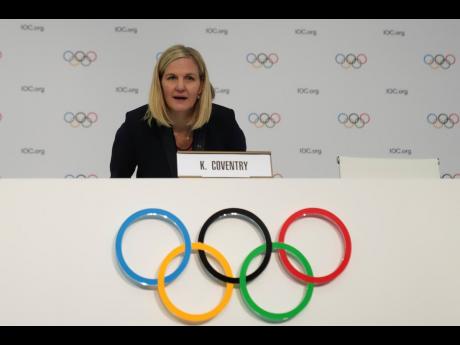
Indeed, recent events, particularly the election a week ago of Zimbabwean Kirsty Coventry to be president of the International Olympic Committee (IOC), succeeding Germany’s Thomas Bach, should be a prime catalyst for such a review.
Ms Coventry is to formally take over in June. She should immediately thereafter hear from Jamaica an informed view of what this country, a global athletic power, believes should be near the top of her agenda during her eight-year tenure, which might include making the IOC itself more transparent and representative.
ACOLYTE
Ms Coventry has been cast as Mr Bach’s acolyte, his preferred candidate, whose mission would be continuity. But that may be a misreading of Ms Coventry, whose peculiar life experiences may well have shaped unique perspectives on the IOC and her approach to its leadership.
While she hasn’t made too much of her gender prior to and after the election, the fact is that Ms Coventry will be the first woman to lead the IOC in the more than 130 years of its modern history. And, at 41, she will be the youngest president of the IOC, which is accustomed to having older men at the helm.
Further, she comes to the job with a clear and strong mandate. She won in the election’s first round, gaining 49 of the 97 ballots cast, substantially more than the 28 won by Spaniard Juan Antonio Samaranch. Sebastian Coe, the president of World Athletics, who was confident before the vote, was a distant third with eight votes.
But there is something else that is significant about Ms Coventry, a former Olympic gold medal swimmer. She is a white Zimbabwean who is the minister of youth, sport and recreation in the ZANU-PF-led government of President Emmerson Mnangagwa. She is one of three white members of Mr Mnangagwa’s administration, which critics have accused of electoral manipulation.
AFTERMATH
In the aftermath of white minority rule in Zimbabwe (previously Rhodesia), some whites left the country and many more fled during Robert Mugabe’s controversial land confiscation and redistribution programme at the start of the 2000s. Ms Coventry not only stayed, but joined the government three years ago.
“I have always been a very proud Zimbabwean,” she said about taking the ministerial job in an interview after her IOC victory. “... I knew it would come with different thoughts and feelings, but I wanted to try and create change in my country … .”
With respect to her mandate, she has spoken of bringing athletes to the centre of the process, expanding access to sport to young people around the world (including half a billion in Africa), and embracing technology to help drive this process.
We would add to that transforming the IOC from a narrow, sometimes shadowy, closed shop, to a really representative body.
In preparation for sending that brief to Ms Coventry, Jamaica’s sports associations should be putting their houses in order.