
Shinique Walters | Glass ceiling vs glass escalator: Women’s role in elections
Published:Sunday | May 4, 2025 | 12:07 AM
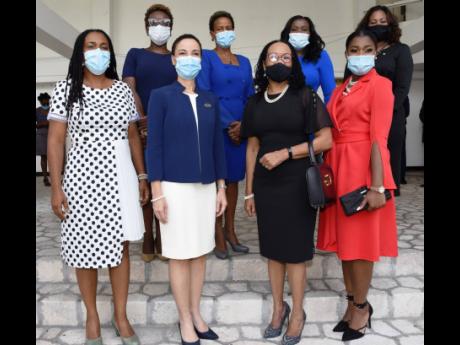
Jamaican women have contributed significantly to the voting process since the 1944 adult suffrage. However, there has been a significant decline in the number of persons who chose to vote in 2020. The voter turnout was approximately 37.85 per cent, with at least 24.5 per cent of the candidates being females who decided to participate in the general election. There is still a small number of women occupying leadership positions in Jamaica.
Currently, about 29 per cent of the people act as leaders for both the Jamaica Labour Party (JLP) and People’s National Party (PNP) governments, which is below the benchmark stipulated by the United Nations, which is stipulated at 30 per cent. Therefore, there is a disconnection between high voter participation and low representation of women in politics.
This suggests that while women are included in the electoral process, their inclusion has not yet translated into equitable power-sharing of voting, translating into decision-making processes. These challenges, therefore, force another conversation to decide if measures are put in place to encourage more women’s participation or if some factors create further inhibition to women’s role in politics.
IS THERE A GLASS CEILING?
The low number of women in leadership positions in Jamaican politics forces us to question whether systemic barriers prevent them from advancing beyond a certain level of the hierarchy. These barriers may also influence the opportunities available for their political advancement, particularly in reaching the highest tiers of governance. Despite progress, such as Jamaica having had a female prime minister and both the PNP and JLP publicly supporting women’s involvement, gender inequality persists within internal party processes, reflecting deep-seated patriarchal biases.
These biases are often evident in the rhetoric and actions of senior party members who hold influential positions. Further, women are frequently encouraged to run in constituencies where they have little chance of winning or are positioned as “sacrificial candidates” to secure victories for male counterparts. Jamaica also suffers from a cultural divide about who they consider to be better leaders.
This is often reflected in the debates and hyper masculine norms that can also discourage women from entering or remaining in the political arena, Financing also plays a critical role in encouraging women to be allowed to secure votes. Often, women lack these different networks and resources to successfully campaign competitively and garner additional support.
Women in leadership often face the “but” mentality, where their accomplishments are acknowledged, yet immediately undermined by criticism. For instance, a woman may be praised as “an excellent speaker, but her attire and perspective don’t align”, turning a compliment into a backhanded critique.
This pattern perpetuates self-doubt and shapes public perception of women’s competence in leadership roles. The media exacerbates this issue by scrutinising women through a gendered lens, evaluating them based on family roles, personal lives, or perceived likeability rather than their policy platforms. Such stereotypes reinforce traditional expectations, discouraging women from asserting themselves in public leadership. In contrast, men are often celebrated for traits like decisiveness and strength, a double standard further amplified by media portrayal. Additionally, the lack of mentorship for aspiring female leaders in Jamaica creates another barrier. Many young women report having few role models or guidance to prepare them for political leadership, limiting their opportunities to rise into influential positions.
IS THERE A GENDER ESCALATOR?
The 2020 election has shown that the some of the formal structures and social movements have been put in place to encourage more women in political leadership. Some of these efforts look at various institutional support and legislative reforms based on some of the gender-equality policies that we have adopted such as Jamaica’s National Policy for Gender Equality (2011) and the National Strategic Action Plan to Eliminate Gender-Based Violence (2017–2027). Both include political representation as key areas of concern.
There also needs to be advocacy and training on electioneering by both the Government and NGO groups to further sensitise women on how to operate in a patriarchal society about leadership in governance. There are several commitments that Jamaica is a signatory to such as the Beijing Platform for Action, CEDAW (Convention on the Elimination of All Forms of Discrimination Against Women), and the Sustainable Development Goals (SDG 5). These also encourage and promote women’s political participation and force us to look at creating quotas or establishing target areas for women’s inclusion.
Despite these benefits, there are still steps that are missing to encourage more women to participate in politics by further accelerating the gender escalator and dismantling the glass ceiling. These include that both political parties who should encourage gender quotas for candidate selection, women are supposed to be given the same privileges of being placed in what is considered to be winnable seats, and greater mentorship and advocacy and training must be further put in place to encourage women in politics.
Jamaica should also look at models that have been used in Africa to fund politicians where the funding or donor support provides financial funding support and provides technical assistance for potential politicians. Create more gender-sensitive education for the media where they are further sensitised on gender equality in leadership through various reforms and public campaigns to normalise a space where the image and potential types of leadership of women are accepted
Safe political space is also needed to manage gender-based political violence through speech and online harassment. This safe space will also encourage more women to engage in political dialogue while encouraging greater participation from women at all levels. The persistent underrepresentation of women in politics signals that more women need to be brought in to ensure that this election period takes on an inclusive approach that focuses on a gender-just political system that empowers women not just as voters, but as change makers. We must look at these ballot boxes as an inclusion tool to transform one that lifts women up and not locks them out of leadership.
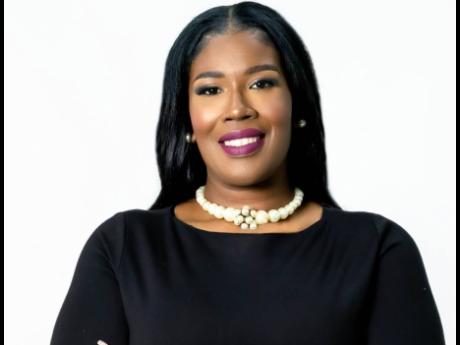
Dr. Shinique Walters is a lecturer in the Department of Government and research fellow at the Centre for Leadership and Government at the University of the West Indies, Mona. Send feedback to shiniquewalters@gmail.com.